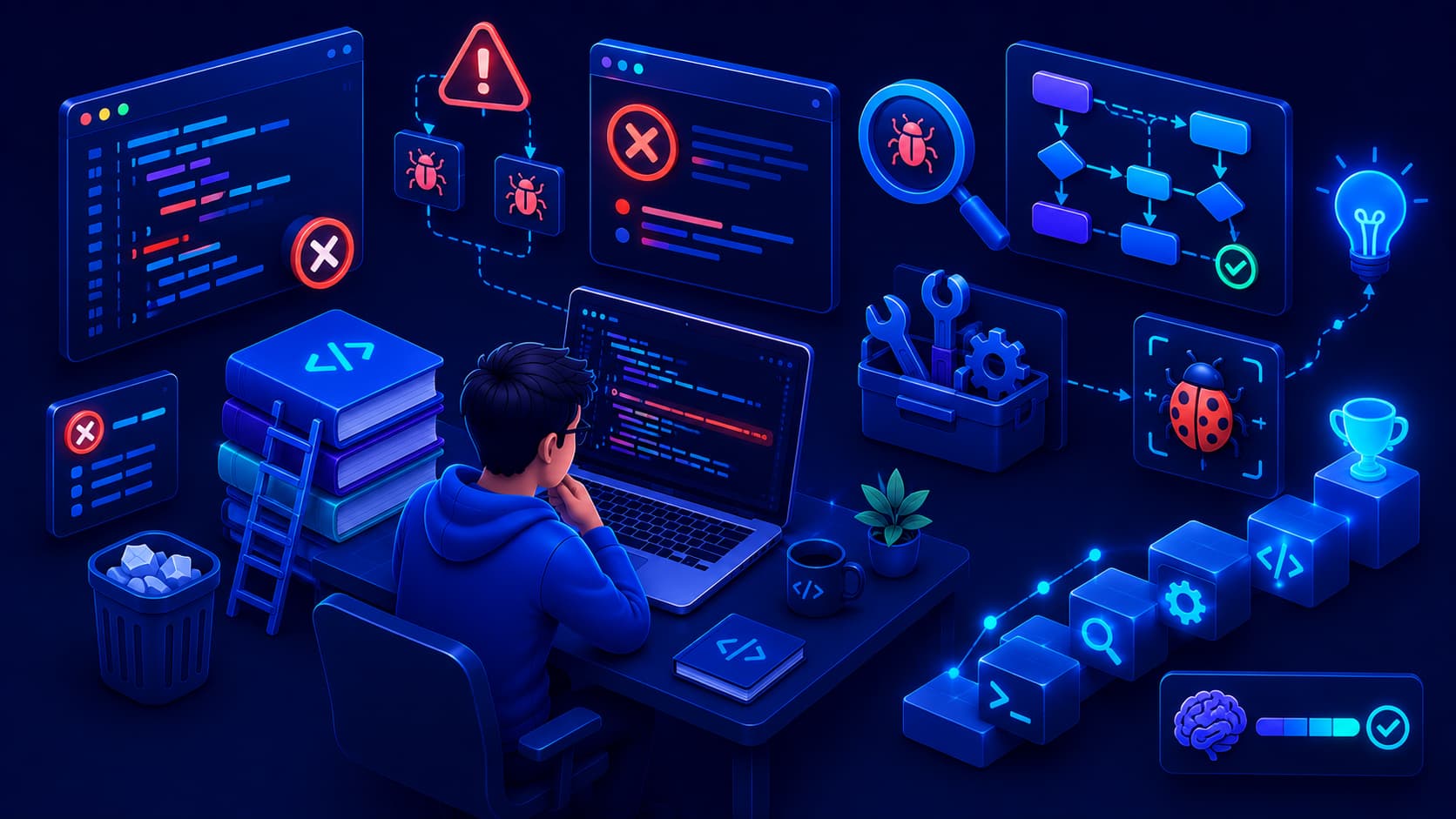
Learning programming is an exciting journey. Every new concept opens the door to building websites, mobile applications, games, automation tools, and countless other digital solutions. At the same time, programming can also feel frustrating. A single missing character can prevent an entire program from running, and an unfamiliar error message may leave beginners wondering what went wrong.
The important thing to remember is that mistakes are a normal part of programming. Even experienced software developers spend a significant amount of time debugging, testing, and improving their code. The difference is not that professionals make fewer mistakes—it is that they learn from them instead of becoming discouraged. Many beginner mistakes are surprisingly common, and recognizing them early can save hours of frustration while helping you build stronger programming habits from the very beginning.
1. Trying to Memorize Everything
Many beginners believe they must memorize every keyword, function, and syntax rule before they can build real programs. This often creates unnecessary pressure and slows the learning process. In reality, professional developers rarely memorize every detail of a programming language. Instead, they focus on understanding programming concepts and know how to use documentation whenever they need specific information.
The ability to solve problems is far more valuable than memorizing syntax. Once you understand concepts such as variables, functions, loops, and objects, looking up language-specific details becomes quick and straightforward.
Practical Example
Suppose you forget the exact syntax for sorting an array in a programming language. Rather than trying to remember it from memory, experienced developers simply consult the official documentation. Within seconds they have the correct syntax, allowing them to continue solving the real problem instead of wasting time memorizing every command.
Editorial Insight
Programming languages evolve continuously. New features are added, old ones become outdated, and frameworks change frequently. Trying to memorize everything is nearly impossible. Developing the habit of reading documentation is a much more practical and sustainable skill.
2. Skipping the Fundamentals
It's tempting to jump directly into building advanced applications or learning the latest frameworks. However, without understanding the core principles of programming, progress usually becomes much more difficult. Concepts such as variables, loops, functions, algorithms, and data structures provide the foundation for almost every programming language.
Investing time in these fundamentals pays dividends throughout your programming journey. Once you understand the underlying concepts, learning new languages and frameworks becomes significantly easier because the ideas remain largely the same.
Best Practice
Before learning advanced frameworks or libraries, make sure you're comfortable with the language itself. Strong fundamentals allow you to understand why code works rather than simply copying patterns from tutorials.
3. Copying Code Without Understanding It
The internet provides millions of code examples, tutorials, and open-source projects. These resources are incredibly valuable, but copying code without understanding how it works limits your learning. Whenever you use an example, take time to understand what each section of the code is doing and why the solution works.
Instead of asking only, "Does this code work?", also ask:
- Why does it work?
- What problem does it solve?
- Could I explain this code to someone else?
- How would I modify it for a different situation?
Developing this habit strengthens your problem-solving skills and builds confidence because you're learning concepts rather than simply repeating solutions.
4. Being Afraid of Error Messages
Error messages often appear intimidating, especially when you're just starting to learn programming. Many beginners either ignore them or immediately search online for a complete solution. In reality, error messages are some of the most valuable tools available to developers.
Most error messages provide useful clues about:
- Where the problem occurred.
- What type of error happened.
- Which part of the code should be investigated first.
Learning to read and interpret these messages is one of the fastest ways to improve as a programmer. Instead of viewing them as obstacles, treat them as guides that help you locate and fix problems more efficiently.
5. Giving Up Too Quickly
Programming problems sometimes take hours—or even days—to solve. This is completely normal. Many beginners mistakenly believe that if they cannot solve a problem immediately, they simply are not good at programming. In reality, persistence is one of the most valuable skills a developer can develop. Every difficult bug you solve today becomes valuable experience that makes future challenges easier to overcome.
Even experienced developers encounter problems they cannot solve on the first attempt. What separates them is their willingness to investigate, experiment, and keep learning until they find a solution.
Practical Example
Imagine spending several hours trying to understand why an application crashes after a user clicks a button. Rather than abandoning the project, you test different possibilities one by one until you discover that a single variable was never initialized. Although solving the problem took time, you've gained knowledge that will help you recognize similar issues much more quickly in the future.
Editorial Insight
Progress in programming is rarely measured by how quickly you solve every problem. It's measured by how much you learn from each challenge. Every obstacle you overcome expands your experience and improves your problem-solving skills.
6. Ignoring Code Readability
When beginners first learn programming, their primary goal is often to make the code work. While functionality is important, code should also be easy to read and understand. Clear variable names, consistent formatting, and logical organization make software significantly easier to maintain over time.
Remember that code is usually read far more often than it is written. Your future teammates—or even your future self—will appreciate code that clearly communicates its purpose.
Good readability includes practices such as:
- Using meaningful variable and function names.
- Applying consistent indentation.
- Organizing code into logical sections.
- Removing unnecessary complexity.
Best Practice
Always write code as though someone else will need to maintain it in the future. Readable code reduces bugs, simplifies debugging, and makes collaboration much easier in team environments.
7. Not Practicing Regularly
Programming is a practical skill. Reading books, watching tutorials, and completing online courses are excellent ways to learn new concepts, but they cannot replace hands-on experience. Many beginners spend weeks consuming educational content without actually writing much code.
Real progress comes from building projects, experimenting with ideas, and solving actual problems. Even practicing for a short period each day is usually more effective than studying for several hours only once a week.
Practical Example
Writing code for just 30 minutes each day often produces better long-term results than watching programming tutorials for several hours on the weekend. Frequent practice reinforces concepts, improves retention, and builds confidence through repetition.
8. Trying to Learn Too Many Technologies at Once
The world of software development is enormous. Programming languages, frameworks, databases, cloud platforms, and development tools are constantly evolving. It's easy for beginners to feel they must learn everything immediately.
Unfortunately, attempting to study too many technologies at the same time often leads to confusion and slow progress. A more effective strategy is to focus on a single learning path until you understand the fundamentals, then gradually expand your knowledge into related areas.
Editorial Insight
Depth is generally more valuable than breadth during the early stages of learning. A solid understanding of one programming language provides a much stronger foundation than a superficial understanding of several different technologies.
9. Avoiding Debugging
Some beginners become frustrated whenever a program doesn't work as expected. Instead of investigating the problem, they immediately rewrite large portions of their code or search online for a complete solution. Experienced developers take a different approach—they debug methodically, one step at a time.
Debugging is one of the most valuable programming skills because it teaches you how software behaves while strengthening your analytical thinking. By isolating problems systematically, you can often identify the root cause much faster than by guessing or rewriting code.
Learning to debug effectively will save countless hours throughout your programming career while helping you become a more confident and independent developer.
10. Comparing Yourself to Experienced Developers
One of the biggest obstacles to learning programming isn't technical at all—it's comparison. Many beginners judge their first few months of learning against developers who have spent years, or even decades, building software. This creates unrealistic expectations and often leads to unnecessary frustration.
Every experienced programmer started as a beginner. They also struggled with syntax errors, confusing bugs, and unfamiliar concepts before developing the skills they have today. Rather than comparing yourself to others, focus on your own progress and celebrate the improvements you make over time.
Editorial Insight
Programming is a long-term skill, not a race. Some developers learn quickly in certain areas and more slowly in others. Consistent improvement is far more important than trying to keep pace with someone else's journey.
Better Habits Lead to Better Programming
Avoiding common mistakes is helpful, but developing good habits has an even greater impact on your long-term success as a programmer. Successful developers don't simply avoid errors—they build routines that help them continue learning throughout their careers.
Strong programming habits include:
- Practicing consistently.
- Breaking large problems into smaller, manageable tasks.
- Reading documentation regularly.
- Learning from debugging instead of fearing it.
- Building small projects to reinforce new concepts.
- Staying curious and continuing to learn.
These habits create steady progress, improve problem-solving abilities, and make programming a much more enjoyable experience over time.
Best Practice
Focus on building habits instead of chasing quick results. Writing code regularly, reviewing your mistakes, and completing small projects will contribute far more to your growth than constantly searching for shortcuts.
Frequently Asked Questions
Is It Normal to Struggle When Learning Programming?
Absolutely.
Programming requires learning an entirely new way of thinking. Every developer encounters challenges while developing these skills, and making mistakes is a natural part of the learning process.
Should I Memorize Programming Syntax?
No.
Understanding programming concepts and knowing how to use documentation effectively are much more valuable than memorizing every language feature. Once you understand the underlying ideas, looking up syntax becomes quick and easy.
How Much Should Beginners Practice?
Consistency matters more than duration. Practicing for a short period each day often produces better long-term progress than studying for long sessions only occasionally. Regular practice reinforces knowledge and helps transform concepts into practical skills.
Is Copying Code Always Bad?
Not at all.
Reading code examples is an excellent way to learn. The important part is understanding why the code works before adapting it to your own projects. Treat examples as learning tools rather than shortcuts.
What's the Fastest Way to Improve?
Build projects, solve real problems, review your own code critically, and treat every mistake as an opportunity to learn. Practical experience remains one of the most effective ways to become a stronger programmer.
Conclusion
Every programmer makes mistakes, regardless of experience. The difference is that experienced developers view mistakes as opportunities to improve rather than reasons to quit. By focusing on strong fundamentals, practicing consistently, understanding your code, and developing effective debugging skills, you'll build habits that support long-term growth.
Programming is not about writing perfect code on your first attempt. It's about learning to solve problems, improving through each project, and becoming more confident with every challenge you overcome. Every bug you fix, every application you build, and every concept you master brings you one step closer to becoming a better software developer.
Final Takeaway
Mistakes are not signs of failure—they are an essential part of learning programming.
Keep these lessons in mind:
- Focus on understanding concepts rather than memorizing syntax.
- Build a strong foundation before moving to advanced topics.
- Learn from error messages instead of fearing them.
- Practice consistently by writing real code.
- Develop debugging and problem-solving skills.
- Measure your progress against your past self, not against experienced developers.
Programming is a skill that improves through patience, persistence, and continuous practice. By embracing mistakes as learning opportunities, you'll develop not only stronger technical abilities but also the confidence needed to tackle increasingly complex software projects.