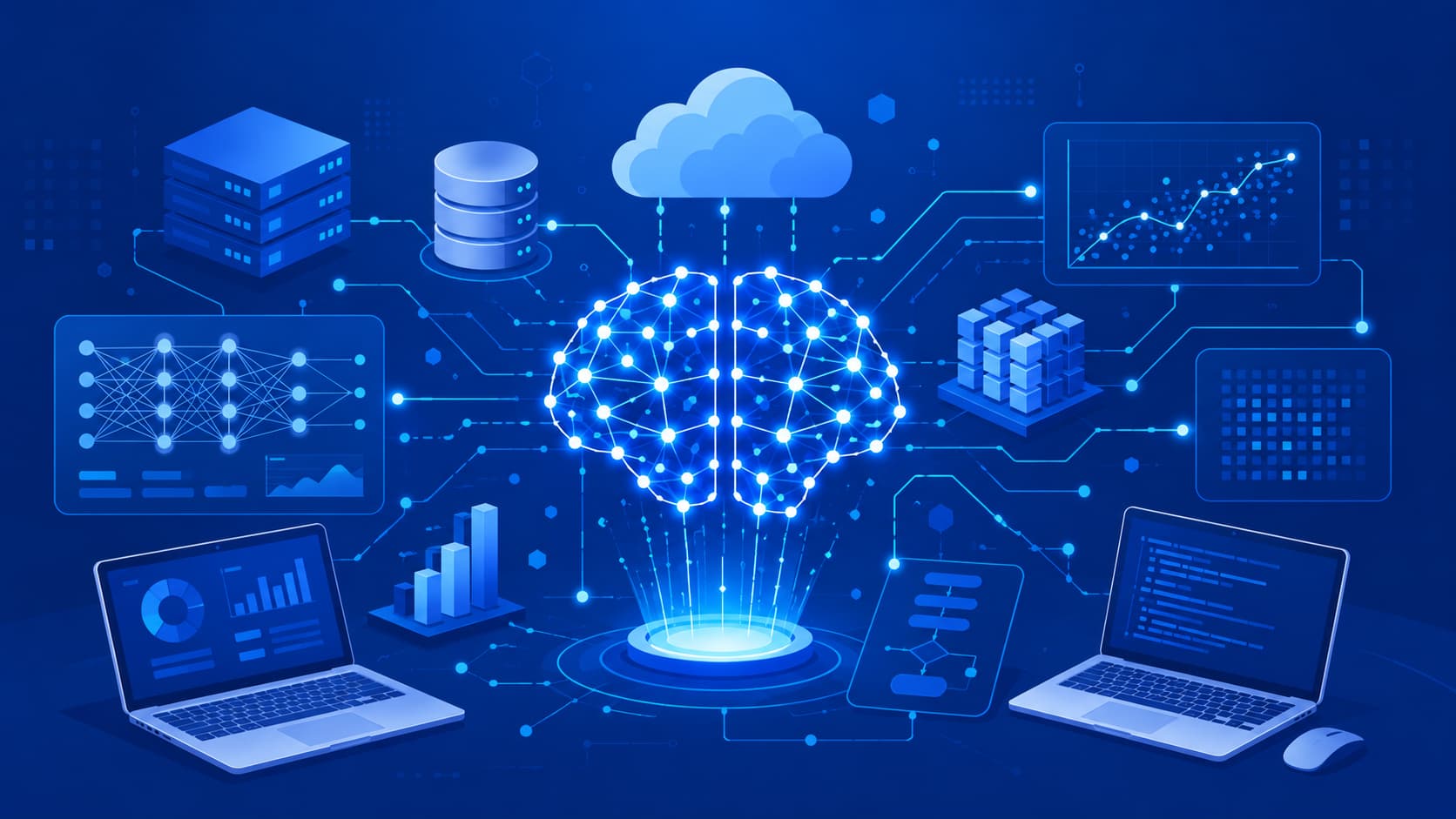
Machine learning has become one of the most important technologies powering the digital services we use every day, even though most people rarely notice it. Every time Netflix recommends a movie you might enjoy, Spotify creates a personalized playlist, Google Maps suggests a faster route, or your email filters spam messages before they reach your inbox, machine learning is working behind the scenes to analyze data and make intelligent predictions.
Although the term artificial intelligence is widely recognized, machine learning is often the technology that makes many AI applications possible. Rather than following fixed instructions written by programmers, machine learning enables computers to learn from data, identify patterns, and improve their performance over time. This ability to adapt makes machine learning one of the key drivers behind today's AI revolution.
The concept may sound highly technical, but its core idea is surprisingly simple. Instead of telling a computer exactly what to do in every possible situation, developers provide examples. The computer studies those examples, discovers relationships within the data, and uses those patterns to make predictions when it encounters new information. This learning process allows machine learning models to solve problems that would be extremely difficult to address using traditional programming alone.
As organizations generate enormous amounts of digital information every day, machine learning has become increasingly valuable across industries. Businesses use it to understand customer behavior, healthcare providers rely on it to support medical diagnoses, financial institutions detect fraudulent transactions, and software companies continuously improve user experiences through intelligent recommendations. Understanding how machine learning works is becoming an essential digital skill for anyone interested in modern technology.
In this guide, you'll learn what machine learning is, how it works, the different ways computers learn from data, common real-world applications, the challenges developers face, and why machine learning has become one of the foundations of modern artificial intelligence.
What Is Machine Learning?
Machine learning is a branch of artificial intelligence that enables computers to learn from data without being explicitly programmed for every possible situation. Instead of relying entirely on manually written instructions, machine learning systems analyze examples, identify patterns, and gradually improve their ability to make predictions as they process more information.
Traditional software follows rules created by developers. If a programmer forgets to include a particular instruction, the software simply doesn't know how to respond. Machine learning takes a fundamentally different approach. Developers provide data rather than exhaustive rule sets, allowing the model to discover patterns on its own and apply them when processing new information.
A helpful analogy is teaching children to recognize different animals. Most parents don't provide a lengthy rulebook describing every characteristic of cats or dogs. Instead, children see enough examples that identifying those animals eventually becomes natural. Machine learning follows a remarkably similar process. The more high-quality examples it receives during training, the better it usually becomes at recognizing similar patterns in the future.
Practical Example
Imagine you're building a system that can recognize apples.
A traditional program would require developers to define countless rules describing every possible apple shape, size, color, and lighting condition. This quickly becomes impossible because real-world apples vary enormously.
With machine learning, developers simply provide thousands of labeled photographs of apples. Instead of memorizing every image, the model learns the common characteristics shared across those examples and eventually recognizes apples it has never seen before.
This ability to generalize from examples is what makes machine learning so powerful.
Editorial Insight
One of the biggest misconceptions about machine learning is that computers somehow "teach themselves" without human involvement.
In reality, people remain responsible for collecting data, selecting learning algorithms, evaluating model performance, correcting errors, and improving the overall system. Machine learning automates pattern recognition—not the entire development process.
Why Is Machine Learning So Important?
Modern technology generates enormous amounts of data every second. People search the web, stream videos, upload photos, shop online, send messages, and interact with thousands of digital services throughout the day. No human team could manually analyze this volume of information quickly enough to deliver personalized experiences or real-time insights.
Machine learning makes this possible by enabling computers to identify trends, detect unusual behavior, predict future outcomes, and continuously improve their performance as new information becomes available. Without machine learning, many digital services that people rely on today simply would not be practical.
Beyond convenience, machine learning also supports critical decision-making in industries such as healthcare, finance, transportation, manufacturing, and cybersecurity. As data continues to grow exponentially, machine learning will play an even greater role in helping organizations transform raw information into meaningful insights.
Everyday Examples of Machine Learning
One of the easiest ways to understand machine learning is to recognize where it already appears in everyday life. Many of the applications people use daily quietly rely on machine learning models that continuously analyze user behavior and improve recommendations over time.
Common examples include:
- Netflix recommending movies based on your viewing history.
- Spotify creating playlists tailored to your listening preferences.
- YouTube suggesting videos you're likely to watch next.
- Online stores recommending products based on previous purchases.
- Banks detecting unusual transactions that may indicate fraud.
- Navigation apps predicting traffic conditions in real time.
- Smartphone keyboards suggesting the next word while typing.
Although these features appear simple, each depends on machine learning models capable of analyzing millions of data points to make increasingly accurate predictions.
Best Practice
Machine learning is most effective when paired with human expertise.
Organizations should avoid relying solely on automated predictions for important decisions involving healthcare, finance, legal matters, or public safety. Instead, machine learning should support human decision-making by providing insights that professionals can evaluate using their experience, judgment, and domain knowledge.
How Does Machine Learning Learn?
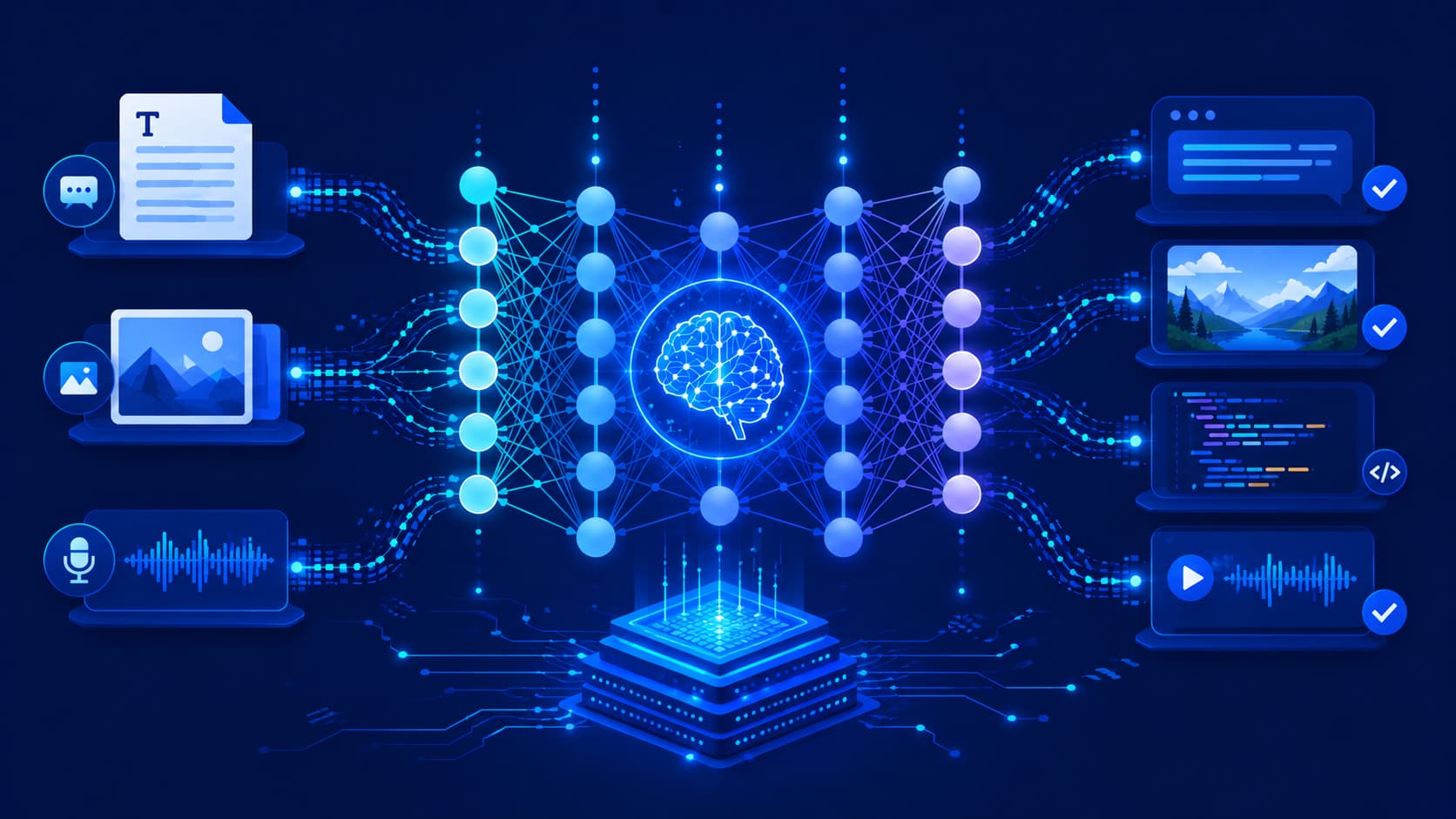
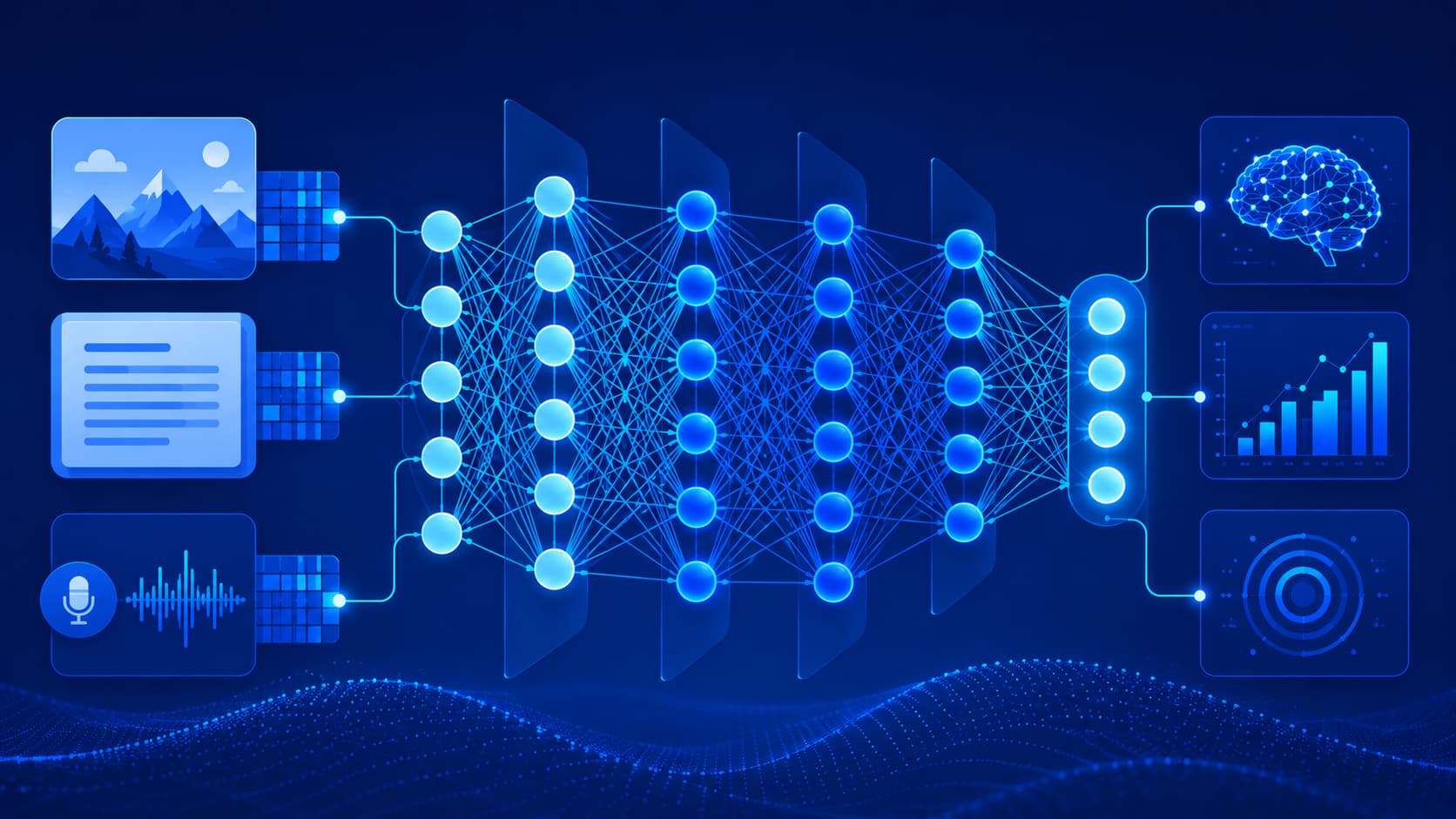
At its core, machine learning follows a logical process that enables computers to recognize patterns and make predictions from data. Unlike traditional software, which executes predefined instructions, a machine learning model gradually improves by analyzing examples and identifying relationships within the information it receives.
Although different machine learning algorithms use different techniques, most models follow the same general workflow. First, developers collect data related to a specific problem. Next, that data is used to train a machine learning model. During training, the model searches for patterns, similarities, and hidden relationships. After learning from enough examples, it becomes capable of making predictions using information it has never encountered before.
For example, imagine building an AI system that recognizes apples. Instead of describing every possible apple shape, size, and color, developers provide thousands of labeled photographs. By analyzing these examples, the model gradually learns which visual characteristics are most strongly associated with apples. Eventually, it can correctly identify apples in entirely new images with impressive accuracy.
The quality of this learning process depends heavily on the quality of the training data. Larger, cleaner, and more representative datasets generally produce models that perform better in real-world situations.
Practical Example
Suppose an online retailer wants to recommend products to customers.
Instead of manually creating recommendations for millions of users, the company trains a machine learning model using previous purchases, browsing history, product ratings, and customer preferences.
When a customer visits the website, the model predicts which products they are most likely to purchase based on patterns observed from similar users. As more customers interact with the platform, the recommendations continue improving over time.
Editorial Insight
Learning in machine learning does not mean the computer suddenly understands concepts the way humans do.
Instead, the model continuously adjusts millions—or sometimes billions—of mathematical parameters until its predictions become increasingly accurate. The process is based on probability, optimization, and statistical relationships rather than common sense or human reasoning.
Understanding this distinction helps explain why machine learning can achieve remarkable accuracy while still making mistakes that seem obvious to people.
Types of Machine Learning
One of the reasons machine learning is so versatile is that there isn't just one way for computers to learn. Different problems require different learning approaches, and each method has its own strengths depending on the available data and the desired outcome.
The three most common types of machine learning are:
- Supervised Learning
- Unsupervised Learning
- Reinforcement Learning
Each approach teaches computers in a different way and is suited to different kinds of real-world applications.
Supervised Learning
Supervised learning is the most widely used machine learning approach.
In this method, models learn from labeled datasets where the correct answers are already known. During training, the algorithm compares its predictions with the correct outputs and gradually improves its accuracy over time.
A simple analogy is a student completing practice exercises with an answer key. After solving enough examples, the student begins recognizing patterns and can answer similar questions independently.
Common applications include:
- Email spam detection
- Medical diagnosis support
- Image recognition
- Credit risk analysis
- Weather forecasting
Practical Example
Suppose developers want to build a system that recognizes handwritten numbers.
They train the model using thousands of images already labeled from 0 to 9. By studying these examples, the model gradually learns the visual characteristics associated with each number. After training, it can accurately identify handwritten digits it has never seen before.
Unsupervised Learning
Unlike supervised learning, unsupervised learning does not rely on labeled data.
Instead, developers provide large amounts of information without telling the computer what patterns to look for. The model explores the data independently and groups similar items together based on hidden relationships.
A useful analogy is entering a library where none of the books are organized. By examining titles, authors, and subjects, you naturally begin grouping similar books together even though nobody instructed you how to organize them.
Businesses frequently use unsupervised learning for customer segmentation, recommendation systems, anomaly detection, and market analysis because it can reveal patterns that humans might not immediately notice.
Reinforcement Learning
Reinforcement learning teaches AI through trial and error rather than labeled examples.
Instead of being told the correct answer, the model interacts with its environment and receives rewards for good decisions or penalties for poor ones. Over time, it discovers which actions consistently produce the best outcomes.
One helpful analogy is learning to ride a bicycle. Nobody masters cycling simply by reading instructions. Progress comes through repeated attempts, mistakes, adjustments, and continuous improvement until balancing becomes natural.
Machine learning systems apply the same principle when solving complex decision-making problems.
Reinforcement learning has been successfully applied in areas such as robotics, autonomous vehicle research, industrial automation, and AI systems capable of defeating world champions in strategic games.
Best Practice
Selecting the right learning method is just as important as choosing the right algorithm.
- Use Supervised Learning when labeled training data is available.
- Choose Unsupervised Learning when you need to discover hidden patterns within data.
- Apply Reinforcement Learning when an AI must learn through interaction, experimentation, and continuous feedback.
Using the appropriate learning approach generally produces better results than relying on a single technique for every problem.
Machine Learning vs Traditional Programming
Understanding the difference between machine learning and traditional programming helps explain why artificial intelligence has advanced so rapidly in recent years. While both approaches solve problems using computers, they do so in fundamentally different ways.
Traditional software relies on rules explicitly written by developers. Every possible situation must be anticipated in advance. If programmers fail to include a rule for a particular scenario, the software simply doesn't know how to respond. This approach works well for predictable tasks such as performing calculations, processing forms, or validating user input.
Machine learning takes a different approach. Instead of relying entirely on manually programmed instructions, developers provide large amounts of training data. The model studies that data, discovers patterns on its own, and gradually builds its own predictive model. Rather than following fixed rules, it learns from experience and applies what it has learned to new situations.
A useful analogy is learning to cook.
Following a recipe step by step is similar to traditional programming because every instruction is clearly defined in advance.
Learning to cook through experience is more like machine learning. As you prepare more meals, you naturally begin understanding ingredients, flavors, and techniques. Eventually, you can create new dishes without following a recipe exactly because you've learned underlying patterns rather than memorizing instructions.
This flexibility allows machine learning to solve problems involving enormous datasets and constantly changing conditions—situations where manually writing every possible rule would be unrealistic.
Practical Example
Imagine building software to detect fraudulent credit card transactions.
Using traditional programming, developers would need to define thousands of rules describing suspicious behavior. Criminals constantly change their techniques, making these rules outdated very quickly.
With machine learning, the system analyzes millions of historical transactions, learns which patterns are associated with fraud, and can identify suspicious activity even when it has never encountered that exact scenario before.
Editorial Insight
Machine learning doesn't eliminate programming—it changes the programmer's role.
Instead of spending most of their time writing rules, machine learning engineers focus on collecting high-quality data, selecting appropriate algorithms, evaluating model performance, and continuously improving training datasets.
In modern AI development, data quality is often just as important as writing good code.
Challenges of Machine Learning
Although machine learning has achieved remarkable success across many industries, it is far from perfect. Like every technology, it comes with limitations and challenges that developers must carefully address to build reliable AI systems.
Understanding these challenges helps explain why creating accurate and trustworthy machine learning models often requires much more than simply choosing an algorithm.
Data Quality
Machine learning models depend heavily on the quality of their training data.
If the data is incomplete, outdated, inaccurate, or unrepresentative, the model's predictions are likely to suffer as well. Even sophisticated algorithms cannot consistently produce reliable results when trained using poor-quality information.
Collecting, cleaning, and validating datasets is often one of the most time-consuming stages of any machine learning project because better data usually leads to better predictions.
Bias
Machine learning systems do not develop opinions independently.
Instead, they learn patterns from data created by people. If that data contains historical bias or systematic imbalances, the model may unintentionally reproduce or even amplify those patterns.
For example, if a hiring dataset reflects years of biased recruitment decisions, an AI system trained on that information may also make unfair recommendations unless developers actively detect and reduce those biases.
Building fair AI requires continuous evaluation, diverse datasets, and responsible development practices.
Privacy
Many machine learning systems rely on enormous amounts of user data.
This raises important questions about how personal information is collected, stored, processed, and protected. As AI becomes increasingly integrated into everyday applications, maintaining user privacy and complying with data protection regulations have become essential responsibilities for organizations developing machine learning solutions.
Computational Cost
Modern machine learning models—particularly deep learning systems—often require significant computing resources.
Training advanced AI models may involve specialized hardware such as GPUs or TPUs, large cloud computing infrastructures, and considerable energy consumption. While users rarely notice these requirements, they represent one of the biggest technical and financial challenges for organizations developing cutting-edge AI systems.
Best Practice
Successful machine learning projects focus on much more than model accuracy.
Development teams should also prioritize:
- High-quality and representative datasets.
- Regular model evaluation.
- Bias detection and mitigation.
- Privacy and data security.
- Transparent and responsible AI practices.
- Continuous retraining as new data becomes available.
A well-managed machine learning system is not only accurate but also trustworthy, ethical, and maintainable over the long term.
The Future of Machine Learning
Machine learning has already transformed how people interact with technology, and its influence is expected to continue growing rapidly. As algorithms improve and computing resources become more accessible, machine learning will increasingly operate behind the scenes in products that people already use every day.
Future healthcare systems may diagnose diseases more quickly, educational platforms could personalize learning for every student, businesses may automate even more routine tasks, and intelligent software assistants will become increasingly capable of supporting human productivity.
Rather than installing separate AI applications, users will simply notice that their existing software becomes smarter, faster, and more personalized over time. Machine learning is gradually becoming an invisible layer of intelligence embedded within modern digital experiences.
Editorial Insight
The future of machine learning is not about replacing people.
Instead, it is about creating systems that help humans make better decisions, automate repetitive work, uncover valuable insights from large datasets, and improve productivity across virtually every industry.
Organizations that successfully combine machine learning with human expertise are likely to achieve the greatest long-term benefits.
Key Takeaways
If you only remember a few concepts from this guide, these are the most important ideas about machine learning:
- Machine learning is a branch of artificial intelligence that enables computers to learn from data instead of relying solely on manually programmed rules.
- Unlike traditional software, machine learning improves by recognizing patterns and making predictions from examples.
- The three primary learning approaches are supervised learning, unsupervised learning, and reinforcement learning.
- Machine learning already powers many everyday services, including recommendation systems, navigation apps, spam filters, fraud detection, and personalized search results.
- High-quality data is one of the most important factors influencing the accuracy and reliability of machine learning models.
- As AI continues to evolve, machine learning will remain one of the core technologies driving innovation across industries.
Real-World Applications of Machine Learning
Machine learning has expanded far beyond research laboratories and technology companies. Today, organizations across nearly every industry use machine learning to improve efficiency, automate repetitive tasks, and make more informed decisions.
Healthcare
Hospitals and healthcare providers use machine learning to assist doctors in analyzing medical images, predicting disease risks, supporting early diagnosis, and identifying treatment options based on large volumes of clinical data.
Rather than replacing medical professionals, machine learning serves as a decision-support tool that helps specialists process information more quickly and accurately.
Finance
Banks and financial institutions rely heavily on machine learning to detect fraudulent transactions, assess credit risk, monitor unusual account activity, and identify suspicious financial behavior in real time.
Because fraudulent patterns constantly evolve, machine learning models can adapt more effectively than traditional rule-based systems.
E-commerce
Online retailers use machine learning to personalize shopping experiences.
By analyzing browsing history, previous purchases, product ratings, and customer preferences, recommendation systems suggest products that each customer is most likely to purchase.
These personalized recommendations improve customer satisfaction while increasing sales.
Transportation
Navigation applications continuously analyze traffic conditions, road closures, travel speeds, and historical driving patterns to recommend the fastest available routes.
Autonomous vehicle research also depends heavily on machine learning to recognize road signs, pedestrians, vehicles, and changing driving conditions.
Cybersecurity
Machine learning helps security systems detect malware, phishing attacks, suspicious login attempts, and unusual network activity by recognizing patterns that may indicate cyber threats.
As attackers develop new techniques, machine learning models can adapt much faster than manually updated security rules.
Editorial Insight
One reason machine learning has become so valuable is its versatility.
The underlying learning process remains largely the same regardless of the industry. Whether the goal is recognizing medical conditions, recommending movies, detecting fraud, or predicting equipment failures, machine learning always begins by discovering useful patterns within large amounts of data.
Frequently Asked Questions
Is machine learning the same as artificial intelligence?
No.
Artificial intelligence is the broader field of creating intelligent computer systems, while machine learning is one of the technologies used to build those systems. Most modern AI applications rely on machine learning, but not every AI technique is based on machine learning.
Do machine learning models continue learning automatically?
Not necessarily.
Many machine learning models must be retrained using newer data to maintain accuracy as real-world conditions change. Without periodic updates, model performance may gradually decline over time.
Do I need programming knowledge to understand machine learning?
No.
Anyone can understand the fundamental concepts without writing code. However, programming becomes important if you want to build, train, or deploy machine learning models professionally.
Why is data quality so important?
Machine learning learns by analyzing examples.
If the training data contains errors, bias, or outdated information, those problems can directly affect the model's predictions. High-quality datasets generally produce more accurate and reliable systems.
Is machine learning only used by technology companies?
Not at all.
Today, industries including healthcare, finance, education, agriculture, manufacturing, transportation, retail, and cybersecurity all rely on machine learning to solve different kinds of problems.
Can machine learning replace human decision-making?
Machine learning is best viewed as a decision-support technology.
While it can analyze enormous amounts of information and identify valuable patterns, important decisions still benefit from human expertise, critical thinking, and ethical judgment.
Conclusion
Machine learning has become one of the most important technologies behind modern artificial intelligence. By learning from data instead of relying solely on manually programmed rules, machine learning enables computers to recognize patterns, make predictions, and continuously improve their performance across a wide variety of applications.
From personalized recommendations and fraud detection to healthcare diagnostics and intelligent automation, machine learning is transforming the way people interact with technology every day. As organizations continue generating larger volumes of data, its importance will only continue to grow.
Understanding the basic principles of machine learning provides valuable insight into how today's intelligent systems operate and prepares you to better understand the next generation of AI-powered technologies.
Final Takeaway
Machine learning is not about teaching computers to think like humans—it is about teaching them to learn from experience.
Instead of following rigid instructions, machine learning systems analyze data, discover meaningful patterns, and use those patterns to make increasingly accurate predictions. This simple yet powerful idea has transformed artificial intelligence from a collection of rule-based programs into adaptive systems capable of solving complex real-world problems.
As machine learning becomes more deeply integrated into everyday technology, understanding its fundamentals is no longer valuable only for engineers and data scientists. Whether you're a student, business owner, developer, marketer, or simply someone interested in technology, knowing how machine learning works will help you better understand the intelligent tools shaping our digital future.