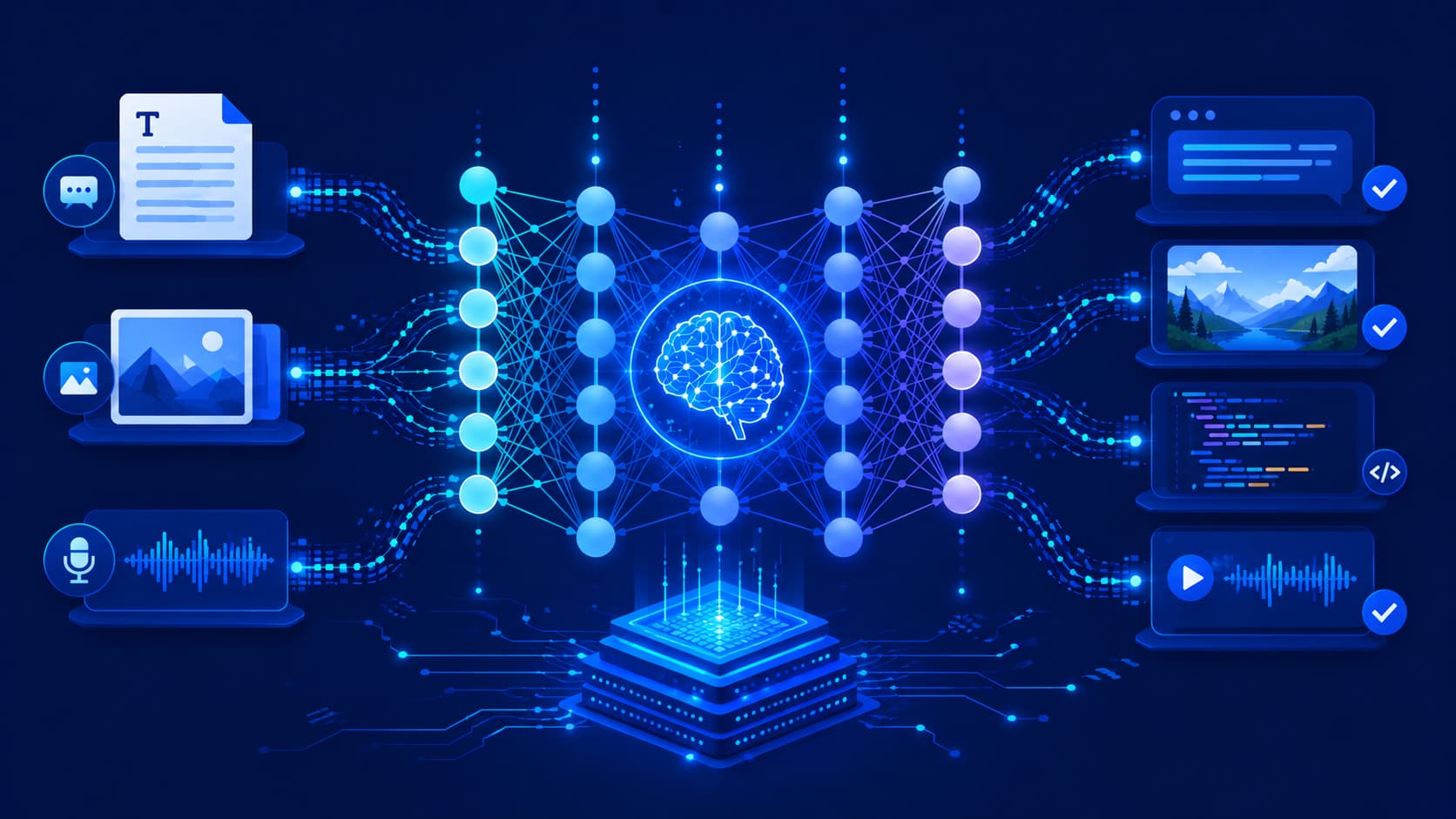
Artificial intelligence can sometimes feel mysterious.
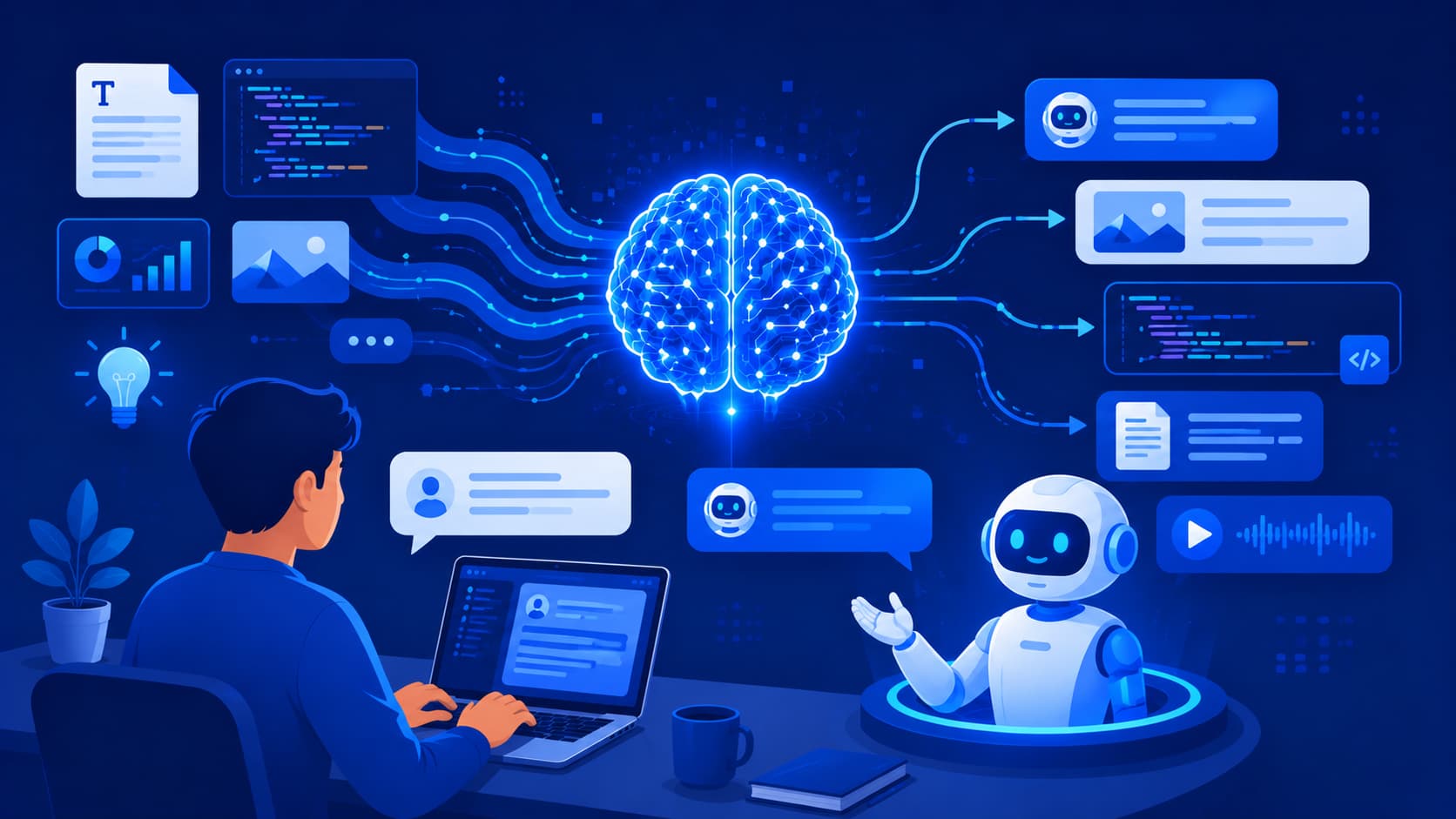
You ask a chatbot a question, upload a photo for analysis, or speak to a virtual assistant, and within seconds you receive a surprisingly accurate response.
Behind many of these everyday AI experiences is a technology that's frequently mentioned but rarely explained in beginner-friendly language:
The neural network.
If you've already learned about machine learning and deep learning, you've probably encountered this term several times.
That's because neural networks are at the core of many modern AI systems. They help computers recognize faces, understand speech, translate languages, generate images, and power natural conversations.
Although the underlying mathematics can become highly sophisticated, the fundamental concept is much easier to understand than many people expect.
You don't need advanced programming skills or a computer science degree to grasp what a neural network does.
Once you understand the basic idea, many other AI technologies—such as deep learning, Large Language Models (LLMs), and Generative AI—become much easier to understand.
What Is a Neural Network?
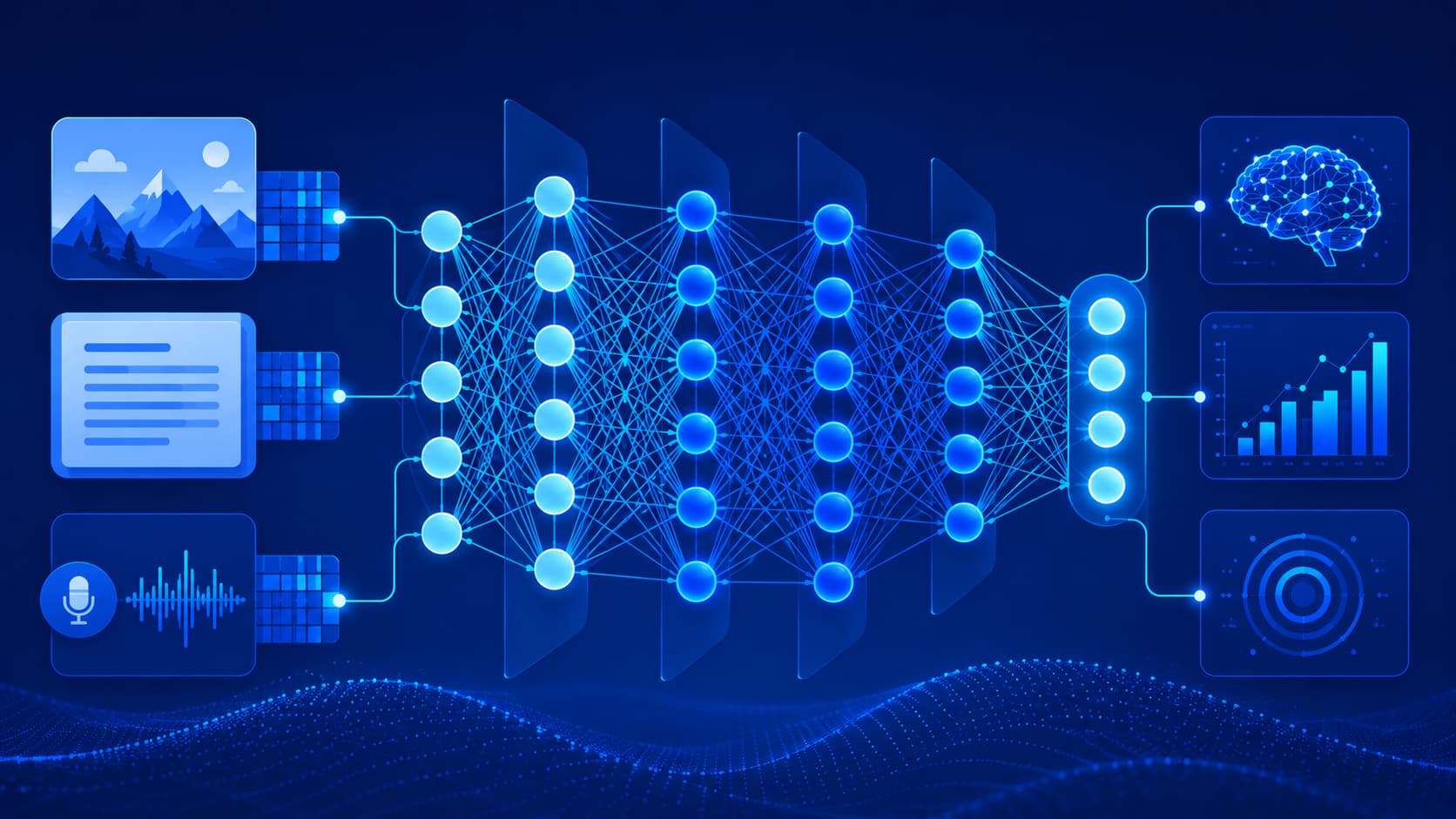
A neural network is a computer model designed to recognize patterns by processing information through multiple connected layers. Instead of solving a problem with one large calculation, it breaks the task into many smaller calculations that work together to produce a final prediction.
The concept was inspired by the way neurons communicate inside the human brain, although the similarity is much simpler than the name suggests.
Artificial neural networks don't attempt to recreate the human brain.
Instead, they borrow one important principle:
Many simple processing units working together can solve remarkably complex problems.
Learning Through Layers
Unlike traditional software that follows fixed rules, a neural network gradually extracts useful information as data moves through several layers.
Each layer performs a small part of the overall task.
As information flows through the network, earlier layers detect simple patterns, while later layers combine those patterns into increasingly meaningful information.
This layered learning process enables neural networks to solve problems that would be extremely difficult to describe using traditional programming.
Why Neural Networks Are Different
Traditional software depends on instructions written by programmers.
If every rule can be clearly described, the software performs exactly as expected.
However, many real-world problems don't work that way.
Recognizing a face, understanding spoken language, or identifying objects in a photograph involves countless small variations that are almost impossible to describe with manually written rules.
Neural networks approach these challenges differently.
Instead of memorizing rules, they learn patterns directly from examples.
Editorial Insight
One of the biggest reasons neural networks transformed artificial intelligence is that they shifted the focus from programming every rule to learning from data. This change allowed computers to solve problems that had previously been considered too complex for traditional software.
Why Were Neural Networks Created?
For many years, computers excelled at following precise instructions.
If developers could clearly define every possible rule, computers produced consistent and predictable results.
The challenge appeared when programmers encountered problems that couldn't easily be described with fixed instructions.
A Handwriting Example
Imagine trying to teach a computer to recognize handwritten letters.
No two people write exactly the same way.
Some write quickly.
Others write neatly.
Some letters are large, while others are small.
Some people even have handwriting that's difficult for other humans to read.
Trying to write rules that describe every possible variation would be nearly impossible.
Instead of attempting to define every rule manually, researchers introduced neural networks.
Rather than programming every variation, developers train the network using thousands—or even millions—of examples.
Over time, the model begins identifying common patterns on its own.
Learning From Experience
This learning process is similar to how people improve through practice.
A child doesn't learn to recognize every handwritten letter by memorizing a long list of rules.
Instead, they see many examples until recognizing the letters becomes natural.
Neural networks follow a similar principle.
The more high-quality examples they analyze during training, the better they generally become at recognizing similar patterns in the future.
Best Practice
When trying to understand neural networks, don't think of them as machines that memorize answers.
Instead, think of them as systems that gradually become better at recognizing patterns through repeated exposure to examples.
The Basic Structure of a Neural Network
Although modern neural networks can contain billions of parameters, most of them follow the same basic structure.
A neural network is typically organized into three main components:
- The Input Layer
- One or more Hidden Layers
- The Output Layer
Each component plays a different role in processing information.
Input Layer
Everything begins with the input layer.
This is where the network receives raw information.
Depending on the task, that input could be:
- A photograph.
- A sentence.
- A voice recording.
- Numerical data.
- Sensor readings.
At this stage, the neural network doesn't yet understand what the information represents.
It simply accepts the data so the learning process can begin.
Hidden Layers
Once the data enters the network, it passes through one or more hidden layers.
These layers perform most of the learning.
Each hidden layer processes the information slightly differently, gradually identifying increasingly complex patterns.
For example:
- Early layers may detect simple edges and shapes.
- Middle layers combine those features into meaningful objects.
- Later layers recognize complete concepts or relationships.
This gradual progression is one of the defining characteristics of neural networks.
Output Layer
After passing through all the hidden layers, the processed information reaches the output layer.
This final layer produces the network's prediction or decision.
Depending on the application, the output might be:
- Identifying a person's face.
- Translating a sentence.
- Predicting the next word.
- Detecting spam.
- Recommending a product.
- Classifying an image.
Everything the neural network learns ultimately contributes to producing this final result.
How Does a Neural Network Learn?
One of the biggest differences between traditional software and a neural network is the way they improve over time.
Traditional software follows rules written by programmers.
A neural network, on the other hand, improves through a process called training. Instead of being programmed with every possible answer, it gradually learns by analyzing large numbers of examples and refining its predictions.
Learning From Mistakes
During training, the neural network receives an example along with the correct answer.
It makes a prediction.
That prediction is then compared with the expected result.
If the prediction is incorrect, the network adjusts its internal parameters slightly before processing another example.
This cycle repeats again and again—sometimes billions of times.
With every small adjustment, the model gradually reduces its errors and becomes more accurate.
Although each improvement may be tiny, millions of these adjustments eventually produce a highly capable AI system.
Why Repetition Matters
Learning doesn't happen after analyzing just a few examples.
The strength of a neural network comes from repeated exposure to high-quality data.
As the model processes more relevant examples, it becomes increasingly skilled at recognizing similar patterns in new information.
For example:
- A handwriting recognition system improves after analyzing millions of handwritten characters.
- An image recognition model becomes more accurate after studying countless labeled photographs.
- A speech recognition system learns different accents by processing large collections of voice recordings.
This ability to improve through experience is one of the defining characteristics of neural networks.
Editorial Insight
Neural networks don't become intelligent overnight. Their impressive performance is the result of countless small improvements accumulated during training. Every adjustment helps the model make slightly better predictions than before.
Where Are Neural Networks Used?
Although most people never interact directly with a neural network, these models operate behind the scenes in many digital services we use every day. They have become one of the most important building blocks of modern artificial intelligence.
Facial Recognition
One of the most familiar examples is facial recognition.
When you unlock your smartphone using your face, a neural network analyzes many facial characteristics simultaneously instead of relying on a single feature such as eye color or nose shape.
By evaluating numerous patterns together, the system can determine whether the face belongs to an authorized user with impressive accuracy.
Image Recognition
Photo management applications also rely heavily on neural networks.
These systems can automatically recognize:
- People.
- Pets.
- Landscapes.
- Food.
- Buildings.
- Thousands of other objects.
Rather than following manually programmed rules, the network learns what different objects look like by studying millions of training images.
Voice Assistants
Modern voice assistants have become much more capable thanks to neural networks.
AI-powered assistants convert spoken language into text while also interpreting what users are trying to say.
Compared with earlier speech recognition systems, today's neural networks handle:
- Different accents.
- Faster speech.
- Natural conversations.
- More varied sentence structures.
This makes voice interactions feel smoother and more reliable.
Language Translation
Online translation services have also improved significantly because of neural networks.
Instead of translating individual words one at a time, modern systems analyze the meaning of an entire sentence before generating a translation.
This context-aware approach produces translations that sound much more natural than earlier word-by-word methods.
Healthcare
Healthcare is another area benefiting from neural network technology.
Hospitals and research organizations increasingly use AI-assisted systems to:
- Analyze medical images.
- Detect possible diseases.
- Support medical research.
These systems are designed to assist healthcare professionals by providing additional insights.
They do not replace doctors, but instead help improve efficiency and support more informed clinical decisions.
Best Practice
Whenever you encounter an AI application that can recognize images, understand speech, or interpret language, there's a good chance a neural network is one of the core technologies working behind the scenes.
Why Are Neural Networks So Effective?
The greatest strength of neural networks is their ability to discover patterns that would be extremely difficult—or even impossible—for humans to describe manually.
Recognizing Patterns Instead of Memorizing Rules
Imagine trying to explain every possible way someone might handwrite the number 8.
Some people draw it tall.
Others make it short and wide.
Some write carefully, while others write very quickly.
Creating programming rules for every possible variation would be an enormous challenge.
A neural network solves this problem differently.
Instead of memorizing thousands of handwritten examples, it studies them until it naturally begins recognizing the common patterns shared across different writing styles.
The Same Principle Applies Everywhere
Pattern recognition isn't limited to handwriting.
The same learning process enables neural networks to work with:
- Human speech.
- Digital images.
- Videos.
- Natural language.
- Countless other forms of complex data.
As the network processes more relevant training examples, it generally becomes better at identifying similar patterns in previously unseen data.
Editorial Insight
The real power of neural networks comes from their flexibility. Instead of requiring developers to predict every possible situation, the model learns directly from experience, making it far more adaptable to the complexity of real-world information.
Do Neural Networks Think Like Humans?
This is one of the most common misconceptions about artificial intelligence.
The short answer is:
No.
Although neural networks were inspired by biological neurons, they do not think, feel, or understand the world the way humans do.
They do not possess:
- Emotions.
- Consciousness.
- Personal opinions.
- Life experiences.
Instead, they perform mathematical calculations based on patterns learned during training.
Why AI Can Still Seem Intelligent
The results produced by neural networks can appear remarkably human-like.
They can:
- Hold conversations.
- Recognize faces.
- Generate realistic images.
- Translate languages.
- Answer complex questions.
However, these capabilities arise from sophisticated pattern recognition—not from human-style understanding.
Recognizing this distinction helps set realistic expectations for what modern AI can and cannot do.
The Challenges of Neural Networks
Neural networks have transformed modern artificial intelligence, but they are not perfect.
Like every technology, they have limitations that researchers and developers must consider when deciding whether a neural network is the right solution for a particular problem.
Understanding these challenges is just as important as understanding their strengths.
They Need Large Amounts of Data
One of the biggest requirements of neural networks is access to large, high-quality datasets.
The more relevant examples a model can learn from, the more accurate it generally becomes.
However, if the available data is:
- Too small.
- Poorly organized.
- Incomplete.
- Unbalanced.
the model's performance may decline significantly.
For this reason, collecting and preparing quality training data is often one of the most time-consuming stages of an AI project.
Training Can Be Expensive
Modern neural networks also require substantial computing resources.
Training advanced models often depends on:
- Powerful GPUs.
- High-performance servers.
- Large amounts of memory.
- Significant electrical power.
Some of today's largest AI models take days or even weeks to train using specialized hardware.
This makes developing state-of-the-art AI systems both time-consuming and expensive.
They Can Be Difficult to Explain
Another important challenge is explainability.
A neural network may produce an accurate prediction, but understanding why it reached that conclusion is often much more difficult.
This issue becomes especially important in industries where transparency matters, including:
- Healthcare.
- Finance.
- Legal services.
- Scientific research.
In these fields, professionals often need more than an accurate prediction—they also need to understand the reasoning behind it.
Researchers continue developing techniques that make neural networks more interpretable while maintaining their impressive performance.
Best Practice
Neural networks are powerful tools, but they are not the answer to every AI problem. Choosing the right technology always depends on factors such as available data, computing resources, project goals, and the need for explainable results.
Neural Networks and Deep Learning
The terms neural network and deep learning are closely connected, but they do not mean exactly the same thing.
Understanding their relationship helps clarify many discussions about modern artificial intelligence.
A Neural Network Is the Foundation
A neural network is the underlying computational model.
It consists of interconnected layers that process information and learn patterns from data.
Neural networks can vary in size and complexity depending on the task they are designed to solve.
Deep Learning Builds on Neural Networks
Deep learning refers to using neural networks that contain many layers.
As these networks become larger and more sophisticated, they gain the ability to recognize increasingly complex relationships within data.
This is why deep learning has become the driving force behind many recent AI breakthroughs.
Modern applications powered by deep learning include:
- Large Language Models (LLMs).
- AI image generators.
- Speech recognition systems.
- Machine translation.
- Autonomous vehicles.
Each of these technologies relies on advanced neural network architectures capable of learning highly complex patterns.
Understanding the Relationship
A simple way to remember the difference is:
- A neural network is the learning model.
- Deep learning is the practice of using very large neural networks with many layers.
In other words:
Every deep learning system uses neural networks, but the term deep learning emphasizes the depth and complexity of those networks.
Editorial Insight
Many beginners assume neural networks and deep learning are competing technologies. In reality, they complement each other. Neural networks provide the foundation, while deep learning represents the use of increasingly deeper neural networks to tackle more sophisticated AI challenges.
Frequently Asked Questions
Is a Neural Network the Same as Artificial Intelligence?
No.
A neural network is one technology used within artificial intelligence.
While it plays a major role in deep learning, it represents only one component of the much broader AI field.
Why Are They Called "Neural" Networks?
The name comes from their loose inspiration from biological neurons in the human brain.
However, artificial neural networks are mathematical models rather than digital replicas of real human brains.
Are Neural Networks Used Only in ChatGPT?
No.
Neural networks are widely used across many AI applications, including:
- Image recognition.
- Speech recognition.
- Recommendation systems.
- Language translation.
- Fraud detection.
- Medical research.
Can a Neural Network Learn on Its Own?
A neural network learns during training by analyzing data and adjusting its internal parameters.
However, it does not independently choose what to learn or create its own goals without guidance from developers.
Why Are Neural Networks Important?
Neural networks enable AI systems to recognize patterns, understand language, analyze images, and solve problems that traditional programming struggles to handle.
Conclusion
Neural networks have become one of the most important foundations of modern artificial intelligence.
Although the mathematics behind them can be highly sophisticated, the central idea is surprisingly approachable.
Rather than following thousands of manually written rules, neural networks learn from examples, gradually improving their ability to recognize patterns and make predictions.
This learning process powers many AI technologies we use every day, from facial recognition and language translation to voice assistants and generative AI.
As artificial intelligence continues to advance, neural networks will remain at the heart of future innovations.
Understanding how they work not only helps explain today's AI systems but also provides a strong foundation for learning more advanced topics such as deep learning, transformers, and Large Language Models.
Final Takeaway
Neural networks are the engines that allow modern AI to learn from experience rather than simply follow predefined instructions.
By recognizing patterns across enormous amounts of data, they have enabled computers to perform tasks that once seemed uniquely human.
Whether you're exploring AI as a student, developer, or simply a curious reader, understanding neural networks is one of the most valuable steps toward understanding how today's intelligent systems truly work.