Not long ago, creating something from scratch almost always required significant human effort.
Writing an article meant composing every sentence yourself. Designing an illustration required opening professional design software or hiring an artist. Developing software involved spending hours—or sometimes days—writing code line by line.
Today, that creative process looks dramatically different.
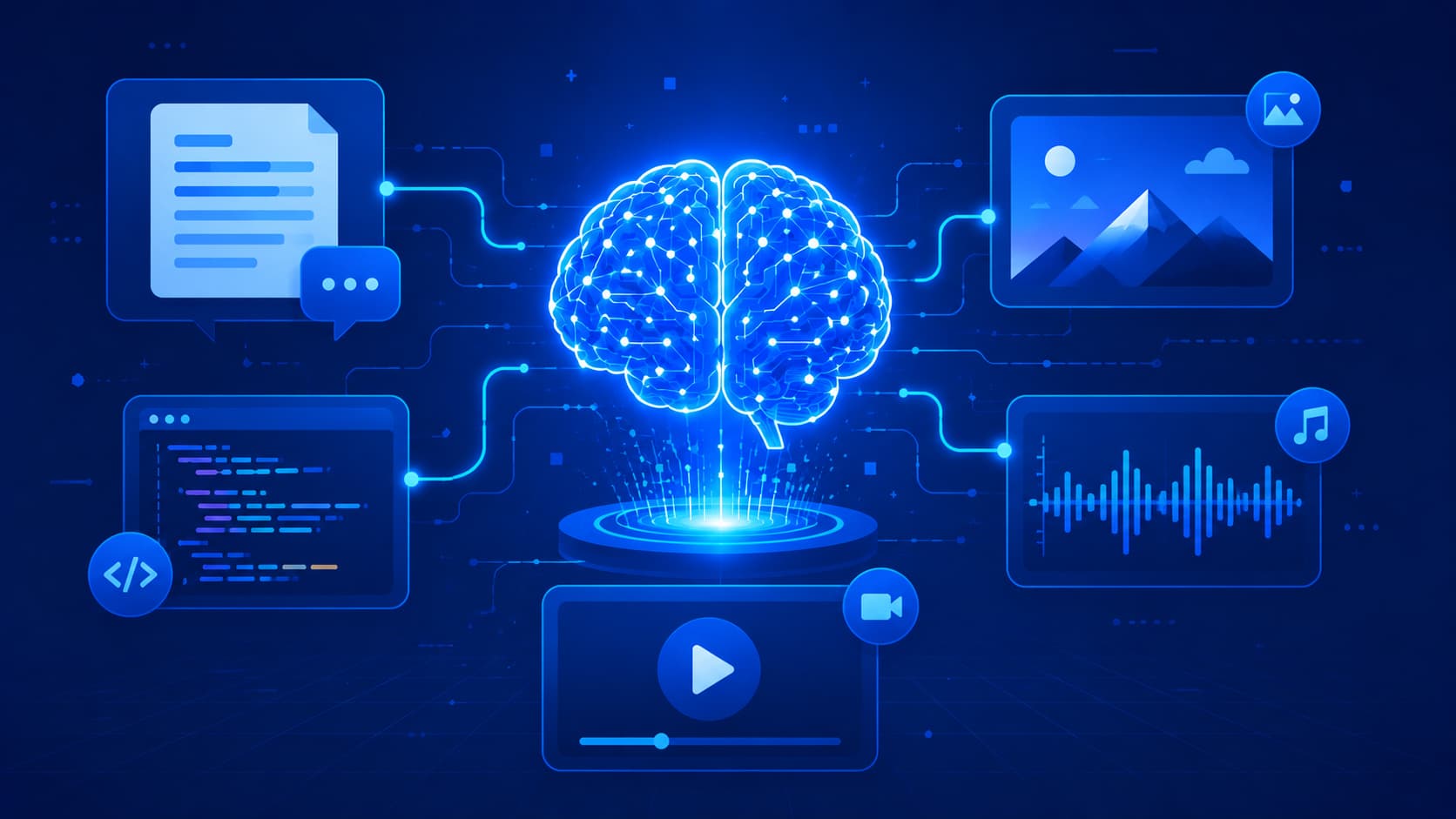
A single prompt can generate a draft article, an illustration, a piece of music, presentation slides, or even functional code within seconds. This transformation has introduced millions of people to one of the fastest-growing areas of artificial intelligence: Generative AI.
Although Generative AI has become incredibly popular through tools such as ChatGPT, Claude, Google Gemini, and Microsoft Copilot, it's also one of the most misunderstood areas of AI. Some people believe it's simply another name for artificial intelligence, while others assume it's replacing human creativity altogether.
The reality is more nuanced.
Generative AI is one specialized branch of artificial intelligence designed to create new content rather than simply analyze existing information. Understanding how it works—and where its strengths and limitations lie—can help you use these tools more effectively while avoiding many common misconceptions.
What Is Generative AI?
Generative AI is a type of artificial intelligence capable of creating original content based on the instructions, or prompts, it receives.
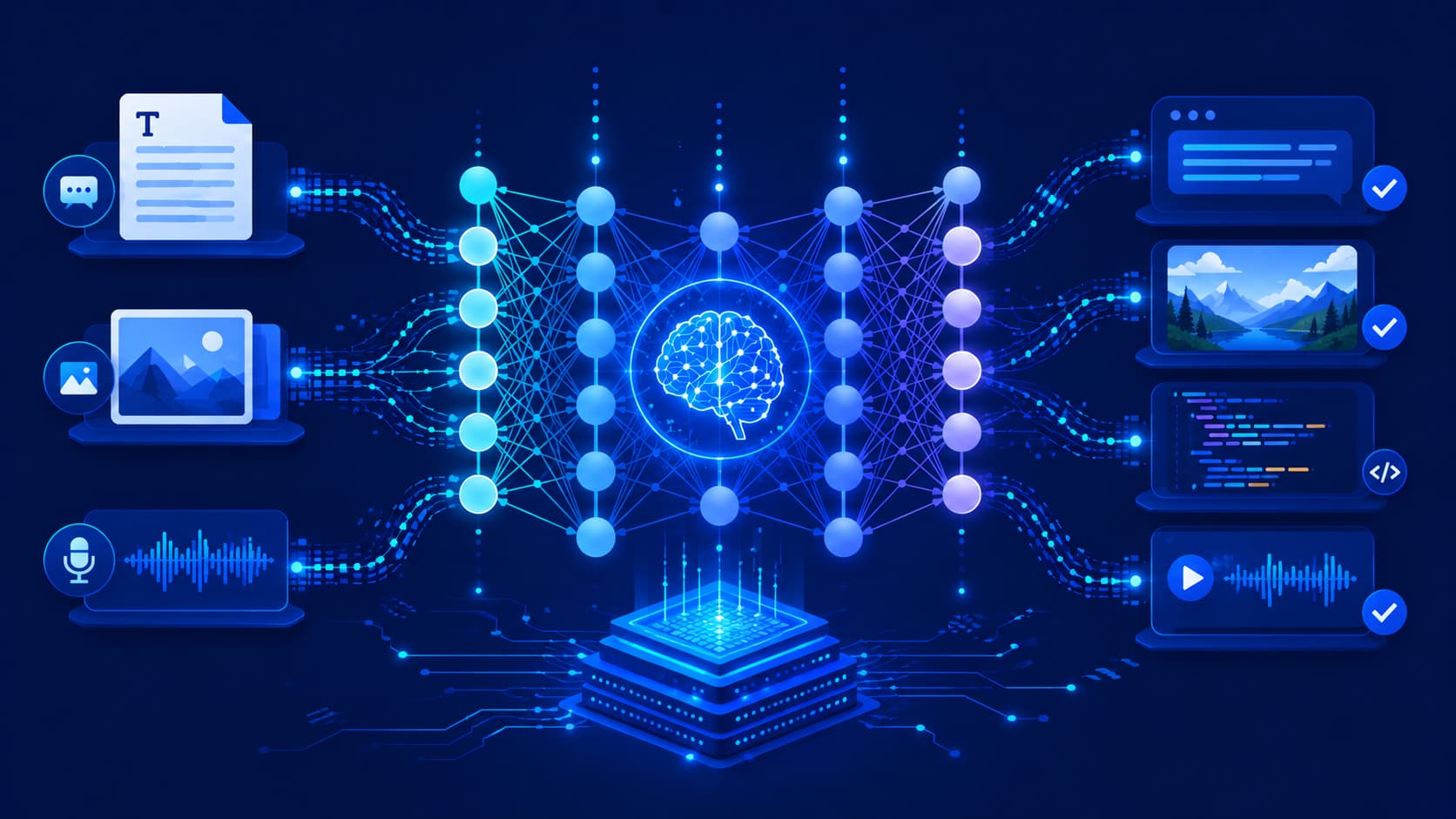
Depending on the model and its capabilities, that content may include:
- Articles and blog posts
- Emails
- Images and illustrations
- Videos
- Computer code
- Music
- Presentations
- Audio
- Product descriptions
- Marketing copy
Unlike traditional AI systems that primarily analyze, classify, or predict information, Generative AI creates something entirely new.
Generation Instead of Classification
To understand the difference, imagine a spam filter.
A traditional AI-powered spam filter examines incoming emails and decides whether each message belongs in your inbox or your spam folder.
Its task is classification.
Now imagine asking an AI assistant to:
- Write a thank-you email.
- Create a marketing slogan.
- Design a logo concept.
- Draft a social media campaign.
Instead of organizing existing information, the AI produces entirely new content in response to your request. That's the defining characteristic of Generative AI.
Why This Matters
This distinction is important because it changes how people interact with AI.
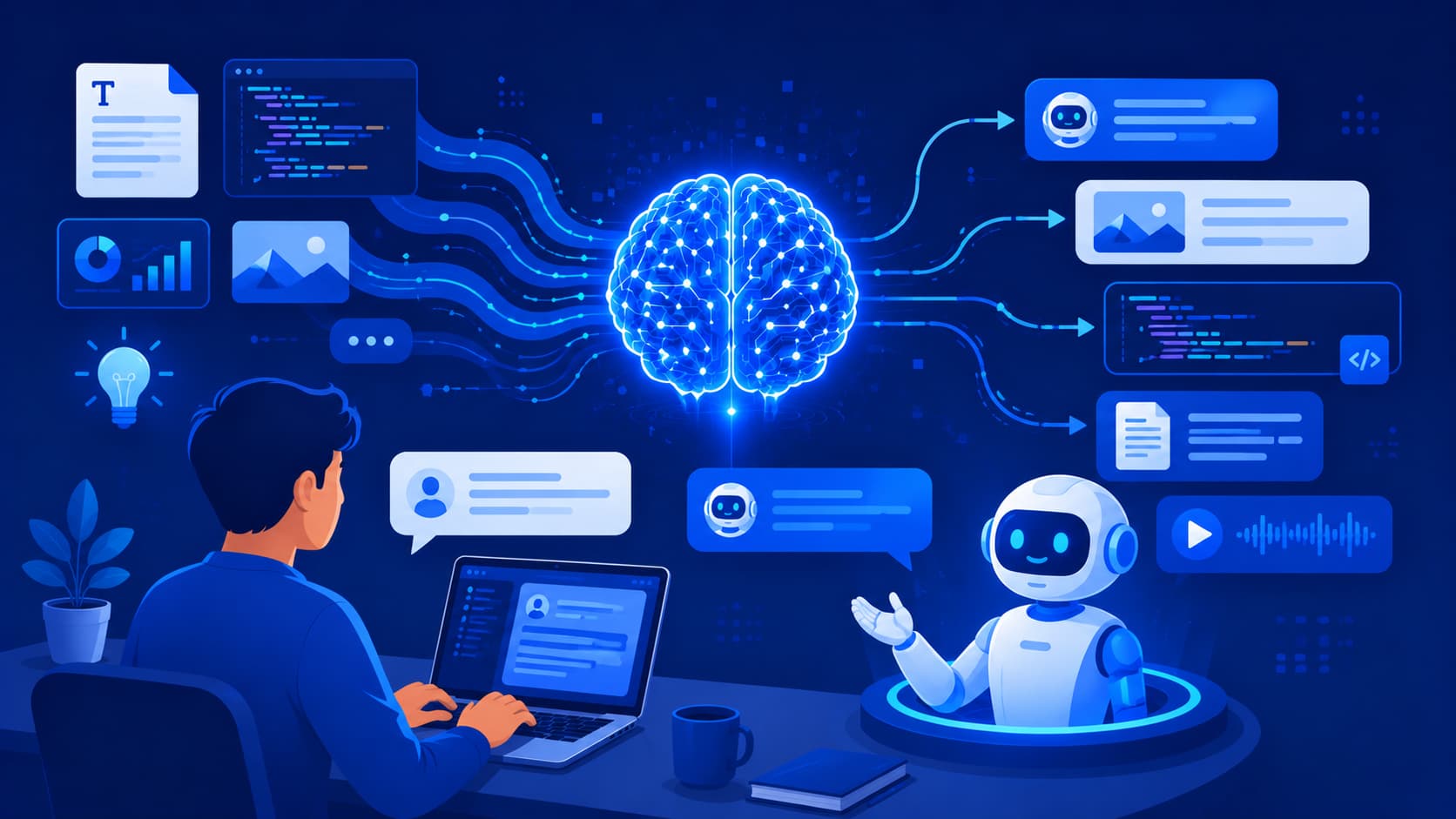
Instead of asking software to simply analyze information, users collaborate with AI to brainstorm ideas, create first drafts, solve creative problems, and accelerate repetitive tasks.
The result is a much more interactive relationship between humans and technology.
Editorial Insight
Generative AI shouldn't be viewed as a replacement for creativity. Instead, it's better understood as a creative accelerator that helps transform ideas into usable drafts much faster than traditional workflows.
Why Has Generative AI Become So Popular?
The popularity of Generative AI can largely be explained by one simple advantage:
It dramatically reduces the time required to transform an idea into a usable first draft.
Tasks that once required hours of work can often begin within seconds.
Helping Different Types of Professionals
Generative AI offers value across many professions.
For example:
- Writers can overcome writer's block.
- Designers can rapidly explore multiple creative concepts.
- Developers can generate repetitive boilerplate code.
- Students can receive explanations that are easier to understand.
- Businesses can produce marketing materials more efficiently.
Rather than eliminating creative work, Generative AI changes where people spend most of their time.
Instead of starting with an intimidating blank page, they begin with a draft that can be reviewed, refined, expanded, and personalized.
Improving Productivity Without Removing Human Input
One reason organizations are adopting Generative AI is that it handles repetitive work exceptionally well.
Routine drafting tasks that previously consumed valuable time can often be completed quickly, allowing professionals to concentrate on higher-value activities such as:
- Strategic planning.
- Critical thinking.
- Creative refinement.
- Decision-making.
- Quality assurance.
In many industries, this shift improves productivity while still keeping humans responsible for the final outcome.
Best Practice
Treat AI-generated content as a starting point rather than a finished product.
The highest-quality results typically come from combining AI's speed with human expertise, editing, and subject-matter knowledge.
How Does Generative AI Work?
At first glance, Generative AI can almost feel like magic.
You type a question.
Within seconds, a detailed explanation appears.
Describe an image, and moments later the image exists.
Ask for computer code, and the AI generates a functional starting point almost instantly.
Behind the scenes, however, the process isn't based on imagination or human-like thinking.
It's based on recognizing and predicting patterns.
Learning From Massive Amounts of Data
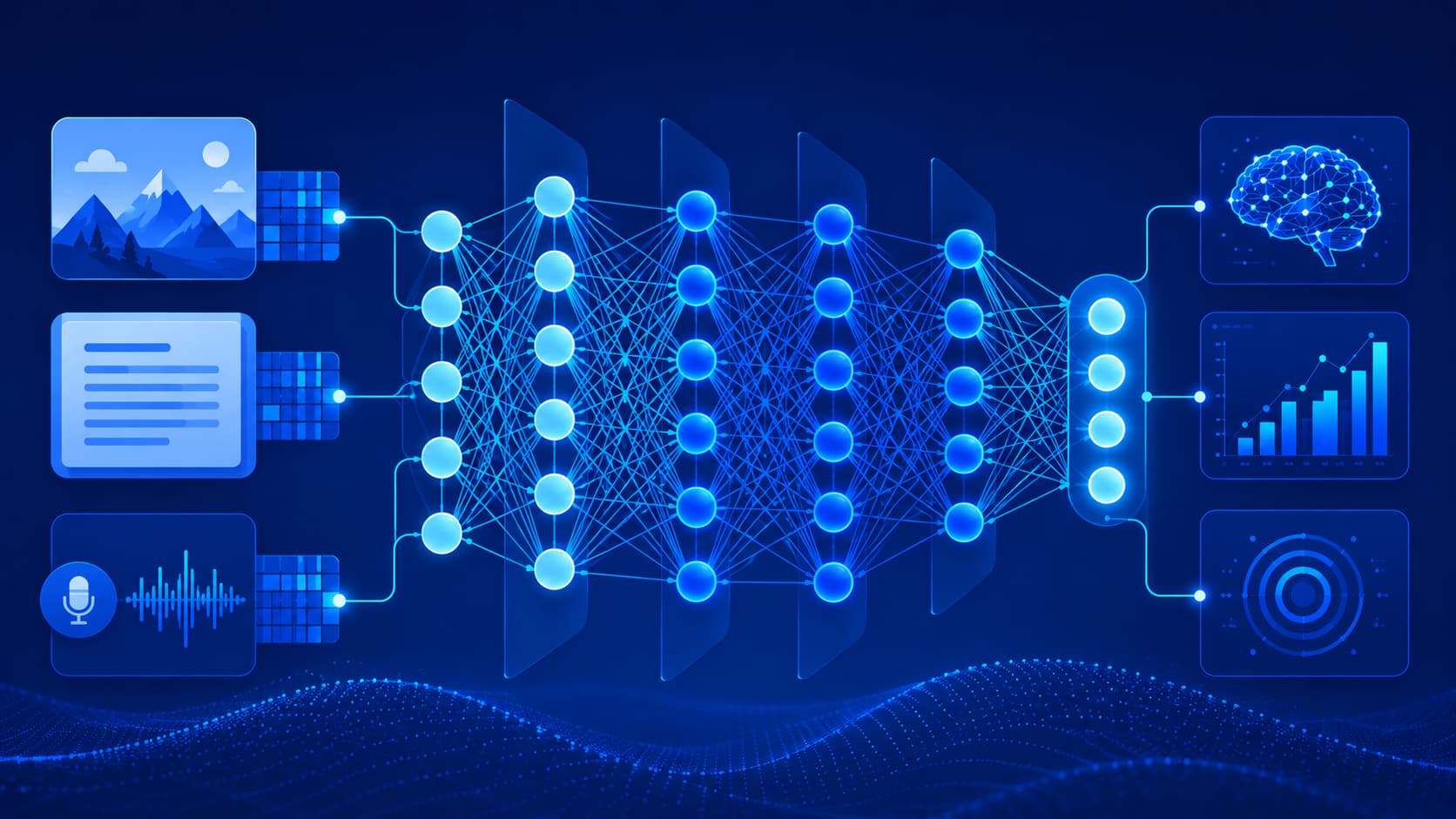
Generative AI models are trained using enormous collections of text, images, audio, code, and other forms of digital information.
During training, the model learns relationships between:
- Words.
- Sentences.
- Visual elements.
- Sounds.
- Programming patterns.
- Countless other forms of data.
Rather than memorizing complete documents, the model learns statistical patterns that allow it to generate new combinations when responding to user prompts.
Why Responses Can Be Different
When you enter a prompt, the AI predicts what content is most likely to come next based on everything it learned during training.
Because this process involves probability rather than retrieving a single stored answer, two people asking nearly identical questions can still receive noticeably different responses.
This flexibility is one of the reasons Generative AI feels conversational and adaptable across a wide range of tasks.
Editorial Insight
Understanding that Generative AI predicts patterns—not facts—is one of the most important concepts for new users. It explains both the technology's impressive creativity and the reason its outputs should still be reviewed for accuracy.
Is Generative AI Actually Creative?
One of the most interesting debates surrounding modern artificial intelligence is whether Generative AI can truly be considered creative.
The answer depends largely on how you define creativity.
Generative AI can certainly produce content that appears highly creative. It can write stories, generate artwork, compose music, design logos, and even produce software code that solves complex problems.
However, the process behind those creations differs significantly from how humans create.
Human Creativity vs. AI Generation
People create by combining many influences, including:
- Personal experiences.
- Emotions.
- Cultural background.
- Imagination.
- Intuition.
- Life lessons.
Generative AI, by contrast, creates output by identifying patterns learned from enormous amounts of training data. It predicts what content is most likely to satisfy a user's request based on statistical relationships rather than personal understanding.
This distinction explains why AI-generated work can be impressive while still lacking the lived experiences and emotional perspective that often shape human creativity.
AI as a Creative Partner
Because of these differences, many professionals don't see Generative AI as a replacement for creativity.
Instead, they treat it as a collaborative tool that accelerates the creative process.
For example:
- Writers use AI to overcome writer's block.
- Designers generate multiple concept variations before refining a final design.
- Developers quickly prototype ideas before improving the code manually.
In each case, AI speeds up the early stages of creation while humans remain responsible for judgment, originality, and final decision-making.
Editorial Insight
The value of Generative AI isn't that it thinks like a human. Its value lies in how quickly it can generate possibilities. Human creativity is still essential for selecting the best ideas, adding context, and transforming a good draft into exceptional work.
Where Is Generative AI Used Today?
One reason Generative AI has attracted so much attention is its versatility.
Rather than serving a single industry, it has become useful across a wide range of professions, helping people automate repetitive tasks while supporting creative and analytical work.
Writing and Content Creation
Writers and content creators use Generative AI to:
- Brainstorm article ideas.
- Create outlines.
- Rewrite paragraphs.
- Summarize lengthy documents.
- Generate first drafts.
- Overcome writer's block.
Instead of replacing the writing process, AI often makes it easier to begin. Many professionals still rely on human editing to refine tone, improve accuracy, and ensure originality before publishing.
Software Development
Developers increasingly use Generative AI as a programming assistant.
Common tasks include:
- Explaining unfamiliar code.
- Generating repetitive functions.
- Suggesting code improvements.
- Identifying potential bugs.
- Creating documentation.
Although AI can significantly improve productivity, programming knowledge remains essential for evaluating, testing, and maintaining reliable software.
Design and Creative Work
Generative AI has also become an important tool for designers.
Rather than starting every project from scratch, designers can rapidly generate:
- Concept art.
- Mood boards.
- Layout ideas.
- Visual compositions.
- Early design prototypes.
These AI-generated concepts often serve as inspiration before designers begin detailed refinement using professional creative tools.
Education
Students and educators are discovering many practical educational applications for Generative AI.
For example, AI can help:
- Simplify difficult concepts.
- Generate study guides.
- Create quizzes.
- Practice foreign languages.
- Produce learning summaries.
When used responsibly, these capabilities support learning rather than replacing it.
Business Operations
Businesses increasingly integrate Generative AI into everyday workflows.
Common applications include:
- Drafting emails.
- Preparing reports.
- Creating product descriptions.
- Developing marketing campaigns.
- Assisting customer support teams.
Automating repetitive writing tasks allows employees to spend more time on strategic planning, customer relationships, and business decision-making.
Best Practice
The most successful organizations use Generative AI to automate routine work—not to eliminate human expertise.
AI excels at creating fast first drafts, while people remain responsible for reviewing facts, ensuring quality, and making final decisions.
Popular Generative AI Tools
New AI applications appear almost every week, but several platforms have become especially well known because of their broad capabilities and widespread adoption.
ChatGPT
ChatGPT is one of the world's most recognized AI assistants.
People use it to:
- Write articles.
- Explain complex concepts.
- Brainstorm ideas.
- Summarize information.
- Assist with programming.
- Improve written communication.
Its conversational interface has made Generative AI accessible to millions of users.
Claude
Claude is widely recognized for producing thoughtful, well-structured responses and handling lengthy documents effectively.
Many professionals rely on it for:
- Research.
- Long-form writing.
- Document analysis.
- Content editing.
Google Gemini
Google Gemini integrates with many Google products, helping users search, write, analyze information, and complete everyday productivity tasks within Google's ecosystem.
Microsoft Copilot
Microsoft Copilot is built into Microsoft's productivity tools, assisting users with documents, spreadsheets, presentations, coding, and business workflows.
Choosing the Right Tool
Although these AI assistants share many similarities, each has its own strengths, workflows, and areas of specialization. The best choice often depends on your specific goals, preferred ecosystem, and the type of work you perform most frequently.
The Benefits of Generative AI
Generative AI offers far more than simple convenience.
When used thoughtfully, it can significantly improve the way people work, learn, and create by reducing repetitive tasks and helping users move from an idea to a workable draft much more quickly.
Rather than replacing human expertise, its greatest strength lies in accelerating the early stages of the creative and problem-solving process.
Faster Idea Generation
One of the biggest challenges in any creative project is getting started.
Whether you're writing an article, designing a presentation, or planning a marketing campaign, facing a blank page can slow progress.
Generative AI helps overcome this obstacle by quickly transforming rough ideas into outlines, drafts, or multiple creative directions.
This allows users to spend less time searching for inspiration and more time refining their best ideas.
Increased Productivity
Many routine tasks involve repetitive writing or organizing information.
Generative AI can help accelerate work such as:
- Writing summaries.
- Organizing notes.
- Creating first drafts.
- Producing repetitive documentation.
- Preparing structured content.
By completing these repetitive tasks more quickly, professionals can dedicate more attention to strategy, creativity, and quality improvement.
Easier Access to Information
Technical subjects often contain unfamiliar terminology that can discourage beginners.
Generative AI can explain complicated topics using simpler language, making information more approachable for people who are learning something new.
This ability has made AI an increasingly valuable educational companion for students, professionals, and lifelong learners.
Supporting Human Creativity
Contrary to popular belief, Generative AI often enhances creativity instead of replacing it.
Many creators use AI to explore multiple approaches before deciding which direction best matches their vision.
The technology provides possibilities, while people remain responsible for selecting, improving, and shaping the final result.
Editorial Insight
The biggest productivity gains rarely come from publishing AI-generated content without changes. They come from using AI to remove repetitive work so that more time can be invested in critical thinking, originality, and high-quality decision-making.
The Limitations of Generative AI
Despite its impressive capabilities, Generative AI is far from perfect.
Understanding its limitations is just as important as understanding what it does well. Responsible use requires recognizing where AI can help—and where human oversight remains essential.
It Can Produce Incorrect Information
One of the best-known limitations of Generative AI is that it can generate responses that sound confident but contain factual inaccuracies.
Because of this, important information should always be verified using reliable sources before making decisions or publishing content.
This is especially important for:
- Medical information.
- Financial advice.
- Legal topics.
- Academic research.
- Business decisions.
It Doesn't Truly Understand Context
Although AI responses often appear intelligent, Generative AI does not think or understand the world the way humans do.
Instead, it predicts patterns in language based on its training data.
It has no personal experiences, emotions, or genuine understanding of the situations it describes.
Recognizing this limitation helps users interpret AI responses more critically.
Output Quality Depends on the Prompt
The quality of AI-generated content is heavily influenced by the instructions users provide.
Clear, detailed prompts generally produce much better results than vague requests.
For example, specifying the desired audience, writing style, format, and purpose often leads to more useful responses than asking broad, open-ended questions.
Learning to communicate effectively with AI has therefore become an important skill in its own right.
Human Review Remains Essential
Whether you're generating articles, software code, business reports, or marketing materials, AI-generated content should always be reviewed before publication or distribution.
Human judgment remains the final layer of quality control.
People are still responsible for:
- Fact-checking.
- Editing.
- Ensuring originality.
- Maintaining ethical standards.
- Making final decisions.
Copyright and Ethical Considerations
As Generative AI becomes more widely adopted, conversations about ethics continue to grow.
Important topics include:
- Copyright.
- Transparency.
- Misinformation.
- Responsible AI use.
- Intellectual property.
Using AI responsibly means understanding both its capabilities and its limitations while respecting intellectual property and verifying important factual information.
Best Practice
Treat AI as an assistant—not an authority.
Use it to generate ideas, accelerate repetitive work, and support creativity, but always apply human judgment before trusting or publishing the final result.
Common Misconceptions
As Generative AI becomes more common, several misconceptions continue to shape public discussions.
Understanding these misunderstandings helps people develop more realistic expectations about what the technology can—and cannot—do.
"Generative AI Simply Copies the Internet"
This is one of the most common myths.
Modern Generative AI models do not retrieve complete articles or images from a database every time someone submits a prompt.
Instead, they generate new responses based on patterns learned during training.
Although outputs may resemble familiar writing styles or concepts, the generation process differs from copying existing content verbatim.
"AI Will Replace Every Creative Profession"
Another widespread belief is that AI will eventually eliminate creative careers.
In reality, many professionals have discovered that AI works best as a creative assistant rather than a replacement.
It accelerates repetitive work while leaving originality, strategic thinking, storytelling, and final decision-making in human hands.
"Every AI Tool Is Generative AI"
Not every AI application generates new content.
Many AI systems focus on:
- Prediction.
- Classification.
- Recommendation.
- Automation.
These systems are still examples of artificial intelligence even though they don't create text, images, music, or code.
Recognizing this distinction makes it easier to understand the broader AI landscape.
Frequently Asked Questions
What is Generative AI in simple terms?
Generative AI is a type of artificial intelligence that creates new content—such as text, images, music, videos, or software code—based on the instructions it receives from users. Instead of simply analyzing existing information, it generates original output by recognizing patterns learned during training.
Is ChatGPT a Generative AI tool?
Yes.
ChatGPT is one of the best-known examples of Generative AI because it produces human-like text in response to user prompts. It can assist with writing, brainstorming, explaining concepts, summarizing information, and many other language-based tasks.
Can Generative AI Replace Human Creativity?
Not entirely.
Generative AI can produce ideas, drafts, and creative suggestions remarkably quickly, but it does not replace the qualities that make human creativity unique.
People contribute:
- Personal experience.
- Critical thinking.
- Emotional understanding.
- Original perspectives.
- Cultural awareness.
- Strategic decision-making.
These human qualities remain essential when creating meaningful content, solving complex problems, or making important decisions.
Why Does Generative AI Sometimes Make Mistakes?
Generative AI predicts likely responses based on patterns in its training data rather than verifying every fact before generating an answer.
Because of this, AI can occasionally produce responses that sound convincing while containing incorrect or outdated information. Important facts should always be reviewed and verified using trusted sources.
Is Generative AI Only Useful for Writers?
Not at all.
Although writing assistance is one of its most visible applications, Generative AI is used across many industries, including:
- Software development.
- Education.
- Healthcare.
- Marketing.
- Design.
- Customer support.
- Business operations.
Its flexibility makes it valuable for professionals who need to generate ideas, automate repetitive tasks, organize information, or improve productivity.
Conclusion
Generative AI has fundamentally changed how people create, learn, and solve problems.
Tasks that once required hours of manual effort can now begin with a simple conversation or a well-crafted prompt. This shift has made creative work faster and more accessible across a wide range of industries and professions.
However, faster content generation does not reduce the importance of human expertise.
If anything, it makes human judgment even more valuable.
AI can quickly generate ideas, draft content, and explore multiple possibilities, but people remain responsible for deciding which ideas are accurate, ethical, useful, and worth pursuing.
As Generative AI continues to evolve, learning how to collaborate with it will become an increasingly valuable skill. The goal isn't to compete with AI or rely on it blindly. Instead, success comes from understanding where the technology adds value, where it has limitations, and how human creativity and critical thinking can complement its capabilities.
Final Takeaway
The most effective users of Generative AI aren't those who ask the most questions—they're the ones who know how to evaluate, refine, and improve the answers they receive.
By treating AI as a powerful assistant rather than a complete replacement for human expertise, you can take advantage of its speed while maintaining the quality, originality, and judgment that only people can provide.