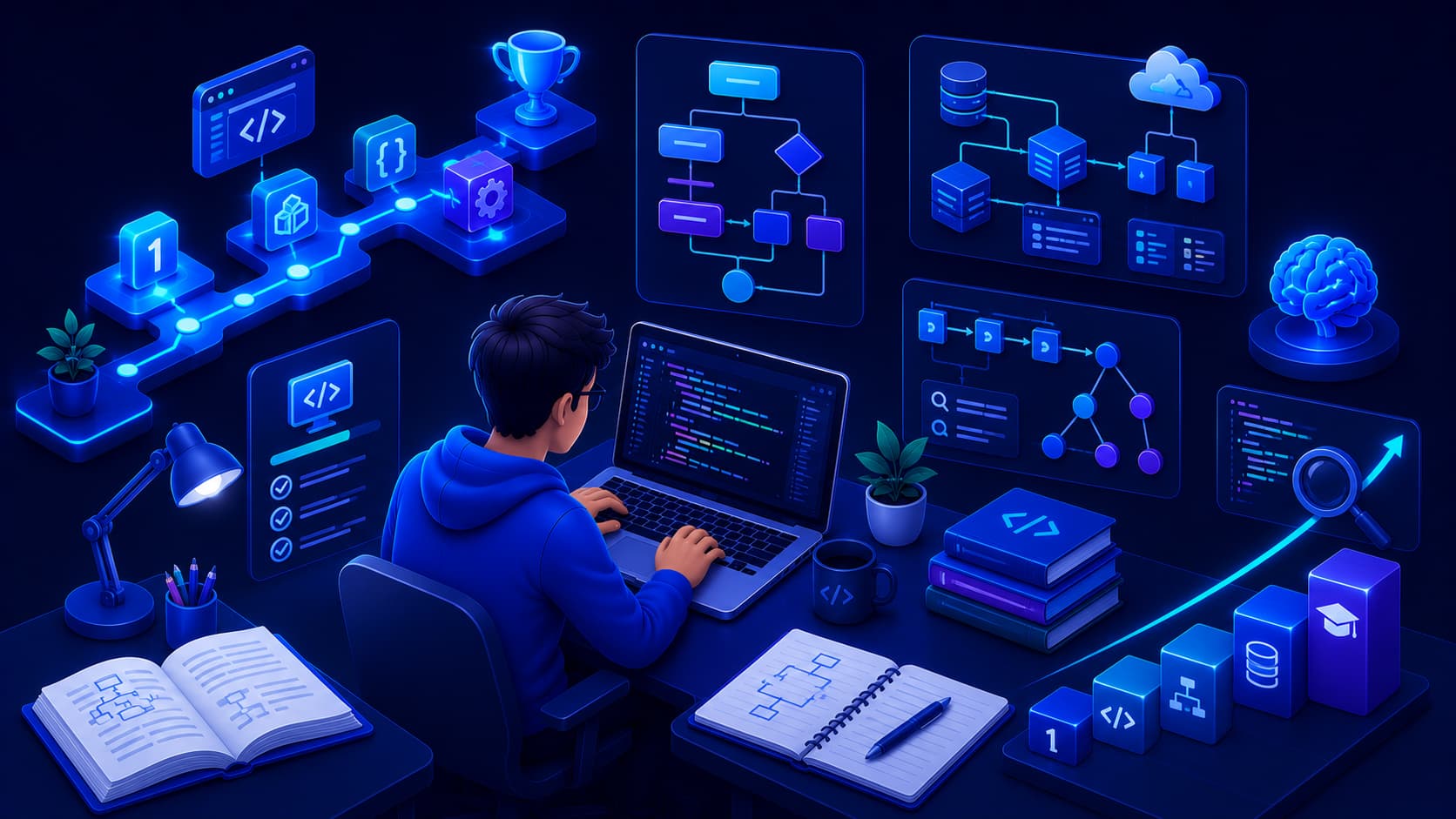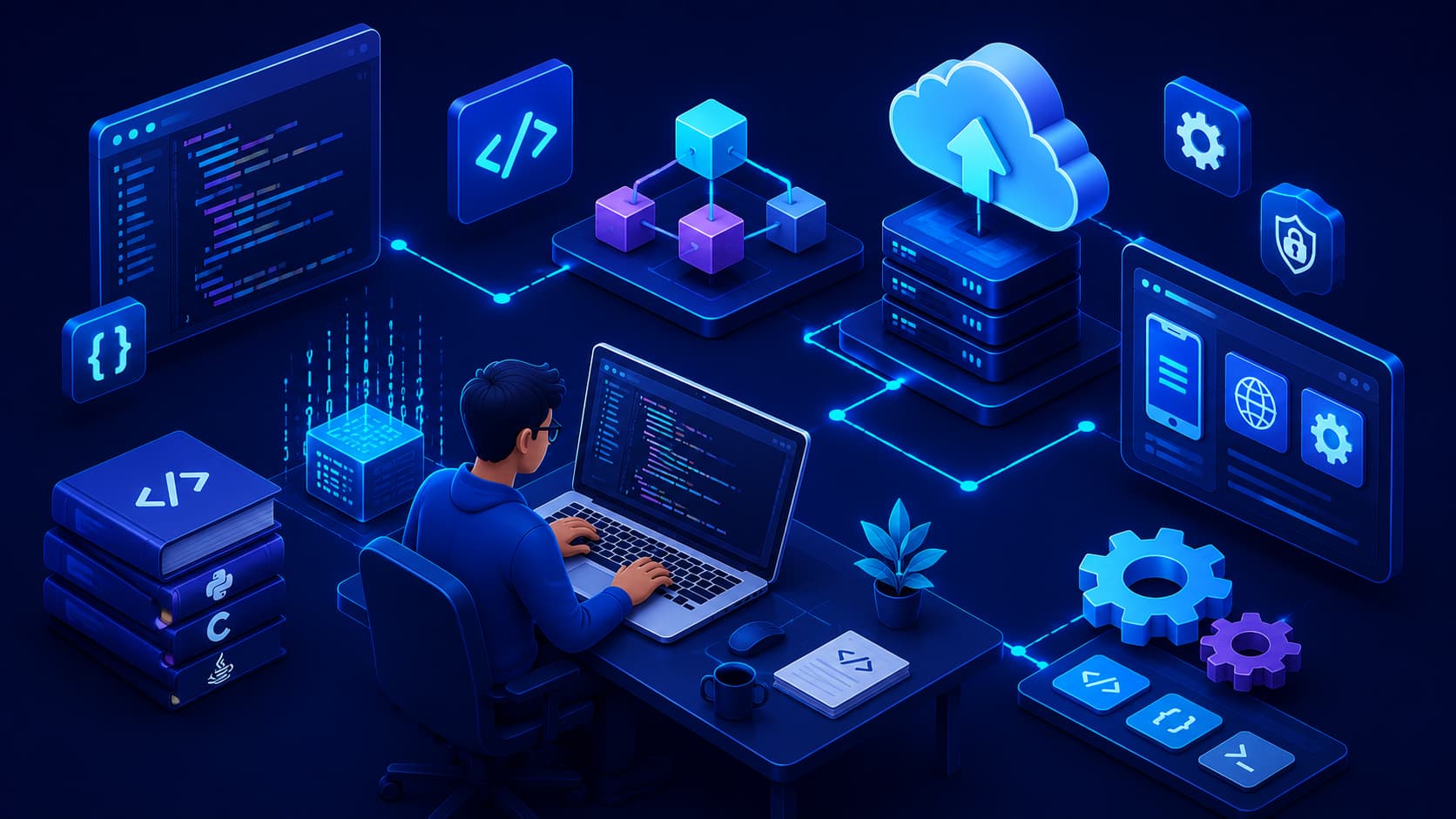
Every app you open, every website you visit, and every game you play has one thing in common—someone wrote code to make it work. Whether you're sending messages through a chat application, streaming movies, shopping online, or interacting with an AI assistant, programming is working behind the scenes to transform ideas into software that people use every day.
Despite its importance, programming is often misunderstood. Many people picture programmers typing endless lines of mysterious code across multiple monitors. While writing code is certainly part of the job, programming is much more than memorizing syntax or learning a specific programming language. At its core, programming is about solving problems by giving computers clear, logical instructions they can execute accurately and repeatedly.
Once you understand this simple idea, programming becomes far less intimidating. It isn't about "speaking to machines"—it's about communicating solutions in a structured, logical way that computers can follow.
What Is Programming?
Programming is the process of designing, writing, testing, and maintaining instructions that tell a computer how to perform specific tasks. These instructions, commonly called code, define how software behaves.
A computer program can perform many different functions, including:
- Displaying information on a website.
- Processing online payments.
- Performing calculations.
- Analyzing data.
- Controlling complex business systems.
Regardless of its purpose, every computer program follows a sequence of instructions created by a programmer. Without programming, computers would have no way of knowing what actions to perform.
Why Is Programming Important?
Modern society depends heavily on software. Banks process financial transactions, hospitals manage patient records, airlines schedule flights, and online retailers handle millions of customer orders every day. Behind each of these systems is software created through programming.
Programming also drives many of today's most important technological innovations, including:
- Artificial Intelligence (AI).
- Cloud computing.
- Cybersecurity tools.
- Robotics.
- Mobile applications.
- Smart devices.
As technology continues to evolve, programming remains one of the most valuable skills for building digital solutions that improve efficiency, solve real-world problems, and create entirely new possibilities.
Programming Is Everywhere
You don't need to become a professional software engineer to benefit from programming. Code influences almost every industry and supports countless everyday activities.
Examples include:
- Businesses automating repetitive tasks with scripts.
- Scientists analyzing research data.
- Designers creating interactive websites.
- Engineers controlling industrial equipment.
- Smart home devices responding to user commands.
Even common household technologies such as smart TVs, security cameras, and voice assistants rely on programming to function correctly. In today's digital world, software has become an essential part of nearly every profession and industry.
Editorial Insight
Learning programming isn't valuable only for people pursuing software careers. Understanding basic programming concepts can improve problem-solving skills, encourage logical thinking, and help professionals collaborate more effectively with technical teams across many different industries.
How Does Programming Work?
Although programming may seem complicated at first, the overall process follows a logical sequence. A programmer begins by identifying a problem that needs to be solved. Next, they design a solution and translate that solution into code using a programming language. The computer then processes those instructions and executes them.
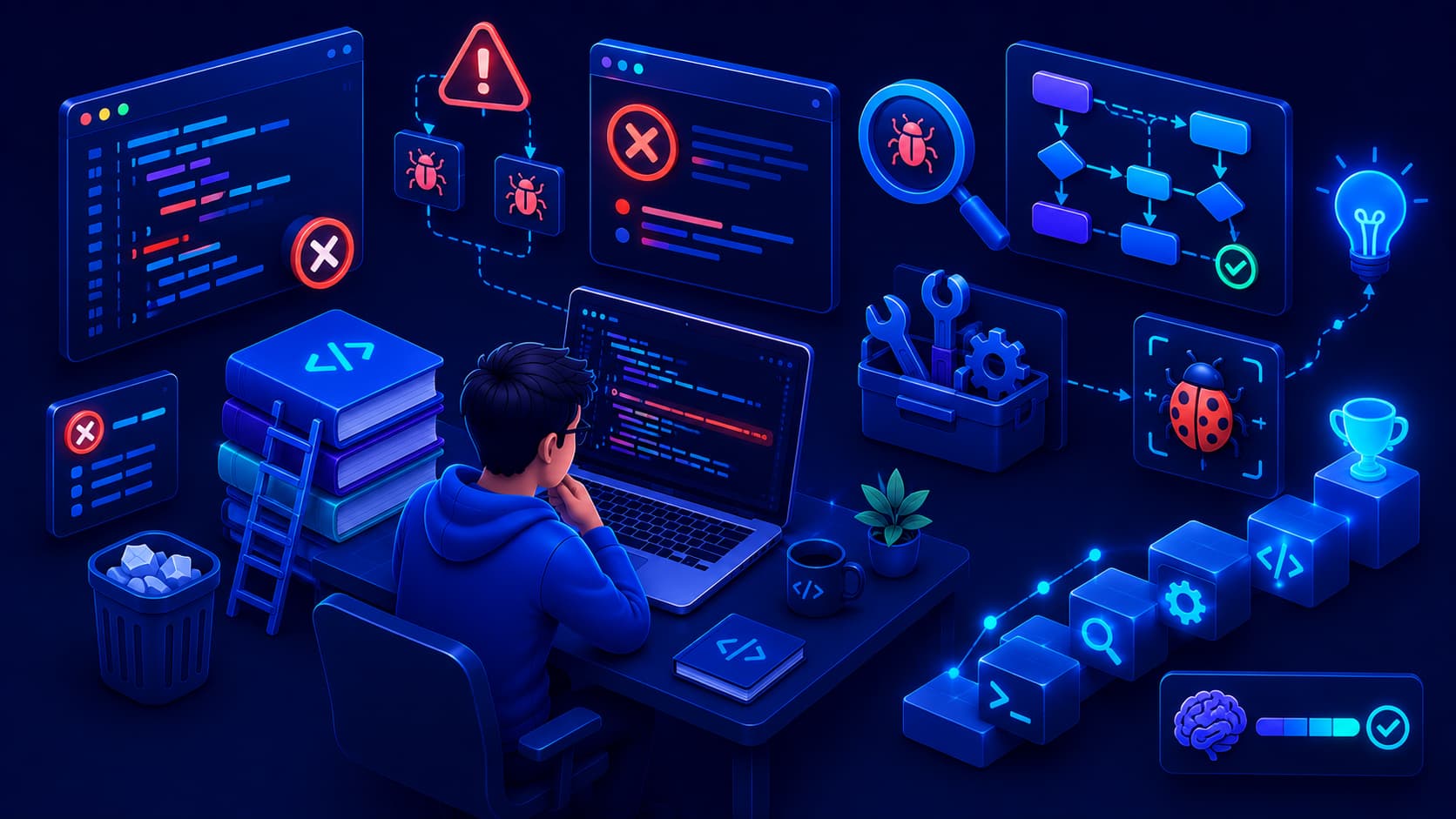
If the software doesn't behave as expected, developers:
- Test the program.
- Identify the problem.
- Improve the code.
- Test again.
This cycle continues until the software works reliably.
Practical Example
Suppose you want to build a simple calculator application. Rather than immediately writing code, you would first determine what the calculator should do, such as addition, subtraction, multiplication, and division. After designing the logic, you write the code, test different calculations, fix any errors, and continue improving the application until it produces accurate results consistently.
Programming Languages
Computers ultimately understand only machine code, which consists of binary instructions. Writing software directly in binary would be extremely difficult, so developers use programming languages that are much easier for humans to read, write, and maintain.
Each programming language has its own:
- Syntax.
- Strengths.
- Typical use cases.
Some languages are widely used for web development, while others are better suited for mobile applications, scientific computing, game development, or artificial intelligence. Although they differ in appearance and capabilities, they all share the same purpose: helping humans communicate instructions to computers in a clear and structured way.
Editorial Insight
Many beginners worry about choosing the "perfect" programming language. In practice, learning core programming concepts—such as variables, conditions, loops, functions, and problem-solving—is far more valuable than focusing on a single language. Once these fundamentals are understood, learning additional languages becomes significantly easier.
Programming Is More Than Writing Code
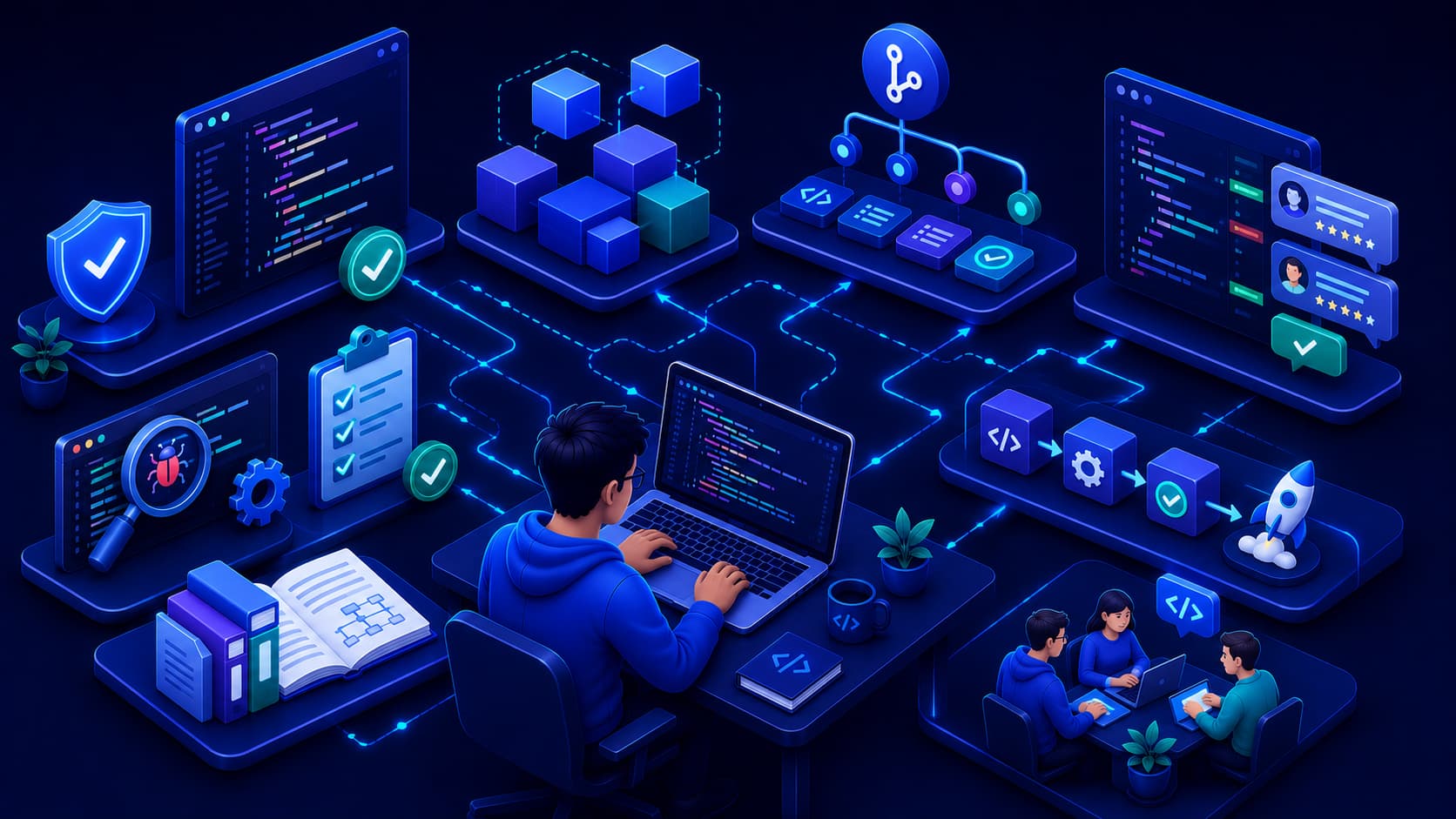
Many newcomers assume programming is simply typing code into a text editor. In reality, writing code represents only one part of the overall software development process. Professional programmers spend a considerable amount of time planning, designing, testing, debugging, and improving their software.
Professional software development commonly includes:
- Planning solutions before writing code.
- Designing software architecture.
- Testing applications.
- Fixing bugs.
- Improving performance.
- Maintaining and updating software over time.
Successful programmers devote as much attention to understanding problems as they do to writing code. Their goal is not to produce the largest amount of code but to create reliable, efficient, and maintainable solutions.
Best Practice
Before writing your first line of code, spend time thinking about the problem you want to solve. A well-planned solution often leads to cleaner code, fewer bugs, and easier maintenance than rushing directly into implementation.
Common Misconceptions About Programming
Many people hesitate to learn programming because of misconceptions about what it actually involves. Understanding the reality behind these myths makes programming feel much more approachable.
"You Have to Be Good at Math"
While certain specialized fields—such as graphics programming, machine learning, and scientific computing—require advanced mathematics, many areas of software development rely far more on logical thinking and problem-solving than on complex calculations.
Many successful developers use only the level of mathematics they learned during school while building websites, business applications, and other everyday software.
Practical Example
A developer creating an online shopping website spends much of their time working with user accounts, databases, payment systems, and business logic. These tasks generally require analytical thinking rather than advanced mathematical formulas.
"Programming Is Only for Geniuses"
Programming is a skill—not an ability reserved for a small group of exceptionally gifted people. Like learning a new language or playing a musical instrument, programming improves through consistent practice over time.
Every experienced developer began by learning simple concepts before gradually progressing to more advanced topics. Persistence and regular practice are typically far more important than natural talent.
"You Need to Memorize Everything"
Professional developers do not memorize every programming function, syntax rule, or library. Instead, they focus on understanding the underlying concepts and know how to find reliable documentation when needed.
Learning how to analyze problems, research solutions, and apply programming principles is considerably more valuable than attempting to memorize thousands of language-specific details.
Where Is Programming Used?
Programming powers nearly every aspect of today's digital world. From the websites we browse to the intelligent systems that assist businesses, software has become the foundation of countless technologies.
Some of the most common applications of programming include:
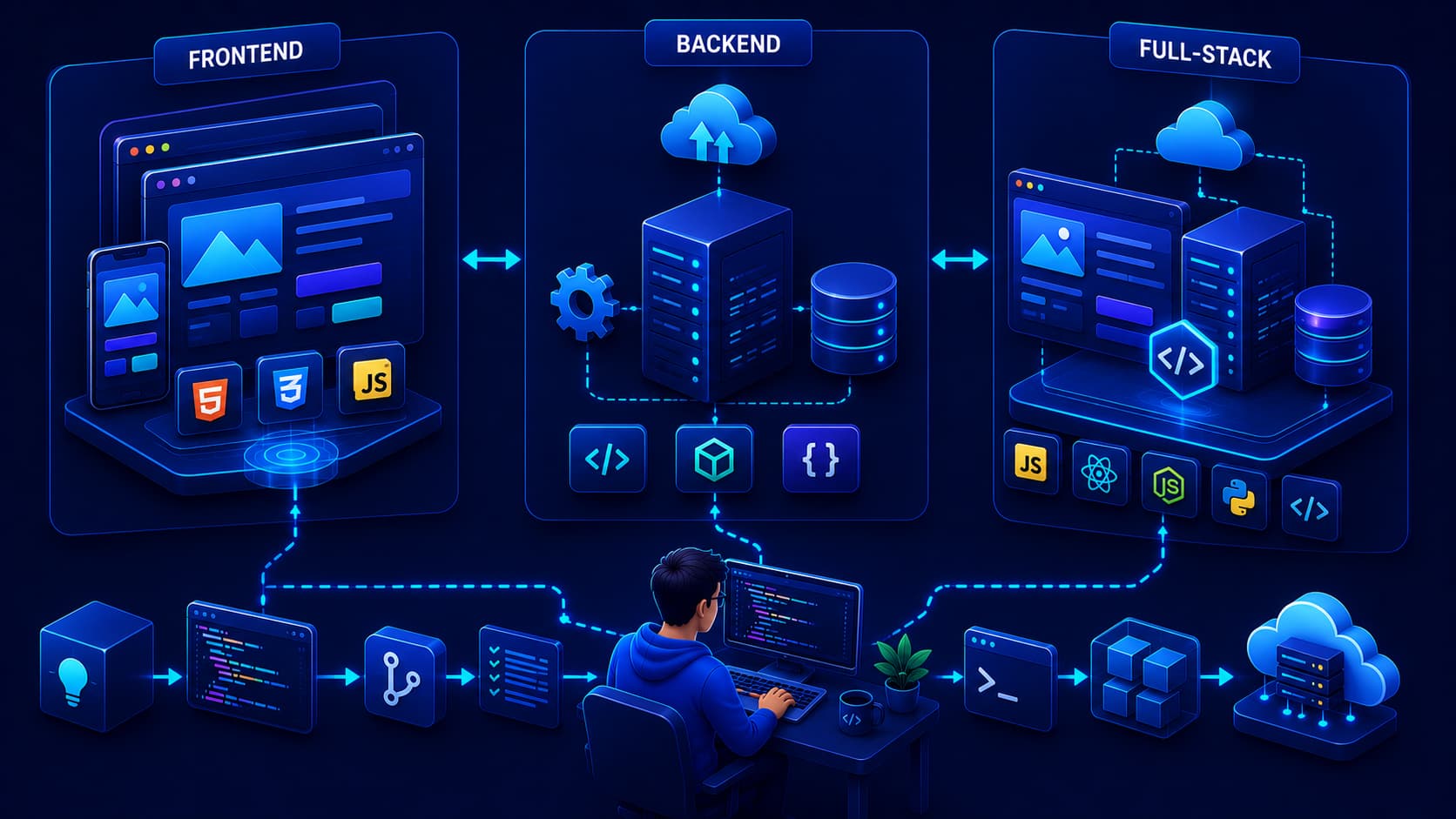
Web Development
Programming is used to build websites, online stores, blogs, and web applications that millions of people access every day. Developers write code that controls how websites look, respond to user interactions, and communicate with databases and online services.
Mobile Applications
Smartphone applications for communication, banking, fitness, navigation, shopping, and entertainment are all created through programming. Developers use programming languages and development frameworks to build applications for Android, iOS, and other mobile platforms.
Artificial Intelligence
Artificial Intelligence (AI) systems rely on programming to process information, recognize patterns, make predictions, and automate complex decision-making processes. Without programming, AI models would not be able to learn from data or perform intelligent tasks.
Cloud Computing
Cloud platforms depend on software to manage servers, storage, networking, and scalable online services. Programming enables businesses to deliver applications and data over the internet while supporting millions of users simultaneously.
Cybersecurity
Security professionals use programming to automate repetitive tasks, analyze threats, detect vulnerabilities, and develop tools that help protect computer systems and networks from cyberattacks.
Game Development
Modern video games combine programming with graphics, audio, networking, and physics to create immersive and interactive experiences. Programming controls everything from character movement to artificial intelligence and multiplayer functionality.
Frequently Asked Questions
Is Programming the Same as Coding?
The terms are often used interchangeably, but they are not exactly the same. Programming generally refers to the broader process of designing, building, testing, and maintaining software, while coding specifically focuses on writing the instructions that computers execute.
Do I Need a Computer Science Degree to Learn Programming?
No.
Many developers learn programming through online resources, personal projects, coding bootcamps, or self-study. Practical experience and consistent learning are often just as valuable as formal education.
Which Programming Language Should Beginners Learn?
There isn't a single best choice.
The right programming language depends on your goals. More importantly, beginners should focus on learning programming fundamentals that apply across many languages rather than worrying about choosing the "perfect" language first.
Is Programming Difficult?
Programming can be challenging, especially when learning new concepts, but it is a skill that develops through practice. Breaking large problems into smaller, manageable steps makes the learning process much easier and more rewarding.
Is Programming a Good Career?
Yes.
Programming skills remain in high demand across numerous industries, creating career opportunities in web development, mobile development, cloud computing, artificial intelligence, cybersecurity, and many other areas of technology.
Conclusion
Programming is the foundation of modern software and one of the most valuable skills in today's digital world. From websites and mobile applications to cloud platforms and artificial intelligence, programming enables developers to transform ideas into practical solutions used by millions of people every day.
Although learning to program requires time, patience, and practice, success isn't about memorizing endless lines of code. Instead, it's about developing the ability to think logically, solve problems systematically, and build reliable software step by step. As technology continues to evolve, these skills become increasingly valuable across nearly every industry.
Final Takeaway
Programming is much more than writing code—it's a structured approach to solving problems through logical thinking and clear instructions that computers can execute.
Whether your goal is to:
- Build websites.
- Develop mobile applications.
- Explore Artificial Intelligence.
- Create games.
- Work in cybersecurity.
- Understand how software works.
Programming provides the foundation for all of these paths. By focusing on core concepts, practicing consistently, and viewing challenges as learning opportunities, anyone can begin developing the skills needed to create meaningful software and participate in today's technology-driven world.