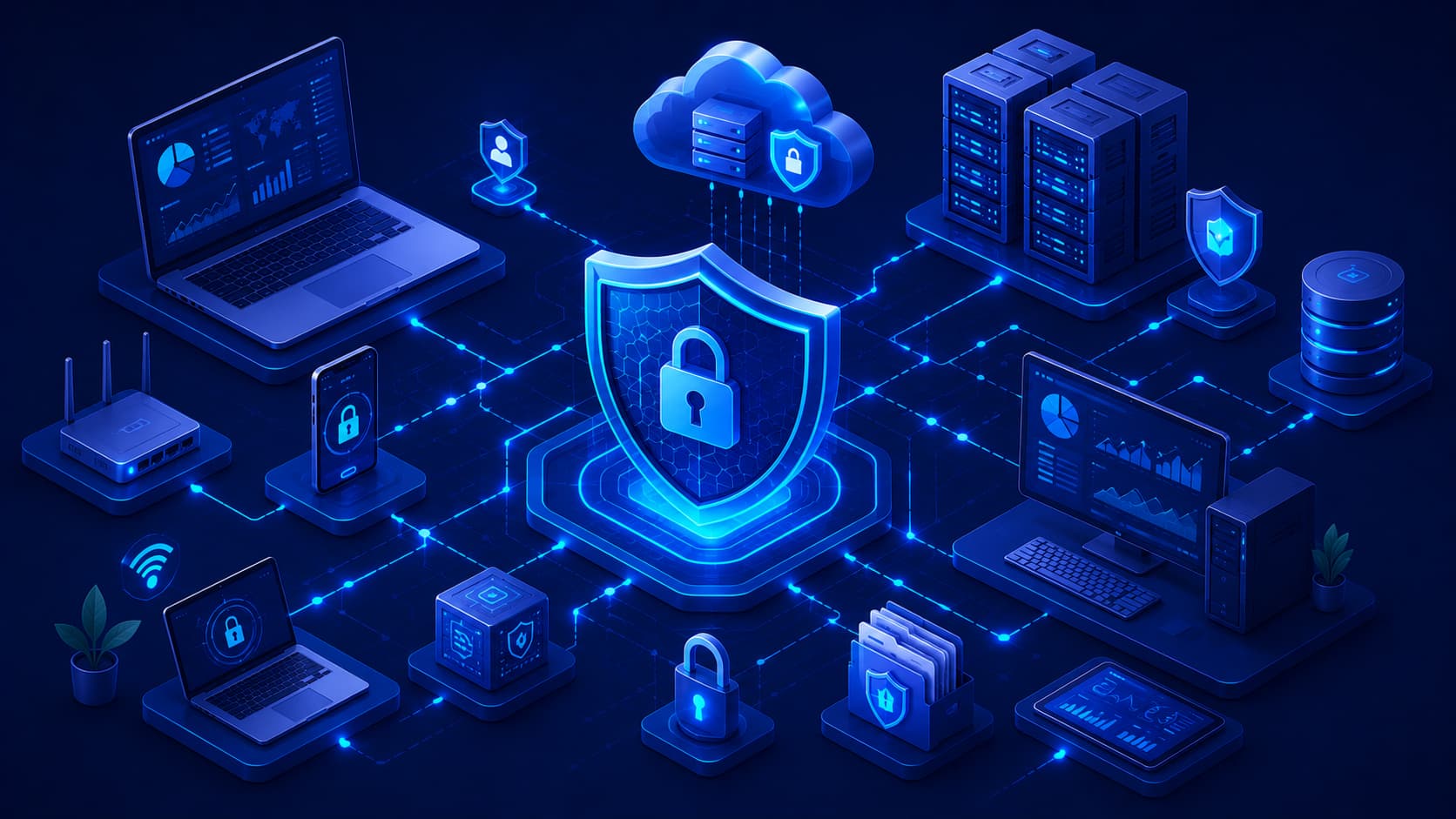
A few decades ago, protecting valuable information usually meant locking filing cabinets, securing office buildings, and limiting physical access to important documents.
Today, much of that information exists in digital form.
Bank accounts, medical records, personal photos, business data, and even critical infrastructure are connected through the internet. While this digital transformation has created incredible opportunities, it has also introduced entirely new security challenges.
Cybercriminals no longer need to break into a building to steal valuable information.
In many cases, all they need is an internet connection and a vulnerable system.
This is where cybersecurity becomes essential.
Cybersecurity is much more than antivirus software or complex technical tools. It is a combination of technologies, processes, policies, and best practices designed to protect devices, networks, applications, and digital information from unauthorized access, cyberattacks, and other online threats.
Whether you're checking email, shopping online, managing a business, or simply browsing the web, cybersecurity plays a critical role in keeping your digital life secure.
Understanding its fundamentals is no longer just important for IT professionals—it's becoming an essential digital skill for everyone.
What Is Cybersecurity?
Cybersecurity is the practice of protecting computers, networks, software, cloud services, and digital information from cyber threats.
Its primary objective is to maintain the confidentiality, integrity, and availability of information—three core principles that form the foundation of information security.
In practical terms, cybersecurity helps ensure that:
- Sensitive information remains private.
- Data cannot be altered without authorization.
- Systems remain available when legitimate users need them.
As technology has evolved, cybersecurity has expanded well beyond traditional desktop computers.
Today it also protects:
- Smartphones.
- Cloud platforms.
- Smart home devices.
- Industrial control systems.
- Internet-connected services.
Understanding the CIA Triad
The three primary objectives of cybersecurity are commonly known as the CIA Triad:
- Confidentiality ensures information is accessible only to authorized individuals.
- Integrity protects data from unauthorized modification or corruption.
- Availability ensures systems and information remain accessible when required.
Nearly every cybersecurity technology and security policy is designed to support one or more of these objectives.
Editorial Insight
Many people associate cybersecurity with preventing hackers, but its scope is much broader. It also focuses on maintaining system reliability, protecting sensitive information, and ensuring digital services remain available despite technical failures or malicious attacks.
Why Is Cybersecurity Important?
Every day, billions of people rely on digital systems to communicate, conduct business, and store valuable information.
People:
- Send emails.
- Complete financial transactions.
- Store files in the cloud.
- Use messaging applications.
- Manage important business operations online.
Without appropriate security measures, this information could become an easy target for cybercriminals.
A successful cyberattack may result in:
- Financial losses.
- Identity theft.
- Business disruption.
- Reputational damage.
- Exposure of sensitive personal information.
For organizations, the consequences often extend far beyond technology, affecting customers, employees, business partners, and long-term operations.
Cybersecurity reduces these risks by combining technical protections with good security practices and ongoing user awareness.
Why Every User Should Care
You don't have to work in IT to benefit from cybersecurity.
Anyone who uses the internet shares responsibility for protecting:
- Personal accounts.
- Financial information.
- Digital identities.
- Online communications.
Simple habits such as using strong passwords and recognizing suspicious emails can significantly reduce everyday security risks.
Best Practice
Think of cybersecurity as an ongoing process rather than a one-time solution. Keeping devices updated, using unique passwords, and enabling multi-factor authentication are simple habits that provide long-term protection.
Cybersecurity Is Everywhere
Many people believe cybersecurity is only important for large corporations or government agencies.
In reality, nearly everyone benefits from cybersecurity every day.
For example, cybersecurity is working behind the scenes when you:
- Unlock your smartphone using facial recognition.
- Log in to your online banking account.
- Receive a verification code during sign-in.
- Shop through an encrypted website.
Organizations across every industry also depend on cybersecurity.
Examples include:
- Businesses protecting customer information.
- Hospitals securing patient records.
- Schools safeguarding student data.
- Governments defending critical public systems.
As more aspects of daily life move online, cybersecurity has become increasingly important for both individuals and organizations.
The Main Goals of Cybersecurity
Although cybersecurity includes many different technologies and strategies, its overall objectives remain remarkably consistent.
Protect Sensitive Information
Personal information, financial records, intellectual property, and business data all have significant value.
Cybersecurity helps prevent unauthorized individuals from accessing or stealing this information.
Prevent Service Disruptions
Many organizations rely on digital systems to operate continuously.
If websites, payment systems, or business applications become unavailable because of a cyberattack, the consequences can be costly.
Cybersecurity helps maintain system availability and resilience against these threats.
Maintain Customer Trust
People expect organizations to protect their personal information.
A single security breach can seriously damage an organization's reputation and reduce customer confidence.
Strong cybersecurity practices help build and preserve that trust over time.
Support Business Continuity
Cyber incidents don't only affect computers—they can interrupt entire business operations.
By preparing for potential attacks and implementing recovery plans, organizations can minimize downtime and continue operating even when unexpected security incidents occur.
Common Areas of Cybersecurity
Cybersecurity is a broad discipline made up of several specialized fields.
Each area focuses on protecting a different part of today's digital ecosystem. Together, they create multiple layers of defense that help organizations safeguard their systems and data.
Understanding these specialties also helps explain why cybersecurity professionals often choose to focus on a particular area rather than trying to master everything at once.
Network Security
Network security protects communication between devices by preventing unauthorized access and monitoring network activity for suspicious behavior.
Common network security technologies include:
- Firewalls.
- Intrusion Detection Systems (IDS).
- Secure network configurations.
- Traffic monitoring tools.
Its primary objective is to ensure that data moving across networks remains secure while preventing attackers from gaining unauthorized access.
Application Security
Applications often become attractive targets because they process valuable user information.
Application security focuses on building, testing, and maintaining software that is resistant to common attacks and vulnerabilities.
Rather than treating security as an afterthought, developers increasingly integrate security practices throughout the software development lifecycle.
Cloud Security
As organizations migrate more infrastructure to cloud platforms, protecting cloud environments has become a critical part of cybersecurity.
Cloud security includes:
- Identity management.
- Encryption.
- Secure configurations.
- Continuous monitoring.
These controls help organizations protect cloud-based applications, storage, and infrastructure while supporting secure access for authorized users.
Endpoint Security
Every laptop, smartphone, tablet, and desktop computer connected to a network represents a potential entry point for attackers.
Endpoint security helps protect these devices through:
- Security software.
- Regular updates.
- Threat monitoring.
- Device management.
Since employees increasingly work from multiple devices and locations, endpoint security has become an essential layer of organizational defense.
Information Security
Information security focuses specifically on protecting data throughout its entire lifecycle.
Whether information is:
- Stored locally.
- Transmitted across networks.
- Saved in cloud environments.
its goal remains the same: ensuring confidentiality, integrity, and availability.
Editorial Insight
These cybersecurity disciplines often overlap. For example, protecting a cloud application may require network security, application security, endpoint protection, and information security working together rather than operating independently.
Is Cybersecurity Only About Technology?
Not at all.
One of the biggest misconceptions about cybersecurity is that software alone can solve every security problem.
In reality, people play an equally important role.
Many successful cyberattacks begin with simple human mistakes rather than sophisticated hacking techniques.
Examples include:
- Clicking a malicious email link.
- Reusing weak passwords across multiple accounts.
- Accidentally sharing sensitive information with the wrong person.
Technology cannot always prevent these situations.
That's why modern cybersecurity combines technical controls with:
- User education.
- Security awareness.
- Safe online habits.
- Organizational policies.
A well-informed user is often one of the strongest defenses against cyber threats.
Why Human Awareness Matters
Cybercriminals frequently target people because exploiting human behavior is often easier than breaking through well-protected computer systems.
Teaching users how to recognize suspicious emails, verify unexpected requests, and protect their credentials significantly reduces the likelihood of successful attacks.
This human-centered approach has become an essential part of every modern cybersecurity strategy.
Best Practice
Before clicking links, downloading attachments, or sharing sensitive information online, take a moment to verify the source. A few extra seconds of caution can prevent many common cybersecurity incidents.
The Future of Cybersecurity
Technology continues to evolve, and cyber threats evolve alongside it.
Artificial intelligence, cloud computing, remote work, connected devices, and ongoing digital transformation are creating exciting opportunities—but they also introduce new security challenges.
Organizations are increasingly adopting AI-powered security tools to:
- Detect unusual behavior.
- Identify threats more quickly.
- Automate portions of their security operations.
At the same time, cybercriminals are also adopting more advanced techniques.
This constant competition between attackers and defenders means cybersecurity will remain one of the fastest-growing and most important fields in technology for years to come.
Editorial Insight
Cybersecurity is not a destination where systems become permanently secure. It is a continuous process of adapting to new technologies, emerging threats, and evolving attack techniques. Organizations that continuously improve their security posture are generally better prepared to respond to future challenges.
Frequently Asked Questions
What Is Cybersecurity in Simple Terms?
Cybersecurity is the practice of protecting computers, networks, applications, and digital information from cyberattacks, unauthorized access, and other online threats.
In simple terms, cybersecurity helps ensure that your digital devices and data remain safe while you use the internet for work, communication, shopping, banking, and entertainment.
Why Is Cybersecurity Important?
Cybersecurity protects personal information, financial data, business systems, and critical infrastructure from theft, disruption, and malicious activity.
Without appropriate security measures, cyber incidents can lead to:
- Financial losses.
- Identity theft.
- Service interruptions.
- Loss of customer trust.
- Exposure of confidential information.
As more aspects of everyday life become digital, cybersecurity has become an essential part of maintaining both personal and organizational safety.
Is Cybersecurity Only for Businesses?
No.
Everyone who uses the internet benefits from good cybersecurity practices. Individuals, students, small businesses, large enterprises, healthcare providers, educational institutions, and government organizations all face digital security risks.
Whether you're using a smartphone, shopping online, or accessing cloud services, cybersecurity helps protect your digital activities.
What's the Difference Between Cybersecurity and Information Security?
Although the two terms are closely related, they are not identical.
Information security focuses on protecting information in any form, while cybersecurity specifically focuses on protecting digital systems, networks, and electronic data from cyber threats.
You can think of cybersecurity as a specialized branch of information security that concentrates on the digital environment.
Is Cybersecurity a Good Career?
Yes.
As organizations continue expanding their digital infrastructure, demand for cybersecurity professionals continues to grow across industries worldwide.
Career opportunities exist in areas such as:
- Security Operations Centers (SOC).
- Network security.
- Cloud security.
- Application security.
- Incident response.
- Security consulting.
- Digital forensics.
- Governance, Risk, and Compliance (GRC).
The field also offers opportunities for continuous learning because cybersecurity technologies and threats evolve rapidly.
Best Practice
Cybersecurity is one of the few technology fields where building practical habits is just as important as learning technical concepts. Developing secure online behaviors today can help prevent serious security incidents in the future.
Conclusion
Cybersecurity has become an essential part of modern life.
From protecting personal devices to securing global business networks, it helps ensure that digital information remains safe, reliable, and accessible.
While technology provides powerful security tools, effective cybersecurity also depends on the decisions people make every day.
Simple actions such as:
- Using strong, unique passwords.
- Enabling multi-factor authentication.
- Keeping software updated.
- Remaining alert to suspicious emails and online threats.
can significantly reduce cybersecurity risks.
As organizations continue embracing cloud computing, artificial intelligence, remote work, and connected devices, cybersecurity will only become more important.
Understanding its core principles not only helps protect your personal information but also prepares you to navigate an increasingly digital world with greater confidence.
Final Takeaway
Cybersecurity isn't solely the responsibility of IT professionals or large organizations—it's a shared responsibility for everyone who uses digital technology.
Modern cybersecurity combines advanced technologies with informed decision-making, responsible online behavior, and continuous awareness of evolving threats.
By learning the fundamentals of cybersecurity today, you'll be better equipped to protect your devices, safeguard your personal information, and confidently participate in an increasingly connected digital world.