Artificial Intelligence has grown into one of the broadest and fastest-evolving fields in modern technology. Every year, new breakthroughs introduce unfamiliar terms such as Machine Learning, Deep Learning, Large Language Models (LLMs), Generative AI, Computer Vision, AI Agents, Reinforcement Learning, and many others.
For beginners, this rapid expansion often raises an important question:
Where should I start?
Searching online usually leads to thousands of individual articles that explain one technology at a time. While these resources are valuable, they rarely show how all of these technologies connect to form the broader Artificial Intelligence ecosystem.
This guide takes a different approach.
Instead of focusing on a single AI technology, it presents a complete roadmap that explains how the major branches of Artificial Intelligence relate to one another. By understanding the big picture first, you'll find it much easier to decide what to learn next and how each topic contributes to building intelligent systems.
Whether you're a student, developer, business professional, researcher, or simply curious about AI, this roadmap will help you navigate one of the most exciting areas of technology.
Why You Need an AI Roadmap
Many newcomers assume Artificial Intelligence is a single technology.
In reality, AI is an umbrella field containing dozens of specialized disciplines.
For example:
- Machine Learning enables computers to learn from data.
- Deep Learning uses multi-layer neural networks to solve complex problems.
- Computer Vision allows machines to interpret images and videos.
- Natural Language Processing helps computers understand human language.
- Generative AI creates entirely new content.
- Robotics combines AI with physical machines.
- Reinforcement Learning trains AI through trial and error.
Without understanding how these disciplines relate to each other, it's easy to become overwhelmed or study topics in an inefficient order.
An AI roadmap provides structure, showing not only what to learn but also why each technology matters and how it builds upon previous concepts.
The Artificial Intelligence Ecosystem
Artificial Intelligence is best understood as a hierarchy rather than a collection of unrelated technologies.
A simplified ecosystem looks like this:
Artificial Intelligence
│
├── Machine Learning
│   ├── Supervised Learning
│   ├── Unsupervised Learning
│   └── Reinforcement Learning
│
├── Deep Learning
│   ├── Neural Networks
│   ├── CNN
│   ├── RNN
│   └── Transformers
│
├── Natural Language Processing
│
├── Computer Vision
│
├── Robotics
│
├── Expert Systems
│
├── Generative AI
│   ├── Large Language Models
│   ├── Image Generation
│   ├── Audio Generation
│   └── Video Generation
│
└── AI Agents
Rather than existing independently, these technologies frequently overlap.
For example, modern Generative AI relies heavily on Deep Learning, while many AI Agents combine Large Language Models with planning, memory, external tools, and decision-making capabilities.
Understanding these relationships makes learning AI significantly easier because each new topic naturally builds on concepts you've already explored.
Learning AI in the Right Order
One of the biggest mistakes beginners make is jumping directly into advanced topics without first understanding the fundamentals.
A more effective learning path is:
- Understand what Artificial Intelligence is.
- Learn the basics of Machine Learning.
- Study Neural Networks and Deep Learning.
- Explore Natural Language Processing and Computer Vision.
- Learn about Large Language Models and Generative AI.
- Understand Prompt Engineering and AI safety concepts.
- Move on to AI Agents, Retrieval-Augmented Generation (RAG), Fine-Tuning, and multimodal AI.
This progression allows each concept to build upon the previous one, making advanced AI topics much easier to understand.
The Core Technologies Behind Artificial Intelligence
Although Artificial Intelligence is often discussed as a single technology, it is actually built upon several specialized disciplines. Each branch solves different types of problems while working together to create intelligent systems.
Understanding these technologies helps explain why modern AI is capable of performing such a wide range of tasks.
Machine Learning
Machine Learning (ML) is one of the most important branches of Artificial Intelligence.
Instead of relying entirely on manually written rules, machine learning algorithms learn patterns from historical data and use those patterns to make predictions or decisions.
Machine Learning powers many everyday applications, including:
- Email spam detection
- Product recommendations
- Fraud detection
- Sales forecasting
- Predictive maintenance
- Personalized content feeds
If you're new to AI, Machine Learning is one of the first technologies you should study because many advanced AI systems are built upon its principles.
Related article: What Is Machine Learning?
Deep Learning
Deep Learning is a specialized area of Machine Learning that uses artificial neural networks with multiple processing layers.
This approach allows AI systems to solve much more complex problems than traditional machine learning models.
Deep Learning is responsible for many of today's biggest AI breakthroughs, including:
- Image recognition
- Speech recognition
- Language translation
- Autonomous driving
- Generative AI
Without Deep Learning, technologies such as ChatGPT, image generation models, and voice assistants would not be possible.
Related article: What Is Deep Learning?
Neural Networks
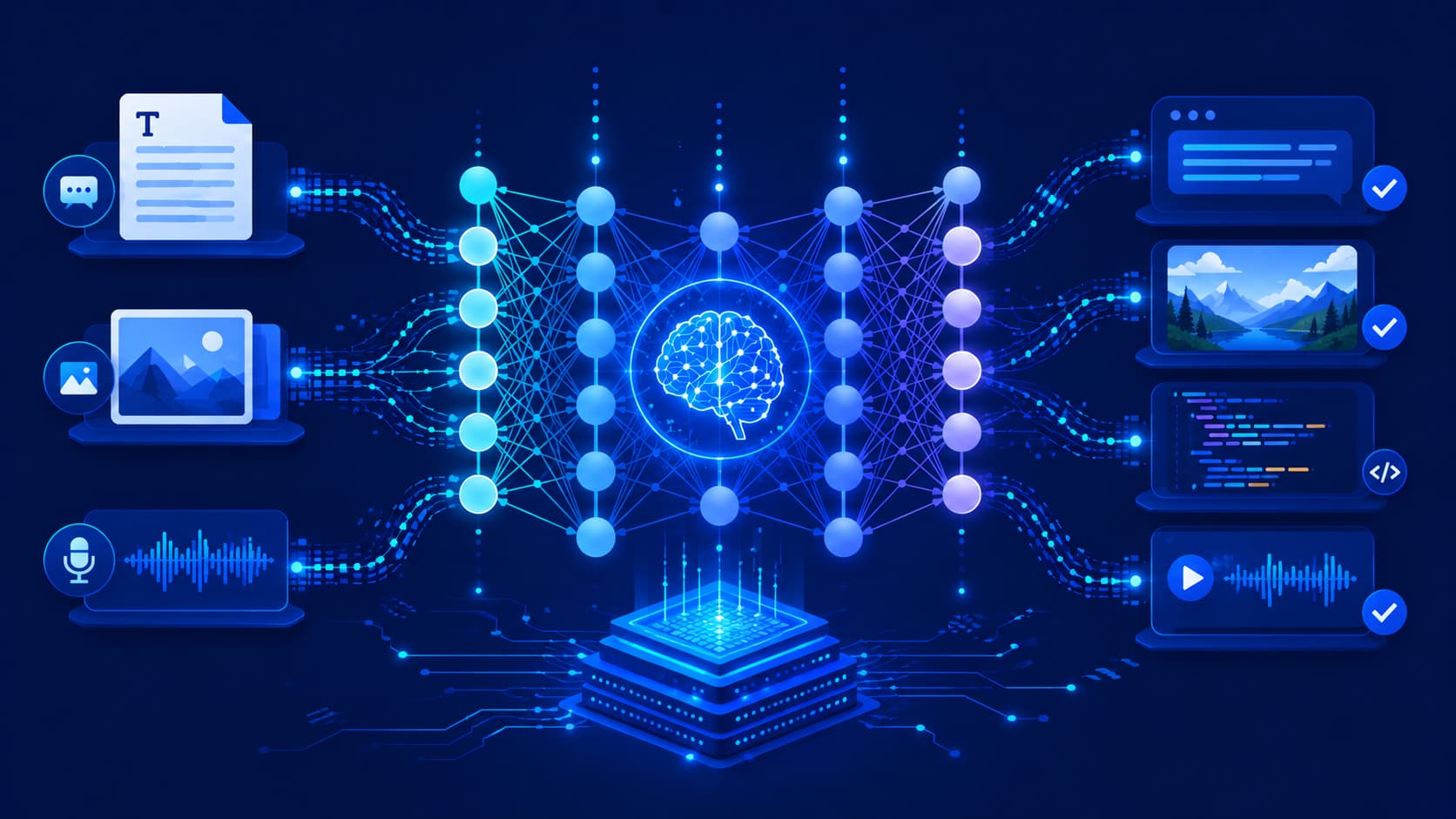
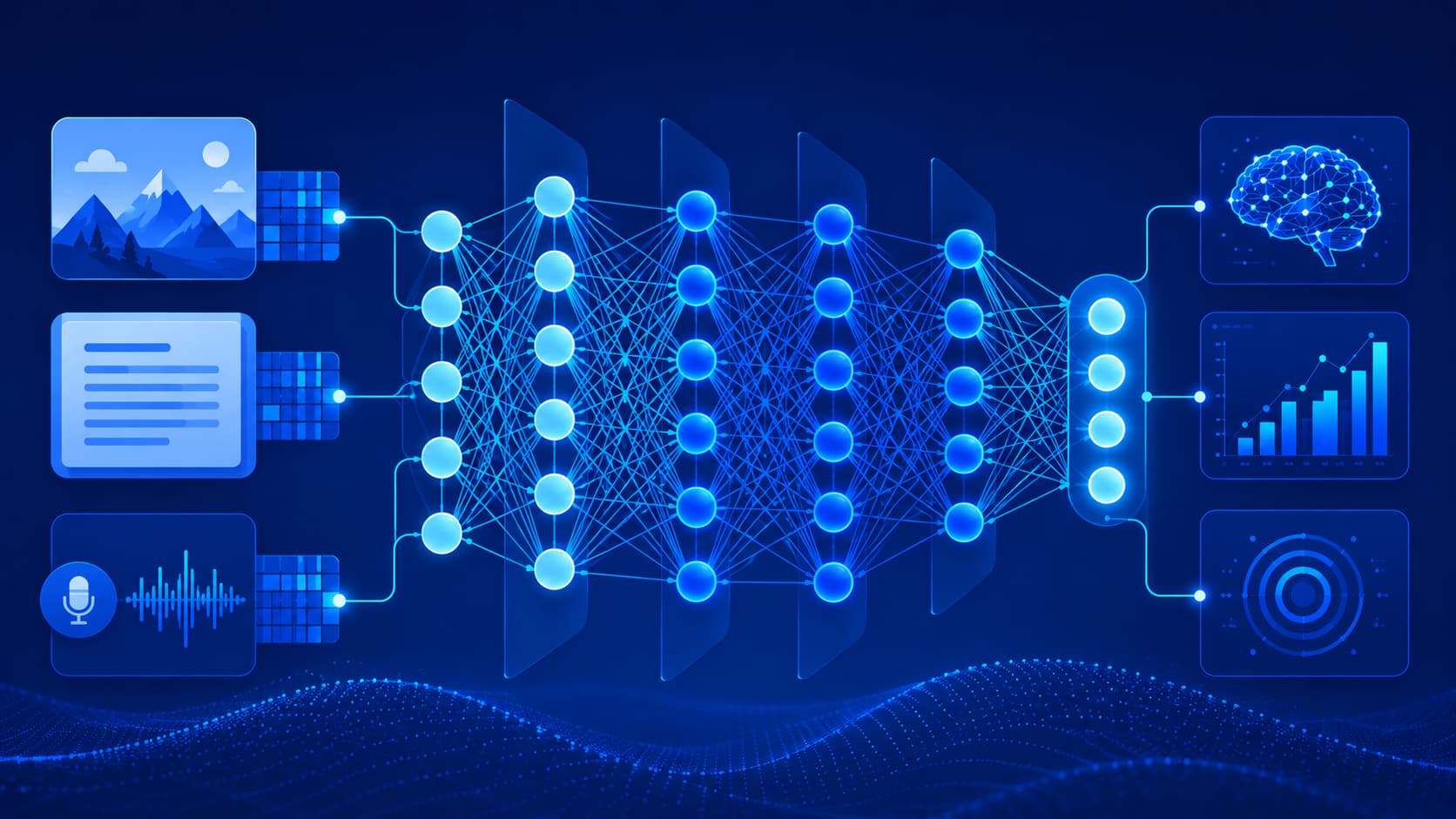
Artificial Neural Networks are the computational models that make Deep Learning possible.
Inspired by the structure of the human brain, neural networks process information through interconnected layers of artificial neurons.
As neural networks become larger and more sophisticated, they can recognize increasingly complex patterns within massive datasets.
Modern Large Language Models often contain billions of neural network parameters.
Related article: What Is a Neural Network?
Natural Language Processing (NLP)
Natural Language Processing enables computers to understand, interpret, and generate human language.
Rather than simply recognizing words, NLP attempts to understand meaning, grammar, context, and intent.
Common NLP applications include:
- Chatbots
- Language translation
- Text summarization
- Sentiment analysis
- Voice assistants
- Search engines
Generative AI systems rely heavily on NLP to communicate naturally with users.
Computer Vision
Computer Vision focuses on enabling computers to understand images and videos.
Instead of reading text, Computer Vision analyzes visual information.
Examples include:
- Facial recognition
- Medical image analysis
- Self-driving vehicles
- Security cameras
- Industrial quality inspection
- Augmented reality
This technology has become increasingly important as organizations automate visual inspection and recognition tasks.
Generative AI
Generative AI represents one of the fastest-growing areas within Artificial Intelligence.
Unlike traditional AI systems that classify or predict information, Generative AI creates entirely new content.
Examples include:
- Writing articles
- Generating images
- Creating music
- Producing videos
- Writing software code
- Designing presentations
Large Language Models such as ChatGPT are one example of Generative AI.
Related article: What Is Generative AI?
AI Agents
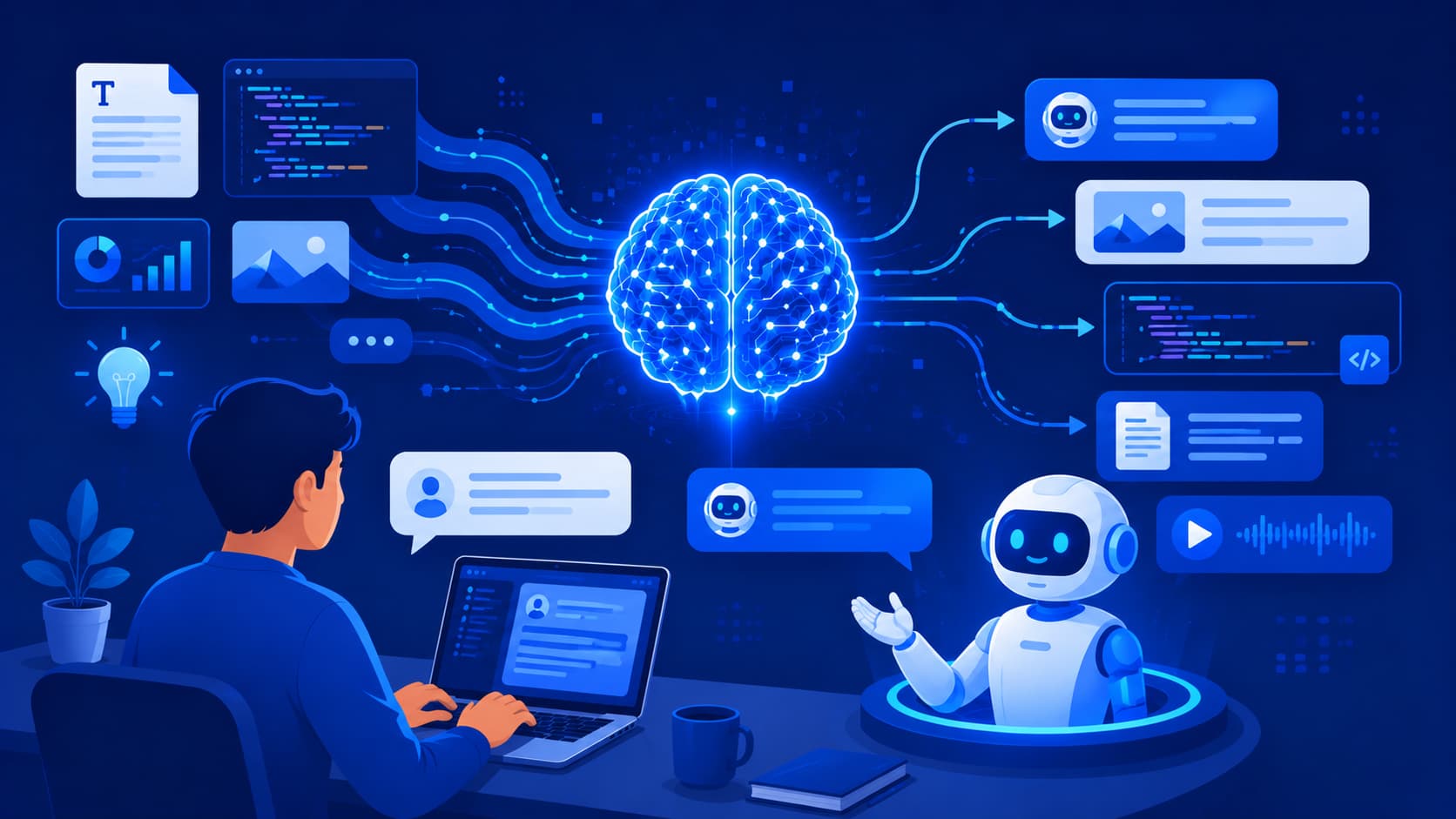
AI Agents extend Generative AI by giving AI systems the ability to plan, reason, remember information, interact with external tools, and execute multi-step tasks.
Rather than simply answering questions, AI Agents can complete workflows.
Examples include:
- Scheduling meetings
- Researching information
- Writing reports
- Managing projects
- Automating repetitive business processes
Many experts consider AI Agents to be one of the next major stages in the evolution of Artificial Intelligence.
How AI Technologies Work Together
One of the biggest misconceptions is that these technologies compete with one another.
In reality, they are highly interconnected.
A simplified relationship looks like this:
Artificial Intelligence
        │
        ▼
Machine Learning
        │
        ▼
Deep Learning
        │
        ▼
Neural Networks
        │
        ▼
Foundation Models
        │
        ▼
Large Language Models
        │
        ▼
Generative AI
        │
        ▼
AI Agents
This hierarchy does not mean that one technology replaces another.
Instead, each layer builds upon previous innovations, enabling increasingly capable intelligent systems.
Artificial Intelligence in Everyday Life
Many people interact with AI dozens or even hundreds of times each day without realizing it.
Some common examples include:
- Search engine rankings
- Streaming recommendations
- Social media feeds
- Smartphone voice assistants
- Email spam filtering
- Online shopping recommendations
- Banking fraud detection
- Navigation and traffic prediction
- AI writing assistants
- Smart home devices
As AI continues to evolve, these applications will become even more integrated into daily life.
Which AI Topics Should You Learn First?
The best learning path depends on your goals, but most beginners benefit from progressing through topics in a logical sequence.
| Stage | Recommended Topic | Why It Matters |
|---|---|---|
| 1 | Artificial Intelligence Fundamentals | Understand the overall ecosystem |
| 2 | Machine Learning | Learn how AI learns from data |
| 3 | Neural Networks | Understand the foundation of Deep Learning |
| 4 | Deep Learning | Explore modern AI architectures |
| 5 | Natural Language Processing | Learn how AI understands language |
| 6 | Computer Vision | Understand visual intelligence |
| 7 | Generative AI | Explore AI content creation |
| 8 | Prompt Engineering | Improve interactions with AI |
| 9 | AI Agents | Learn intelligent automation |
| 10 | Advanced Topics | Fine-Tuning, RAG, Multimodal AI, AI Safety |
Following this progression provides a strong foundation before moving into more specialized areas.
Career Paths in Artificial Intelligence
Artificial Intelligence is no longer limited to academic research or large technology companies. Organizations across nearly every industry are investing in AI, creating demand for professionals with a wide range of skills.
Not every AI career requires building machine learning models from scratch. Depending on your interests and experience, there are multiple paths you can pursue.
AI Research Scientist
AI researchers focus on developing new algorithms, improving existing models, and advancing the field through scientific research.
Their work often involves mathematics, statistics, deep learning, and publishing research papers.
Machine Learning Engineer
Machine Learning Engineers design, build, deploy, and maintain AI models in production environments.
Their responsibilities typically include:
- Preparing datasets
- Training models
- Evaluating performance
- Optimizing inference
- Deploying machine learning systems
This role combines software engineering with data science.
Data Scientist
Data Scientists analyze large datasets to uncover insights, identify trends, and support business decision-making.
While not every Data Scientist builds AI models, machine learning has become an increasingly important part of modern data science.
AI Application Developer
Many developers use existing AI models through APIs instead of creating their own models.
For example, an AI application developer might build:
- AI-powered chatbots
- Document summarization tools
- Customer support assistants
- AI search engines
- Content generation platforms
This career path has grown rapidly with the availability of commercial AI services.
AI Product Manager
Product Managers help organizations identify opportunities where AI can solve real business problems.
Rather than focusing on technical implementation, they coordinate product strategy, user requirements, engineering teams, and business objectives.
Prompt Engineer
Although the title varies between organizations, prompt engineering has become a valuable skill.
Professionals who understand how to communicate effectively with large language models can significantly improve the quality, consistency, and usefulness of AI-generated outputs.
Rather than replacing technical expertise, prompt engineering complements software development, marketing, education, research, and many other professions.
Challenges Facing Artificial Intelligence
Despite its rapid progress, Artificial Intelligence still faces significant technical, ethical, and societal challenges.
Understanding these limitations is essential for anyone working with AI.
Data Quality
AI systems are only as good as the data used to train them.
Incomplete, outdated, or biased datasets can lead to inaccurate predictions and unfair outcomes.
Maintaining high-quality data remains one of the biggest challenges in AI development.
Bias and Fairness
AI models may unintentionally learn biases that exist in historical data.
If not carefully monitored, these biases can affect hiring decisions, lending systems, healthcare recommendations, and many other real-world applications.
Developing fair and transparent AI systems has become a major area of research.
Privacy
Many AI applications rely on large amounts of personal or organizational data.
Protecting sensitive information while enabling AI innovation requires careful attention to privacy regulations, data governance, and cybersecurity.
Explainability
Some advanced AI models operate as "black boxes," making it difficult to understand how they reached a particular decision.
Improving AI explainability is particularly important in industries such as healthcare, finance, and law, where transparency is essential.
Security
AI systems themselves can become targets of cyberattacks.
Organizations must consider threats such as:
- Data poisoning
- Model theft
- Prompt injection
- Adversarial attacks
- Unauthorized access
Securing AI systems is becoming an increasingly important aspect of modern cybersecurity.
Future Trends in Artificial Intelligence
Artificial Intelligence continues to evolve at an extraordinary pace.
Several trends are expected to shape the next generation of AI technologies.
AI Agents
Future AI systems will increasingly perform complex tasks autonomously rather than simply responding to prompts.
These AI agents will be capable of planning, reasoning, remembering information, and collaborating with other systems.
Multimodal AI
Modern AI models are beginning to understand multiple forms of information simultaneously.
Instead of processing only text, future systems will seamlessly combine:
- Text
- Images
- Audio
- Video
- Documents
- Sensor data
This enables richer and more natural human-computer interactions.
Smaller, More Efficient Models
While large AI models continue to improve, there is also growing interest in developing smaller models that can run efficiently on laptops, smartphones, and edge devices.
These models reduce costs while enabling AI applications in environments with limited computing resources.
Responsible AI
Governments, businesses, and researchers are placing greater emphasis on developing AI responsibly.
Future AI systems are expected to place stronger focus on:
- Transparency
- Fairness
- Accountability
- Privacy
- Human oversight
Responsible AI is becoming just as important as AI capability.
Frequently Asked Questions
Is Artificial Intelligence the same as Machine Learning?
No.
Artificial Intelligence is the broader field, while Machine Learning is one of the technologies used to create intelligent systems.
Do I need to learn programming before studying AI?
Not necessarily.
You can begin by understanding AI concepts and applications before learning programming languages such as Python if you plan to build AI systems.
Which programming language is most commonly used for AI?
Python is the most widely used programming language for Artificial Intelligence because of its extensive ecosystem of AI and machine learning libraries.
Is mathematics required for AI?
Basic AI concepts can be learned without advanced mathematics.
However, topics such as machine learning, deep learning, and model optimization benefit from knowledge of linear algebra, probability, calculus, and statistics.
Is AI replacing software developers?
AI is changing how software is developed, but it is generally viewed as a tool that enhances developer productivity rather than replacing software engineers entirely.
Developers who understand how to work effectively with AI are likely to remain in high demand.
Conclusion
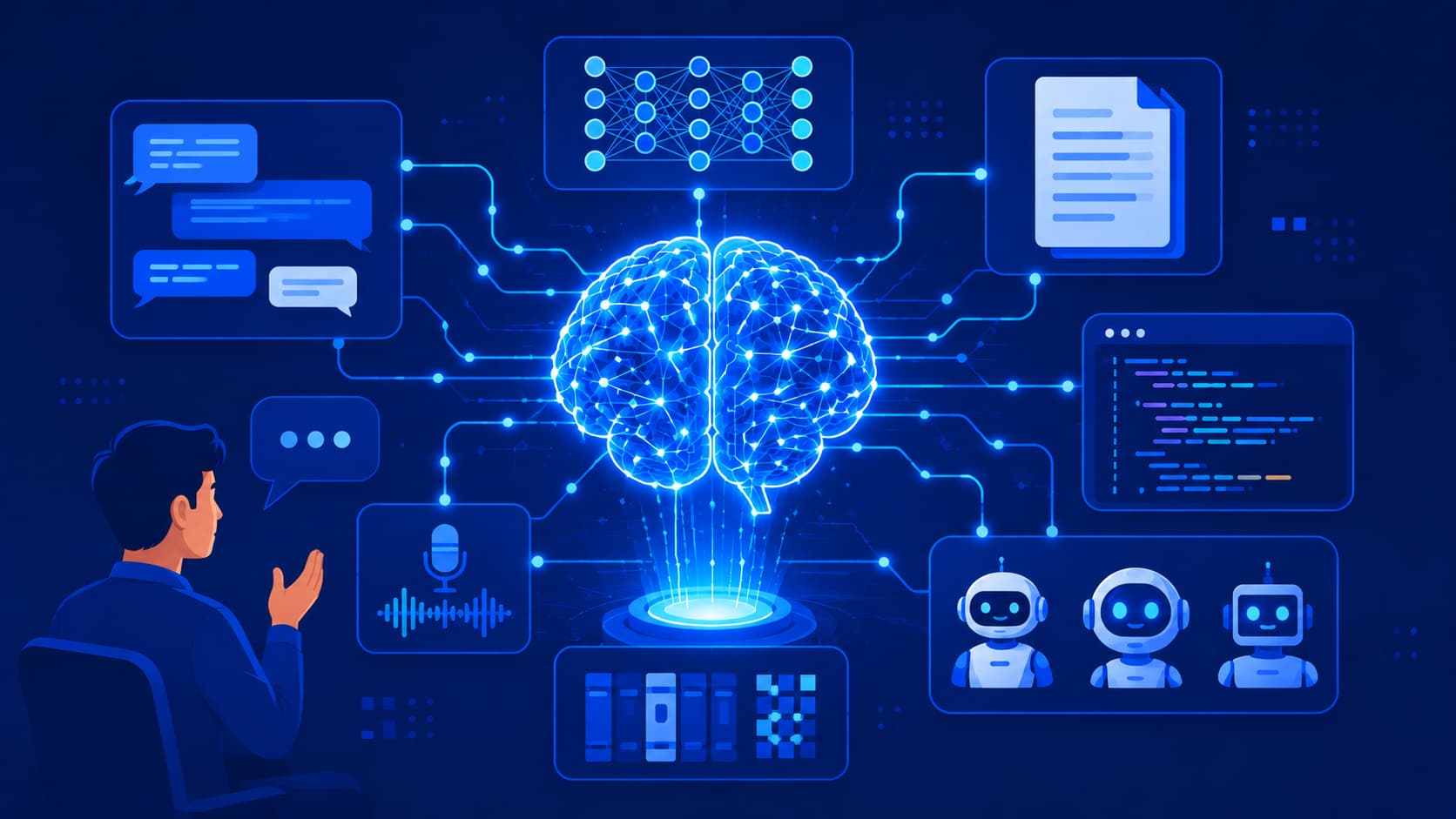
Artificial Intelligence is far more than a single technology—it is an ecosystem of interconnected disciplines that continue to reshape how people work, communicate, learn, and innovate.
Understanding the relationships between Machine Learning, Deep Learning, Neural Networks, Natural Language Processing, Computer Vision, Generative AI, and AI Agents provides a strong foundation for exploring this rapidly evolving field.
Rather than trying to master every AI topic at once, following a structured learning roadmap allows you to build knowledge step by step. Each concept builds upon the previous one, making advanced subjects easier to understand and apply in real-world scenarios.
As Artificial Intelligence continues to evolve, maintaining a broad understanding of the ecosystem will help you adapt to new technologies, identify emerging opportunities, and make informed decisions about what to learn next.
Final Takeaway
Think of Artificial Intelligence as a connected ecosystem rather than a collection of isolated technologies. Start with the fundamentals, strengthen your understanding through specialized topics, and continuously expand your knowledge as new innovations emerge. A clear roadmap will always be more valuable than chasing the latest trend.