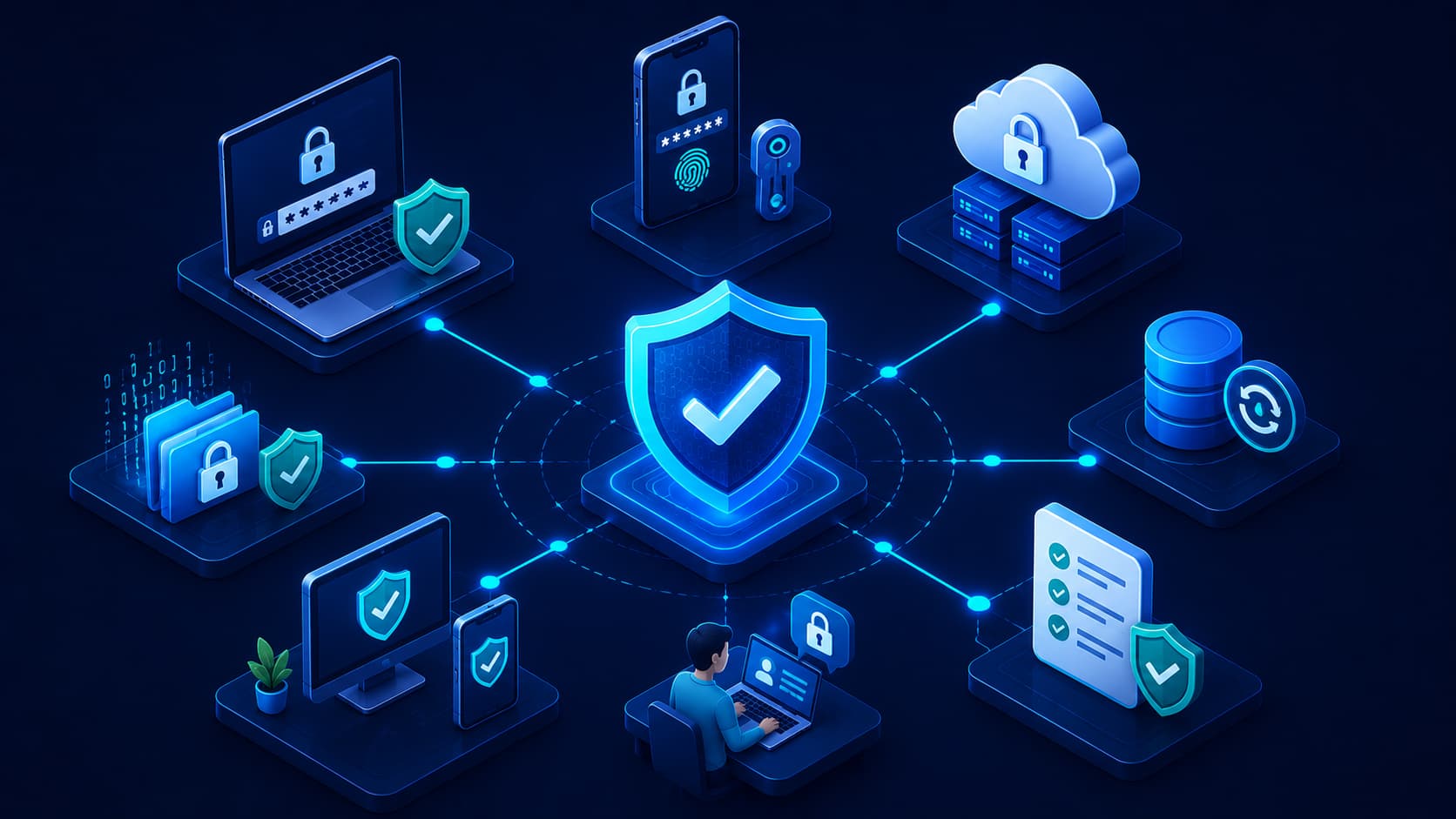
Cybersecurity is often associated with sophisticated security software, advanced firewalls, and highly skilled security professionals.
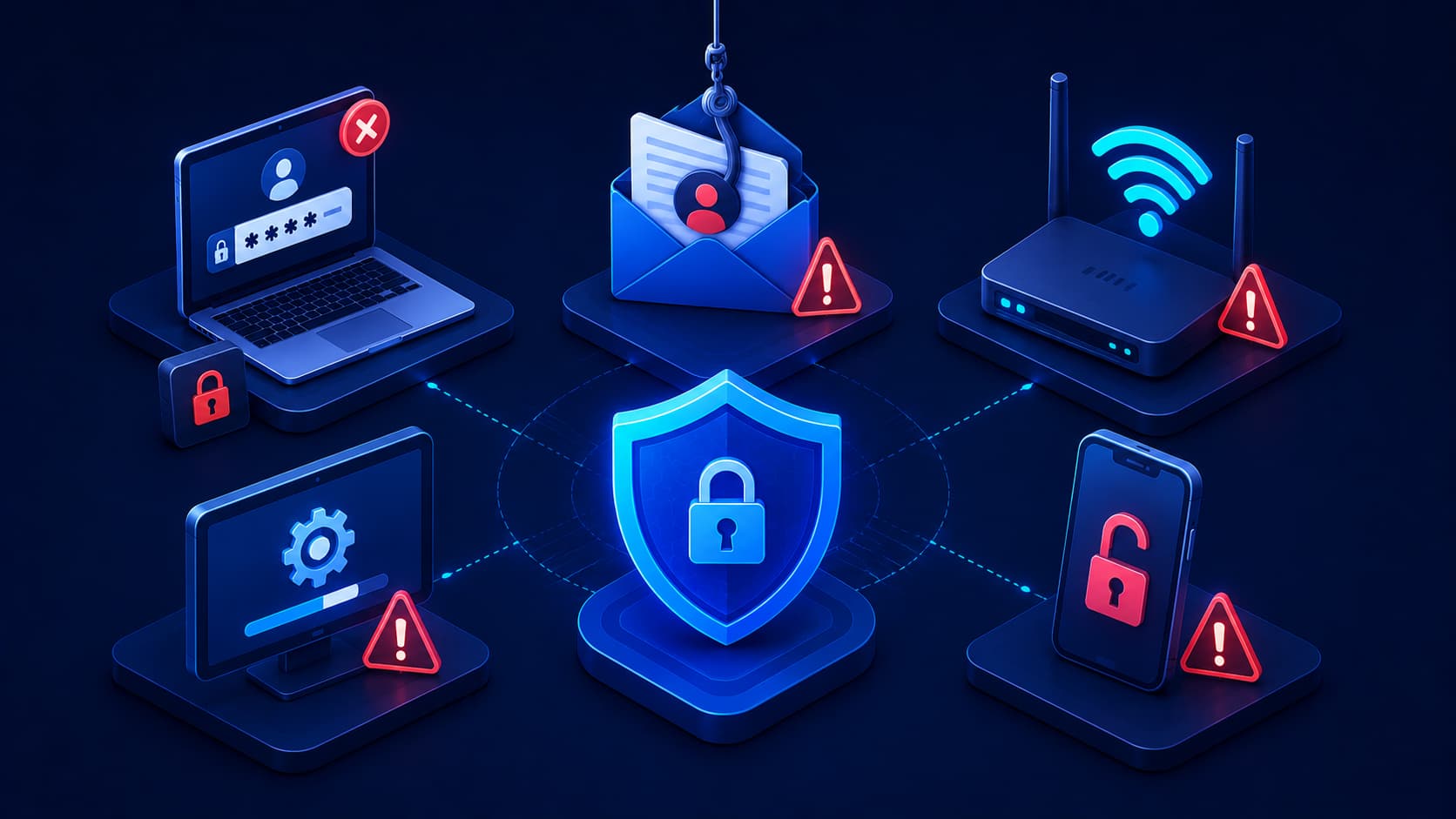
While those technologies are important, they represent only part of the picture. Many successful cyberattacks don't happen because security tools fail—they happen because simple security practices are overlooked.
Consider just a few common examples:
- A reused password.
- An outdated application.
- A phishing email that wasn't questioned.
- An important file that was never backed up.
These seemingly small decisions can have significant consequences.
The good news is that building strong cybersecurity doesn't require perfection.
It starts with consistent habits.
Over time, those habits create multiple layers of protection that make it much harder for attackers to succeed, whether you're protecting personal devices or managing an entire organization.
1. Use Strong and Unique Passwords
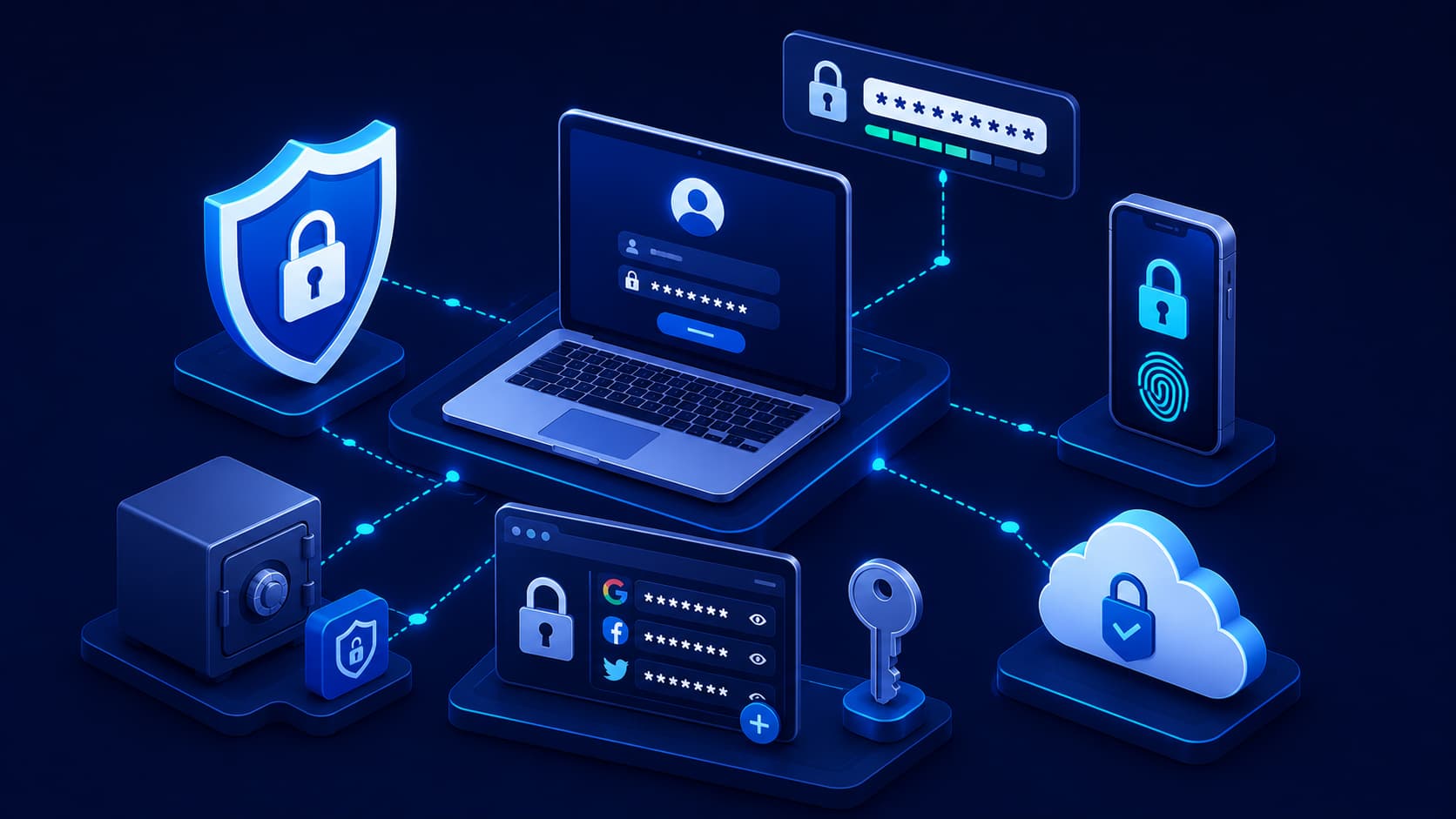
Every important online account should have its own unique password.
Reusing passwords across multiple services creates unnecessary risk because a breach on one platform can quickly affect many others.
Long, unpredictable passwords provide significantly stronger protection than short or commonly used combinations.
If you manage many online accounts, a password manager can simplify the process by securely generating and storing unique passwords for each service.
Why Unique Passwords Matter
Imagine using the same password for your:
- Email account.
- Banking application.
- Cloud storage.
- Social media accounts.
If just one of these services suffers a data breach, attackers may immediately try those same credentials on the others through automated credential stuffing attacks.
Using unique passwords limits the damage to a single account rather than exposing your entire digital identity.
Best Practice
Choose passwords that are:
- At least 12–16 characters long.
- Unique for every important account.
- Stored in a trusted password manager.
- Combined with Multi-Factor Authentication whenever possible.
These simple habits dramatically improve account security with very little additional effort.
2. Enable Multi-Factor Authentication
Passwords alone are no longer enough to protect important accounts.
Whenever a service supports Multi-Factor Authentication (MFA), enabling it should be one of your first security improvements.
Even if your password is compromised, MFA adds an additional verification step that makes unauthorized access much more difficult.
For many online accounts, this simple setting provides one of the highest security benefits relative to the small amount of effort required.
Editorial Insight
Many security improvements require new software or technical knowledge. Enabling MFA is different—it typically takes only a few minutes, yet it can prevent many of the most common account takeover attacks.
3. Keep Software Updated
Software updates do much more than introduce new features.
Many updates fix security vulnerabilities that attackers actively attempt to exploit.
Devices and software that should be updated regularly include:
- Operating systems.
- Web browsers.
- Mobile applications.
- Wi-Fi routers.
- Security software.
Enabling automatic updates, when appropriate, helps ensure important security patches aren't missed.
Why Automatic Updates Help
Attackers often begin exploiting vulnerabilities shortly after they become publicly known.
Automatic updates reduce the amount of time your devices remain exposed by installing security patches as soon as they become available.
4. Back Up Important Data
No cybersecurity strategy is complete without reliable backups.
Unexpected events such as:
- Hardware failures.
- Accidental deletion.
- Ransomware attacks.
- Natural disasters.
can all result in data loss.
Maintaining multiple copies of important information allows recovery without depending on a single device or storage location.
For critical files, combining:
- Local backups.
- Secure cloud backups.
provides additional resilience if one backup method becomes unavailable.
Real-World Example
Imagine your laptop suddenly fails or becomes infected with ransomware.
Without backups, years of important documents and family photos could be permanently lost.
With recent local and cloud backups, however, you can restore your files and continue working with minimal disruption.
5. Stay Alert to Social Engineering
Technology can block many cyber threats, but it cannot eliminate human deception.
Cybercriminals continue to use a wide range of social engineering techniques to manipulate people into revealing sensitive information.
Common examples include:
- Phishing emails.
- Fraudulent phone calls.
- Fake websites.
- Impersonation scams.
Rather than relying on technical exploits, these attacks target human trust and curiosity.
Developing the habit of verifying unexpected requests before taking action remains one of the strongest cybersecurity defenses.
Best Practice
Before responding to an unexpected request:
- Verify the sender's identity.
- Confirm unusual payment or login requests through another communication channel.
- Avoid clicking links before checking where they lead.
- Be cautious of messages that create urgency or pressure you to act immediately.
A few extra moments of verification can prevent costly security incidents.
6. Secure Your Devices
Your computer, smartphone, and tablet often contain far more sensitive information than you realize.
A single device may store:
- Email accounts.
- Saved passwords.
- Banking applications.
- Personal photographs.
- Business documents.
- Authentication apps.
Because so much valuable information is stored on modern devices, protecting them should be a priority.
Recommended security measures include:
- Using a strong screen lock.
- Enabling biometric authentication when available.
- Configuring automatic screen locking after short periods of inactivity.
If your device supports encryption, keep it enabled.
For laptops and smartphones, features that allow you to locate or remotely erase a lost device provide valuable additional protection.
Editorial Insight
Many people focus heavily on protecting online accounts but overlook the devices used to access them. Since smartphones and laptops often contain authentication apps, saved passwords, and personal documents, securing the device itself is just as important as protecting your online accounts.
7. Limit Access to Sensitive Information
Not everyone needs access to every file, account, or system.
Whether you're managing personal accounts or business resources, limiting access reduces the potential impact of a security incident.
In organizations, this concept is known as the principle of least privilege, meaning users receive only the permissions necessary to perform their responsibilities.
Individuals can apply the same idea by:
- Reviewing connected applications.
- Removing unused accounts.
- Revoking permissions that are no longer necessary.
Fewer access points generally mean fewer opportunities for attackers.
Practical Example
Take a few minutes every few months to review which apps have access to your:
- Email account.
- Cloud storage.
- Social media profiles.
- Calendar.
- Contacts.
Removing applications you no longer use reduces unnecessary exposure and strengthens your overall security.
8. Educate Yourself and Others
Technology evolves quickly—and so do cyber threats.
One of the most valuable cybersecurity investments is continuous learning.
Understanding topics such as:
- Common scams.
- Phishing techniques.
- Password security.
- Safe browsing habits.
helps people recognize suspicious activity before it becomes a serious problem.
For businesses, regular cybersecurity awareness training is just as important as deploying technical security controls.
Employees who understand how cyberattacks work often become the organization's first line of defense.
9. Monitor Your Accounts Regularly
Many online services notify users about:
- New login attempts.
- Password changes.
- Unusual account activity.
Rather than ignoring these alerts, review them carefully.
Early detection can prevent a small security issue from becoming a much larger incident.
Organizations should also monitor systems for:
- Unexpected activity.
- Failed login attempts.
- Configuration changes.
Continuous monitoring helps identify potential threats before they cause significant damage.
Best Practice
Enable security notifications on your most important accounts so you're alerted whenever suspicious activity occurs. Responding quickly to unusual login attempts or unauthorized changes can prevent attackers from gaining long-term access.
10. Prepare for Security Incidents
No security strategy can eliminate every risk.
The goal of cybersecurity is not only to prevent attacks but also to respond effectively when something unexpected happens.
For individuals, preparing for security incidents may involve:
- Knowing how to recover compromised accounts.
- Restoring files from backups.
- Contacting financial institutions after suspicious activity.
- Understanding the steps required to secure affected accounts.
Businesses benefit from having documented incident response plans that clearly define:
- Roles and responsibilities.
- Communication procedures.
- Recovery steps.
Preparation often determines how quickly an individual or organization can recover from a cybersecurity event.
Why Preparation Matters
Even organizations with excellent security controls occasionally experience incidents.
What often separates a minor disruption from a major crisis is how quickly people recognize the problem and follow a well-prepared recovery process.
Having backups, recovery procedures, and emergency contacts ready before an incident occurs can significantly reduce downtime and financial losses.
Cybersecurity Is a Continuous Process
One of the biggest misconceptions about cybersecurity is that it's something you complete once and never think about again.
In reality, cybersecurity is an ongoing process.
Every year:
- New software vulnerabilities are discovered.
- Attack techniques continue to evolve.
- Technology changes.
- Organizations adopt new digital services.
Maintaining strong cybersecurity means adapting alongside these changes.
Regularly reviewing security settings, installing updates, improving security awareness, and evaluating new risks all contribute to a stronger security posture.
Rather than aiming for perfect security, focus on continuous improvement.
Editorial Insight
Cybersecurity is not a destination but an ongoing commitment. Even small improvements made consistently—such as reviewing account permissions, updating devices, or learning about new phishing techniques—help strengthen your defenses over time.
Frequently Asked Questions
What Is the Most Important Cybersecurity Best Practice?
There isn't a single cybersecurity practice that is more important than all others.
Strong protection comes from combining multiple security measures, including:
- Strong, unique passwords.
- Multi-Factor Authentication.
- Regular software updates.
- Reliable backups.
- User awareness.
Together, these practices create a layered defense that is far more effective than relying on any single security tool.
Are Cybersecurity Best Practices Different for Businesses?
The core principles remain the same.
However, businesses often implement additional measures such as:
- Access management.
- Employee security awareness training.
- Security monitoring.
- Incident response planning.
These additional controls help organizations manage larger environments and more complex security risks.
How Often Should I Review My Security Settings?
Review important account settings every few months or whenever a service introduces new security features.
You should also review them immediately after any suspected security incident.
Regular reviews help ensure your accounts remain protected as security recommendations evolve.
Can Small Businesses Benefit From Cybersecurity Best Practices?
Absolutely.
Small businesses are frequently targeted because attackers often assume they have fewer security resources.
Following basic cybersecurity practices can significantly reduce risk and improve resilience against common threats.
Is Cybersecurity Only the Responsibility of IT Teams?
No.
Technology teams manage many security controls, but every user contributes to cybersecurity through safe online behavior and responsible handling of information.
Cybersecurity is a shared responsibility across an entire organization as well as within every household.
Conclusion
Strong cybersecurity is built through consistent habits, not a single security product or technology.
Using unique passwords, enabling Multi-Factor Authentication, keeping software updated, backing up important data, securing devices, and staying informed about evolving threats all contribute to a stronger security posture.
Whether you're protecting personal information or managing business systems, cybersecurity is a shared responsibility.
Every thoughtful decision—from verifying a suspicious email to reviewing account permissions—helps reduce risk and makes it more difficult for attackers to succeed.
Final Takeaway
Effective cybersecurity isn't achieved through one perfect solution. Instead, it comes from combining multiple best practices into your daily routine.
By using strong passwords, enabling Multi-Factor Authentication, keeping your software up to date, backing up important data, protecting your devices, limiting unnecessary access, and continuing to learn about emerging threats, you create multiple layers of defense that significantly reduce your risk of becoming a victim of cybercrime.
As digital technology becomes increasingly integrated into everyday life, adopting these habits is one of the most valuable investments you can make in protecting your personal information, maintaining trust, and staying resilient against modern cyber threats.