Every application begins with an idea. Someone identifies a problem that needs solving or imagines a better way to accomplish a task. That idea may eventually become a website, a mobile application, a desktop program, or an enterprise software platform used by millions of people.
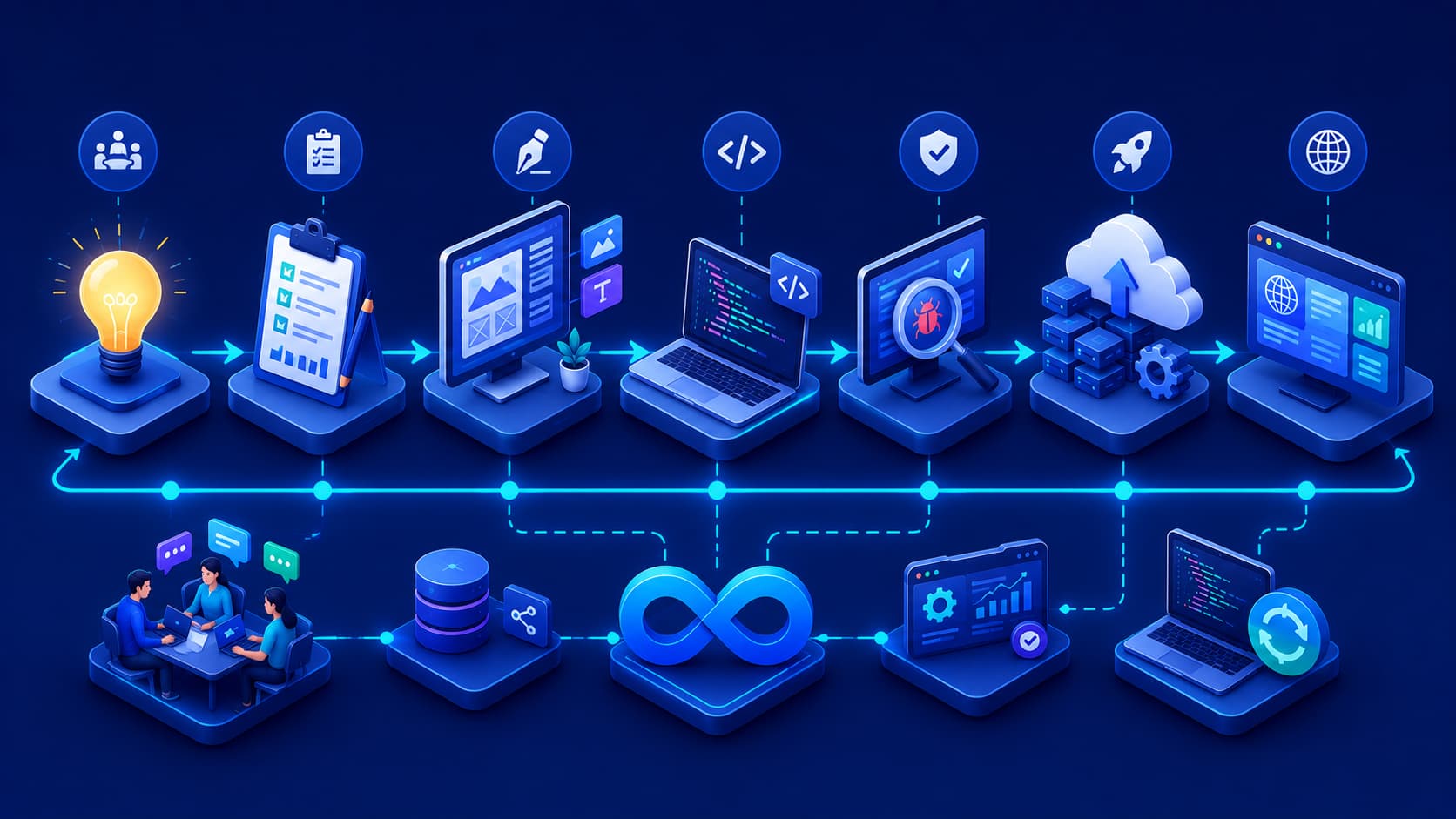
Turning an idea into working software, however, involves far more than writing code. Successful software development requires careful planning, thoughtful design, implementation, testing, deployment, and continuous improvement. Each stage contributes to creating software that is reliable, secure, and capable of meeting user needs. This structured process is commonly known as the Software Development Lifecycle (SDLC).
Although development teams may follow different methodologies, most software projects move through a similar series of stages from the initial concept to the final release. Understanding this lifecycle also highlights why software development is a collaborative effort involving developers, designers, testers, project managers, and many other specialists.
What Is Software Development?
Software development is the process of designing, creating, testing, deploying, and maintaining software applications. It combines technical expertise, creativity, and problem-solving to transform ideas into practical digital solutions.
While programming is an essential part of development, writing code represents only one stage of a much larger workflow. Successful software projects also depend on:
- Careful planning.
- Effective communication.
- Thorough testing.
- Documentation.
- Security.
- Long-term maintenance.
Whether software is built by an individual developer or a global engineering team, the overall objective remains the same: delivering software that effectively solves real-world problems.
Step 1: Planning
Every software project begins with planning. Before writing any code, developers first define the problem the software is intended to solve and establish a clear direction for the project.
Planning typically involves identifying:
- Project goals.
- Target users.
- Core features.
- Technical requirements.
- Budget and timeline.
- Potential risks.
A well-planned project reduces uncertainty, improves communication, and helps development teams make better technical and business decisions throughout the development process.
Practical Example
Imagine a team building an online appointment booking application.
Before any coding begins, they need to answer questions such as:
- Who will use the application?
- What problems will it solve?
- Which features are essential for the first release?
- What platforms will it support?
- How will user data be protected?
Addressing these questions early helps prevent costly changes later in development.
Step 2: Design
Once the project's goals are clearly defined, the next stage is designing the software. Design focuses on both the user experience (UX) and the technical architecture that will support the application.
Development teams may create:
- User interface mockups.
- User flow diagrams.
- Database designs.
- System architecture diagrams.
before development begins.
A thoughtful design process helps ensure that the final application is not only functional but also intuitive, scalable, and easy to maintain.
Editorial Insight
Many software issues can be avoided during the design phase. Investing time in planning the user experience and system architecture often reduces future development costs, simplifies maintenance, and creates a better experience for end users.
Step 3: Development
After planning and design are complete, developers begin writing code. This stage transforms ideas into working software by building the application's various components.
Depending on the project's requirements, developers may implement:
- User interfaces.
- Business logic.
- Databases.
- APIs.
- Security features.
- Integrations with external services.
Rather than completing every feature at once, modern software development is often incremental. Features are continuously developed, reviewed, tested, and refined throughout the project, allowing teams to identify issues early and adapt to changing requirements more effectively.
Step 4: Testing
Writing software is only one part of the development process. Before an application is released to users, it must be thoroughly tested to ensure it behaves as expected under a variety of conditions. Testing helps identify bugs, improve reliability, and verify that new features function correctly before they reach production.
Depending on the project, testing may include:
- Verifying individual features.
- Checking how different components work together.
- Confirming that the software performs well under realistic workloads.
- Identifying security vulnerabilities.
- Ensuring compatibility across supported devices and operating systems.
Finding issues before release is typically far less expensive and less disruptive than fixing them after users encounter problems. For this reason, testing remains one of the most important stages of software development.
Editorial Insight
Modern development teams often integrate testing throughout the entire development lifecycle rather than waiting until coding is complete. Early testing allows defects to be identified sooner, reducing both development time and long-term maintenance costs.
Step 5: Deployment
Once the software has been tested and approved, it is ready to be released to users. This stage is known as deployment. Although deployment represents a significant milestone, it is not the end of the development process—it marks the beginning of the software's operational life.
Deployment methods vary depending on the type of application:
- Desktop applications are typically distributed as installation packages.
- Mobile applications are commonly released through app stores.
- Web applications are usually deployed to production servers or cloud infrastructure.
After deployment, development teams continue monitoring the software to ensure it performs reliably for real users.
Step 6: Maintenance and Continuous Improvement
Software continues evolving long after its initial release. Developers regularly fix bugs, improve performance, strengthen security, and introduce new features based on user feedback, technological changes, and evolving business requirements.
Ongoing maintenance may include:
- Fixing reported issues.
- Improving application performance.
- Updating compatibility with new operating systems.
- Addressing security vulnerabilities.
- Adding requested functionality.
- Improving usability and accessibility.
Many successful software products continue receiving updates for years, demonstrating that software development is an ongoing process rather than a one-time project.
Best Practice
Regular maintenance is just as important as the initial release. Organizations should establish a schedule for monitoring performance, applying security updates, responding to user feedback, and improving the application over time to keep it reliable and competitive.
Software Development Is a Team Effort
Modern software projects are rarely built by a single individual. Instead, teams with different areas of expertise collaborate throughout the development lifecycle to transform ideas into reliable software products.
Depending on the project's size and complexity, contributors may include:
- Software developers.
- User Interface (UI) designers.
- User Experience (UX) designers.
- Quality Assurance (QA) engineers.
- Project managers.
- Security specialists.
- DevOps engineers.
- Technical writers.
Each role contributes specialized knowledge that helps improve software quality, usability, security, and long-term maintainability. Even small development teams often share responsibilities across multiple disciplines to ensure all aspects of the project receive appropriate attention.
Development Methodologies
Not every software project follows exactly the same workflow. Different teams adopt different development methodologies depending on project size, objectives, organizational culture, and customer requirements.
Some teams prefer a highly structured approach with extensive planning before development begins. Others release smaller updates more frequently and adapt continuously based on user feedback. Regardless of the methodology, however, the fundamental stages remain largely the same:
- Planning.
- Design.
- Development.
- Testing.
- Deployment.
- Maintenance.
Although the sequence and timing of these activities may vary, the ultimate objective remains unchanged: delivering software that meets user needs while maintaining high standards of quality, reliability, and security.
Common Misconceptions About Software Development
Software development is often associated only with writing code, but in reality it involves many interconnected activities. Understanding these common misconceptions provides a more accurate picture of how modern software is created and maintained.
Software Development Is Not Just Programming
Programming is an essential part of software development, but it represents only one stage of the overall process. Successful software also depends on planning, design, testing, security, deployment, documentation, and ongoing maintenance.
A complete software project typically includes activities such as:
- Gathering requirements.
- Designing user interfaces.
- Developing application features.
- Testing functionality.
- Deploying the software.
- Maintaining and improving the product after release.
Without these supporting activities, even well-written code may fail to meet user expectations or business requirements.
Editorial Insight
Many beginning developers focus almost entirely on learning programming languages. While coding skills are important, professional software development also requires communication, planning, documentation, collaboration, and problem-solving abilities. These skills often become increasingly valuable as projects grow in size and complexity.
Software Is Never Truly "Finished"
Many people assume software development ends once an application is released. In reality, software continues evolving through updates, performance improvements, security patches, bug fixes, and new features based on user feedback. Continuous improvement has become a standard part of modern software development.
Examples of post-release improvements include:
- Resolving newly discovered bugs.
- Improving application performance.
- Adding requested features.
- Updating compatibility with new operating systems.
- Addressing newly identified security vulnerabilities.
Successful software products often receive updates for many years after their initial launch.
Bigger Teams Don't Always Build Better Software
While large software projects frequently require larger development teams, success depends more on effective collaboration, communication, planning, and technical quality than on team size alone. Small, well-organized teams are often capable of producing outstanding software.
Efficient teamwork, clear objectives, and good development practices generally have a greater impact on project success than simply increasing the number of developers.
Frequently Asked Questions
What Is the Software Development Lifecycle (SDLC)?
The Software Development Lifecycle (SDLC) is a structured process that guides software from planning and design through development, testing, deployment, and ongoing maintenance.
Is Programming the Same as Software Development?
No.
Programming focuses primarily on writing code, while software development includes many additional activities such as planning, design, testing, deployment, documentation, maintenance, and project coordination.
Why Is Software Testing Important?
Testing helps identify defects before software reaches users, improving reliability, security, performance, and overall software quality.
Does Software Development End After Release?
No.
Most software continues receiving updates, bug fixes, security improvements, and new features throughout its lifecycle to meet changing user needs and technological requirements.
Can One Person Develop Software?
Yes.
Small applications are often created by individual developers, while larger and more complex projects typically involve teams with specialized roles working together throughout the development process.
Conclusion
Software development is a structured journey that transforms ideas into practical digital solutions. Although writing code is a central part of that journey, successful software also depends on careful planning, thoughtful design, thorough testing, reliable deployment, and continuous improvement.
Understanding the Software Development Lifecycle provides valuable insight into how modern applications are created, maintained, and continuously improved. Whether you're interested in becoming a developer or simply curious about how software reaches your devices, recognizing the collaborative nature of software development helps explain why today's applications continue evolving long after their initial release.
Final Takeaway
Successful software is rarely the result of coding alone. It is the outcome of a structured process that combines planning, design, development, testing, deployment, and ongoing maintenance, with specialists from multiple disciplines working toward a common goal.
Whether building a simple personal application or a large enterprise platform, following a well-defined development lifecycle helps teams create software that is reliable, secure, scalable, and capable of adapting to users' needs over time.