Software has become part of nearly every aspect of daily life. You might edit documents on your laptop, check email through a web browser, and respond to messages on your smartphone—all within a few minutes. Although these activities seem similar, they often rely on different types of applications.
Some applications are installed directly on your computer, others run entirely inside a web browser, and many are designed specifically for smartphones and tablets. Each approach offers unique advantages and is intended for different situations. Understanding these differences helps explain why certain applications work better on particular devices and why software developers often create multiple versions of the same product.
The three most common categories are:
- Desktop applications
- Web applications
- Mobile applications
Although they frequently provide similar functionality, the way they are developed, delivered, and used can be very different.
What Is a Desktop Application?
A desktop application is software that is installed directly on a computer. Once installed, it runs using the computer's operating system and hardware resources. Desktop applications are commonly used for tasks that require significant computing power, advanced functionality, or close integration with the operating system.
Common use cases include:
- Professional photo editing.
- Video production.
- Software development.
- Computer-aided design (CAD).
- Scientific computing.
- Office productivity.
Many desktop applications can continue working without an internet connection, although certain cloud-based features may still require online access.
Practical Example
A video editor working on a high-resolution film project typically uses a desktop application because it can:
- Access powerful graphics hardware.
- Handle very large media files.
- Deliver high-performance rendering.
- Continue working even if the internet connection is unavailable.
These capabilities make desktop applications especially suitable for professional workloads.
What Is a Web Application?
A web application runs inside a web browser rather than being installed like traditional desktop software. Users access it through the internet using a browser on a computer, tablet, or smartphone.
Most of the application's processing occurs on remote servers or cloud infrastructure, while the browser provides the user interface. Because web applications are centrally managed, users often receive new features automatically without manually installing updates.
These characteristics make web applications particularly valuable for:
- Collaboration.
- Remote work.
- Online education.
- Cloud-based productivity.
- Services that must be accessible across multiple devices.
Editorial Insight
One of the greatest strengths of web applications is accessibility. Users can often continue their work from different computers without installing additional software, provided they have a compatible browser and internet access.
What Is a Mobile Application?
A mobile application is software specifically designed for smartphones and tablets. Unlike desktop applications, mobile apps are optimized for touchscreens, smaller displays, and mobile operating systems.
Mobile applications frequently take advantage of hardware features built into modern devices, including:
- Cameras.
- GPS.
- Microphones.
- Motion sensors.
- Biometric authentication.
- Push notifications.
Because they are designed for portability, mobile applications are ideal for communication, navigation, shopping, fitness tracking, banking, and many other everyday activities performed while users are on the move.
Different Applications, Different Strengths
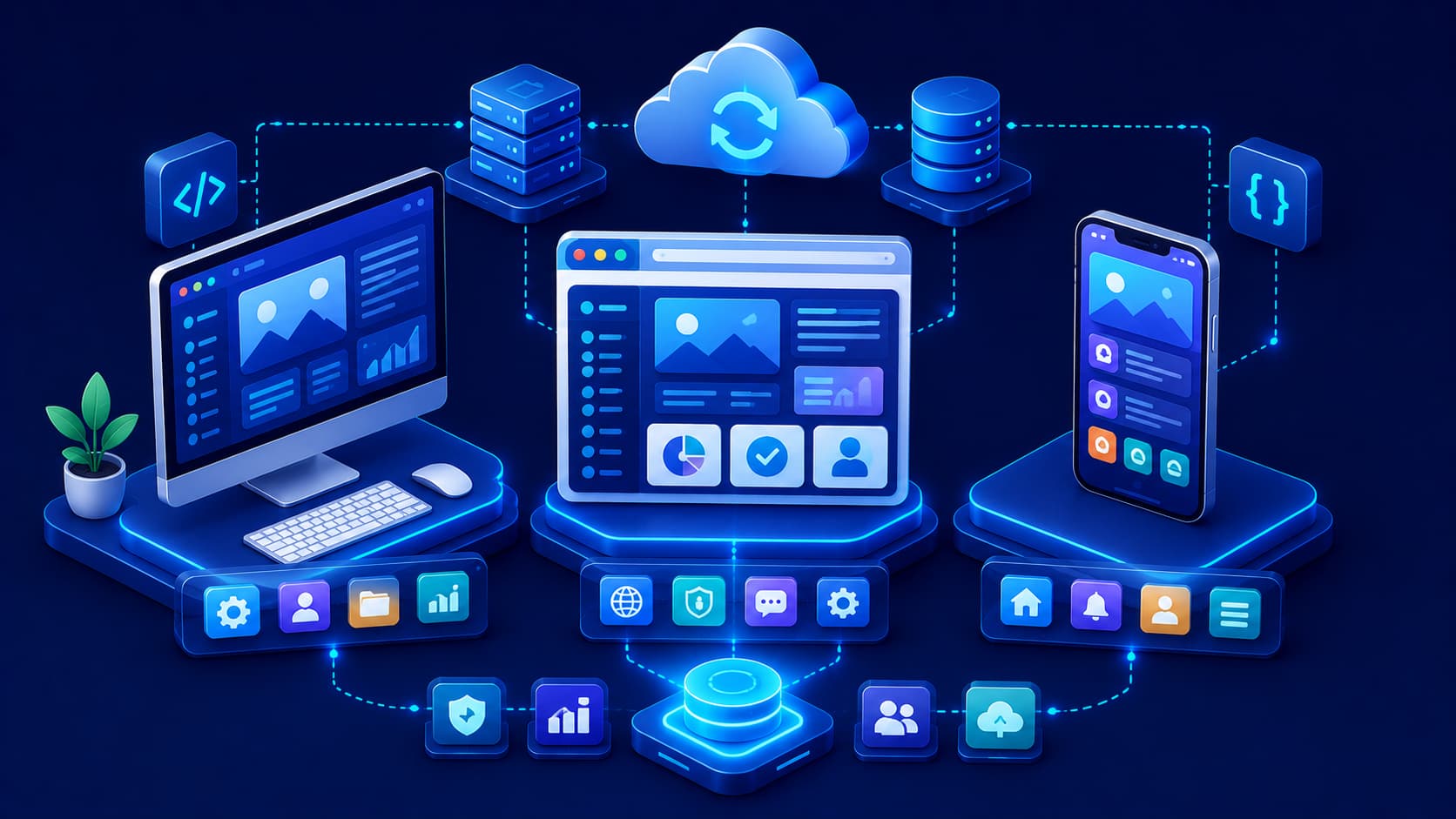
Although desktop, web, and mobile applications sometimes perform similar tasks, each is optimized for a different user experience. Desktop applications prioritize performance and advanced functionality, web applications emphasize accessibility across devices, and mobile applications focus on convenience and integration with mobile hardware.
Rather than competing directly, these application types often complement one another. Many modern software platforms offer desktop, web, and mobile versions that work together to provide a seamless experience regardless of which device a user chooses.
Advantages of Desktop Applications
Desktop applications remain popular because they can take full advantage of a computer's hardware resources. Since they run directly on the operating system, they often deliver excellent performance for demanding tasks that require significant processing power or access to specialized hardware.
Some of their primary advantages include:
- High performance for resource-intensive workloads.
- Deep integration with the operating system.
- Direct access to graphics processors, storage devices, and peripherals.
- The ability to operate without a continuous internet connection.
These strengths make desktop applications especially suitable for professional fields such as engineering, software development, scientific research, graphic design, and media production, where speed and advanced functionality are essential.
Advantages of Web Applications
Web applications have become increasingly common because they are simple to access and maintain. In most cases, users only need a compatible web browser and an internet connection to begin using the software.
Key advantages include:
- Accessibility from multiple devices.
- No manual installation in most cases.
- Automatic updates managed by the service provider.
- Easy collaboration through cloud-based services.
- Centralized data storage and synchronization.
Because updates are handled centrally, users always have access to the latest version without downloading or installing new releases themselves. This makes web applications particularly valuable for education, remote work, customer service, and collaborative business environments.
Editorial Insight
For organizations with distributed teams, web applications simplify software management considerably. IT departments can deploy new features instantly, while employees can access the same tools from different locations using only a web browser.
Advantages of Mobile Applications
Mobile applications are built around portability and convenience. Because they operate on smartphones and tablets, they allow users to stay connected wherever they are.
Common advantages include:
- Optimized touch-based interaction.
- Integration with mobile hardware features.
- Convenient access while traveling.
- Push notifications and real-time alerts.
- Interfaces designed for quick, focused interactions.
These capabilities make mobile applications ideal for communication, navigation, online banking, shopping, health tracking, fitness monitoring, and many everyday activities performed away from a traditional computer.
Can One Application Exist on Multiple Platforms?
Absolutely.
Many modern software products are available as desktop applications, web applications, and mobile applications at the same time. Although each version may have a slightly different interface, they often work together through cloud synchronization to provide a seamless experience across devices.
For example, you might:
- Create a document on your desktop computer.
- Continue editing it through a web browser at school or work.
- Review or share the finished document later on your smartphone.
This cross-platform approach provides flexibility while maintaining a consistent user experience regardless of which device you're using.
Choosing the Right Type of Application
There is no single application type that is best for every situation. The right choice depends on your specific needs, workflow, device, and performance requirements.
Desktop applications are often the best option when:
- Maximum performance is required.
- Advanced features are important.
- Large files are processed regularly.
- Offline work is common.
Web applications are often the preferred choice when:
- Access from multiple devices is important.
- Collaboration is a priority.
- Automatic updates are desirable.
- Minimal installation is preferred.
Mobile applications are usually the best fit when:
- Portability is essential.
- Tasks are completed while traveling.
- GPS, cameras, or other mobile hardware features are needed.
- Quick interactions are more important than complex workflows.
Many organizations successfully combine all three approaches, allowing users to choose the most appropriate platform for each task while maintaining a consistent experience across devices.
Best Practice
When selecting software, focus on how and where it will be used rather than choosing a platform based on popularity. The most effective solution is often one that offers desktop, web, and mobile versions working together, allowing users to switch seamlessly between devices without interrupting their workflow.
Common Misconceptions
Understanding the differences between desktop, web, and mobile applications becomes easier when several common misconceptions are addressed. Although these application types may appear to overlap, each is designed with different goals and strengths in mind.
Web Applications Are Not Just Websites
Although both websites and web applications are accessed through a web browser, they serve different purposes. Traditional websites primarily present information, while web applications allow users to actively interact with content and perform tasks.
Examples of web application activities include:
- Editing documents.
- Managing projects.
- Processing business data.
- Collaborating with team members.
- Managing customer information.
In contrast, a typical informational website is mainly designed for reading articles, viewing products, or browsing content rather than performing interactive work.
Editorial Insight
The line between websites and web applications has become increasingly blurred. Many modern services combine informational pages with interactive features, allowing users to both consume content and complete complex tasks within the same browser experience.
Mobile Apps Are Not Simply Smaller Desktop Apps
Mobile applications are specifically designed for smartphones and tablets. Developers must consider touch controls, battery efficiency, smaller screens, and hardware features such as cameras and GPS when designing the user experience. Simply shrinking a desktop interface rarely produces a good mobile application.
A successful mobile app typically prioritizes:
- Simplicity.
- Fast navigation.
- Touch-friendly controls.
- Efficient battery usage.
- Quick access to essential features.
These design priorities help create a smoother experience for users on mobile devices.
Desktop Applications Are Not Becoming Obsolete
Although cloud services and web applications continue to grow rapidly, desktop software remains essential for many professional workflows that require high performance, advanced hardware access, or reliable offline capabilities.
Industries that continue to rely heavily on desktop applications include:
- Video production.
- Engineering.
- Scientific research.
- Software development.
- 3D modeling.
- Graphic design.
Each application type continues to play an important role in modern computing, and no single approach replaces all the others.
Frequently Asked Questions
What's the Difference Between a Desktop App and a Web App?
A desktop application is installed directly on a computer, while a web application runs inside a web browser and is typically accessed over the internet.
Do Web Applications Always Require an Internet Connection?
Many do, although some modern web applications can provide limited offline functionality using browser technologies.
Why Are Mobile Apps Designed Differently?
Mobile devices have smaller screens, touch interfaces, and specialized hardware features such as cameras and GPS. These characteristics require different design approaches than traditional desktop software.
Can the Same Software Have Desktop, Web, and Mobile Versions?
Yes.
Many modern software platforms provide desktop, web, and mobile versions so users can access the same service across multiple devices while maintaining synchronized data and a consistent experience.
Which Type of Application Is Best?
There is no universal answer.
The best choice depends on:
- The task being performed.
- The device being used.
- Performance requirements.
- User preferences.
Different application types excel in different situations, and many users benefit from using more than one.
Conclusion
Desktop applications, web applications, and mobile applications each play an important role in today's software ecosystem. Desktop applications provide powerful performance and advanced capabilities, web applications emphasize accessibility and collaboration across devices, and mobile applications deliver convenience wherever users go.
Rather than competing with one another, these application types frequently work together to create seamless digital experiences. Many modern software platforms offer synchronized versions across multiple devices, enabling users to start a task on one platform and continue it on another without interruption. Understanding the strengths and limitations of each approach helps users select the right software for different situations while giving aspiring developers a clearer understanding of how modern applications are designed.
Final Takeaway
Desktop, web, and mobile applications are not competing technologies—they are complementary solutions designed for different environments and user needs.
- Desktop applications prioritize performance and advanced functionality.
- Web applications maximize accessibility and collaboration.
- Mobile applications focus on portability and device-specific experiences.
As technology continues to evolve, successful software increasingly combines all three platforms, allowing users to work seamlessly across computers, browsers, smartphones, and tablets while maintaining a consistent and productive experience.