Cloud computing has become one of the most valuable skills in today's technology industry.
From startups launching their first applications to global enterprises serving millions of users, organizations of every size rely on cloud platforms to power their digital services. As cloud adoption continues to accelerate, the demand for professionals with cloud computing skills continues to grow.
This growing demand has inspired many people to begin learning cloud computing.
The challenge, however, is knowing where to start.
A quick online search reveals thousands of tutorials, certification programs, and technical courses. While having so many learning resources is beneficial, it can also feel overwhelming for beginners.
The good news is that you don't need to master everything at once.
Cloud computing is a broad discipline, but it becomes much easier to understand when you approach it through a structured learning path. Rather than jumping directly into advanced services or certification exams, building a strong foundation first will make every future topic easier to learn.
Step 1: Understand the Fundamentals
Before exploring any cloud platform, spend time understanding the core concepts of cloud computing.
You should be comfortable explaining:
- What cloud computing is.
- Why organizations adopt cloud services.
- The differences between public, private, and hybrid cloud.
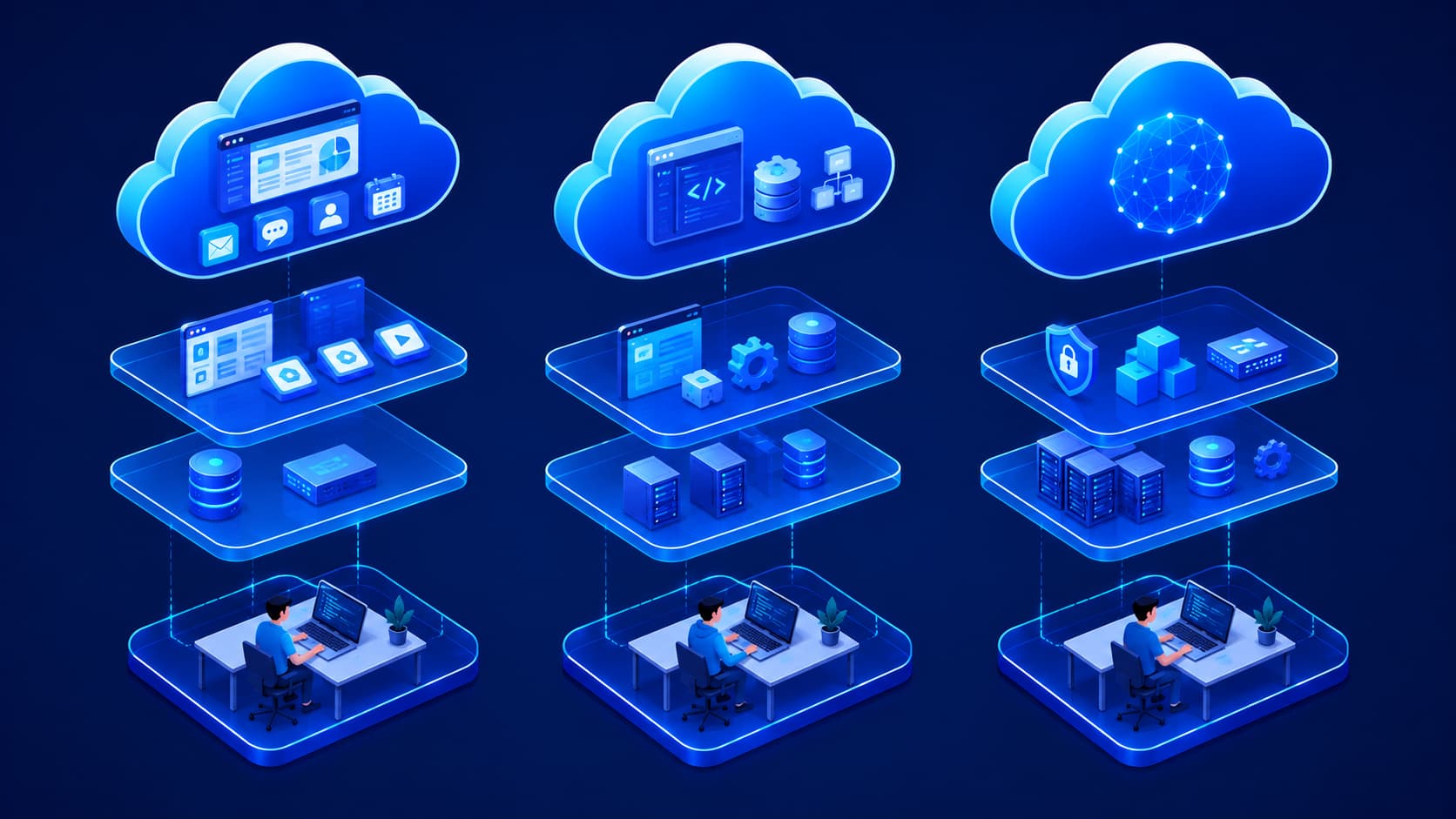
- The purpose of SaaS, PaaS, and IaaS.
- How cloud storage works.
- Basic cloud security principles.
These topics form the foundation for nearly everything you'll learn later.
Without a solid understanding of these concepts, advanced cloud services often seem confusing because they build upon these basic principles.
Why Fundamentals Matter
Many beginners are eager to start deploying virtual machines or experimenting with advanced cloud services.
However, understanding why those services exist is just as important as learning how to use them.
Strong fundamentals help you:
- Learn new cloud services more quickly.
- Troubleshoot problems more effectively.
- Understand documentation with greater confidence.
- Adapt more easily to different cloud providers.
Editorial Insight
Every major cloud platform uses different terminology and interfaces, but the underlying concepts remain remarkably similar. Investing time in learning the fundamentals first will make it much easier to transition between different cloud ecosystems throughout your career.
Step 2: Learn Basic Networking
Cloud computing doesn't replace networking—it depends on it.
You don't need to become a network engineer, but understanding a few essential networking concepts will make learning cloud platforms significantly easier.
Important topics include:
- IP addresses.
- DNS (Domain Name System).
- HTTP and HTTPS.
- Firewalls.
- Virtual networks.
- Load balancers.
These concepts appear throughout cloud environments regardless of which provider you choose.
Real-World Example
Imagine hosting a website in the cloud.
Visitors type your domain name into a browser, DNS translates that name into an IP address, a load balancer distributes incoming traffic, and firewall rules determine which requests are allowed to reach your application.
Understanding these networking components makes cloud architecture much easier to understand.
Best Practice
Don't try to memorize networking terminology. Instead, focus on understanding how each component contributes to delivering a cloud-based application securely and reliably.
Step 3: Learn Linux Basics
Many cloud servers run Linux.
Even if you're primarily a Windows user, learning basic Linux commands will make working in cloud environments much more comfortable.
Focus on practical skills such as:
- Navigating directories.
- Managing files.
- Installing software.
- Viewing system logs.
- Managing file permissions.
- Using the command line.
You don't need to memorize every command.
The goal is simply to become confident performing common administrative tasks in a Linux environment.
Why Linux Is Important
Cloud platforms frequently use Linux because it is:
- Stable.
- Efficient.
- Highly customizable.
- Widely supported across cloud services.
As your cloud skills grow, Linux knowledge will become increasingly valuable, especially if you work with servers, containers, or DevOps tools.
Step 4: Choose One Cloud Platform
Many beginners try to learn Amazon Web Services (AWS), Microsoft Azure, and Google Cloud simultaneously.
While this sounds ambitious, it often creates unnecessary confusion.
A better approach is to choose one platform and learn it well.
Once you understand the concepts within one cloud ecosystem, transferring that knowledge to another provider becomes much easier because many core principles remain the same.
Rather than comparing every service across multiple providers, focus on developing practical experience with a single platform before expanding your knowledge.
Editorial Insight
Cloud providers may use different service names, pricing models, and management interfaces, but concepts such as virtual machines, object storage, networking, databases, and identity management exist across nearly every major platform. Mastering one provider builds a strong foundation for learning others later.
Step 5: Build Hands-On Experience
Reading articles, watching tutorials, and completing online courses are excellent ways to learn cloud computing concepts.
However, real learning begins when you start using cloud services yourself.
Most major cloud providers offer free tiers or trial credits that allow beginners to explore their platforms without making a significant financial investment.
Rather than trying dozens of services at once, begin with a few simple projects that reinforce the concepts you've already studied.
Examples include:
- Creating a virtual machine.
- Uploading files to cloud storage.
- Hosting a simple website.
- Configuring a basic cloud database.
Each completed project strengthens both your technical skills and your confidence.
Why Practical Experience Matters
Hands-on projects teach lessons that books and videos often cannot.
As you build real cloud environments, you'll naturally learn how to:
- Solve unexpected problems.
- Read technical documentation.
- Debug configuration issues.
- Understand how different cloud services work together.
These experiences closely resemble the challenges you'll encounter in professional cloud environments.
Editorial Insight
One of the fastest ways to improve your cloud skills is to experiment without fearing mistakes. Every deployment error, failed configuration, or troubleshooting session teaches valuable lessons that are difficult to gain through passive learning alone.
Step 6: Learn Basic Security Practices
Security should be part of your cloud journey from the very beginning.
Many beginners focus only on launching cloud services while overlooking how to protect them.
Develop good security habits early by:
- Enabling multi-factor authentication (MFA).
- Creating strong, unique passwords.
- Reviewing user access permissions.
- Understanding the shared responsibility model.
These practices not only make your cloud environments safer but also prepare you for real-world IT operations where security is an everyday responsibility.
Security Shouldn't Be an Afterthought
Some learners postpone studying cloud security until after mastering infrastructure.
In reality, security is woven into nearly every cloud service.
Understanding security from the beginning helps you develop safer habits and reduces the likelihood of introducing vulnerabilities as your projects become more advanced.
Best Practice
Treat every practice project as if it were running in a production environment. Use strong authentication, avoid unnecessary permissions, and become familiar with basic security recommendations even when experimenting with free cloud services.
Step 7: Understand DevOps Fundamentals
As your cloud knowledge grows, you'll quickly encounter another important term: DevOps.
Cloud computing and DevOps are closely connected because modern software development increasingly depends on automation and cloud infrastructure.
You'll frequently hear concepts such as:
- Continuous Integration (CI).
- Continuous Deployment (CD).
- Infrastructure as Code (IaC).
- Containers.
- Automation pipelines.
You don't need to master these topics immediately.
However, understanding what they are and why organizations use them will make your transition into advanced cloud technologies much smoother.
How Cloud and DevOps Work Together
DevOps focuses on improving how software is built, tested, deployed, and maintained.
Cloud platforms provide the scalable infrastructure that enables many DevOps practices.
Together, they help organizations:
- Release software more quickly.
- Automate repetitive tasks.
- Improve reliability.
- Respond to customer needs faster.
This is why many modern learning roadmaps combine cloud computing and DevOps rather than treating them as completely separate disciplines.
Editorial Insight
Think of cloud computing as the infrastructure and DevOps as the workflow that makes full use of that infrastructure. Understanding both areas gives you a broader perspective on how modern software systems are developed and operated.
Step 8: Earn Certifications (Optional)
Cloud certifications can be valuable, but they shouldn't be your first objective.
Many beginners make the mistake of studying only to pass an exam without truly understanding how cloud technologies work in practice.
A more effective approach is to gain practical experience first.
Once you've built several projects and developed confidence with the fundamentals, certifications become much more meaningful because they validate skills you've already developed.
Cloud certifications can help:
- Demonstrate your knowledge.
- Strengthen your résumé.
- Increase confidence during job interviews.
However, employers generally value practical experience just as highly as certification credentials.
Choosing the Right Time
Consider pursuing a certification after you can comfortably:
- Launch and configure cloud services.
- Understand core networking concepts.
- Apply basic security practices.
- Troubleshoot common cloud issues.
At that stage, certification preparation becomes a review of existing knowledge rather than an introduction to unfamiliar concepts.
Common Mistakes Beginners Should Avoid
Learning cloud computing becomes much easier when you avoid a few common pitfalls.
Many beginners struggle not because cloud technology is too difficult, but because they approach the learning process inefficiently.
Understanding these common mistakes can help you make faster and more consistent progress.
Trying to Learn Everything at Once
Cloud computing is an enormous field.
Attempting to master every cloud provider, programming language, DevOps tool, and security technology at the same time often leads to frustration and burnout.
Instead, focus on one topic at a time.
Building your knowledge gradually creates a much stronger foundation than trying to absorb everything simultaneously.
Skipping the Fundamentals
Advanced cloud services often look exciting, making it tempting to jump directly into complex deployments.
However, understanding networking, operating systems, cloud architecture, and security will make advanced topics much easier later.
Strong fundamentals consistently pay off throughout your learning journey.
Learning Without Building Projects
Watching tutorials can create the illusion of progress.
Real understanding develops when you:
- Build applications.
- Configure cloud services.
- Troubleshoot problems.
- Improve your own projects.
Even small projects provide practical experience that videos alone cannot replace.
Comparing Yourself to Others
Technology evolves rapidly, and every learner progresses at a different pace.
Comparing yourself with professionals who have spent years working in cloud computing can become discouraging.
Instead, focus on steady improvement.
Consistency matters far more than speed.
Editorial Insight
The most successful cloud professionals rarely learn everything at once. They build their expertise gradually through consistent practice, curiosity, and continuous improvement over time.
Frequently Asked Questions
How Long Does It Take to Learn Cloud Computing?
The basic concepts can typically be learned within a few weeks of consistent study.
Developing practical skills and professional-level experience usually requires several months of hands-on learning, depending on your schedule and the amount of time you dedicate to building projects.
Do I Need to Know Programming First?
No.
Many cloud computing fundamentals can be learned without prior programming experience.
However, as you move into automation, DevOps, and Infrastructure as Code (IaC), learning basic scripting languages will become increasingly valuable.
Which Cloud Platform Should Beginners Choose?
Any major cloud provider is a suitable starting point.
The most important goal is to understand the underlying cloud concepts rather than memorizing the interface of a specific platform.
Once you've mastered one provider, transitioning to another becomes much easier because many core concepts remain the same.
Is Cloud Computing a Good Career Choice?
Yes.
Cloud computing continues to be one of the fastest-growing areas in information technology.
Career opportunities exist across many fields, including:
- Cloud infrastructure.
- Software development.
- Cybersecurity.
- DevOps.
- IT operations.
As organizations continue migrating services to the cloud, demand for cloud professionals is expected to remain strong.
Can I Learn Cloud Computing on My Own?
Absolutely.
Many successful professionals begin by combining:
- Official documentation.
- Hands-on practice.
- Personal projects.
- Structured learning resources.
The key is to remain consistent and continue developing practical experience over time.
Best Practice
Set realistic weekly learning goals instead of trying to master everything immediately. Completing one small project every week often leads to greater long-term progress than spending months studying without applying what you've learned.
Conclusion
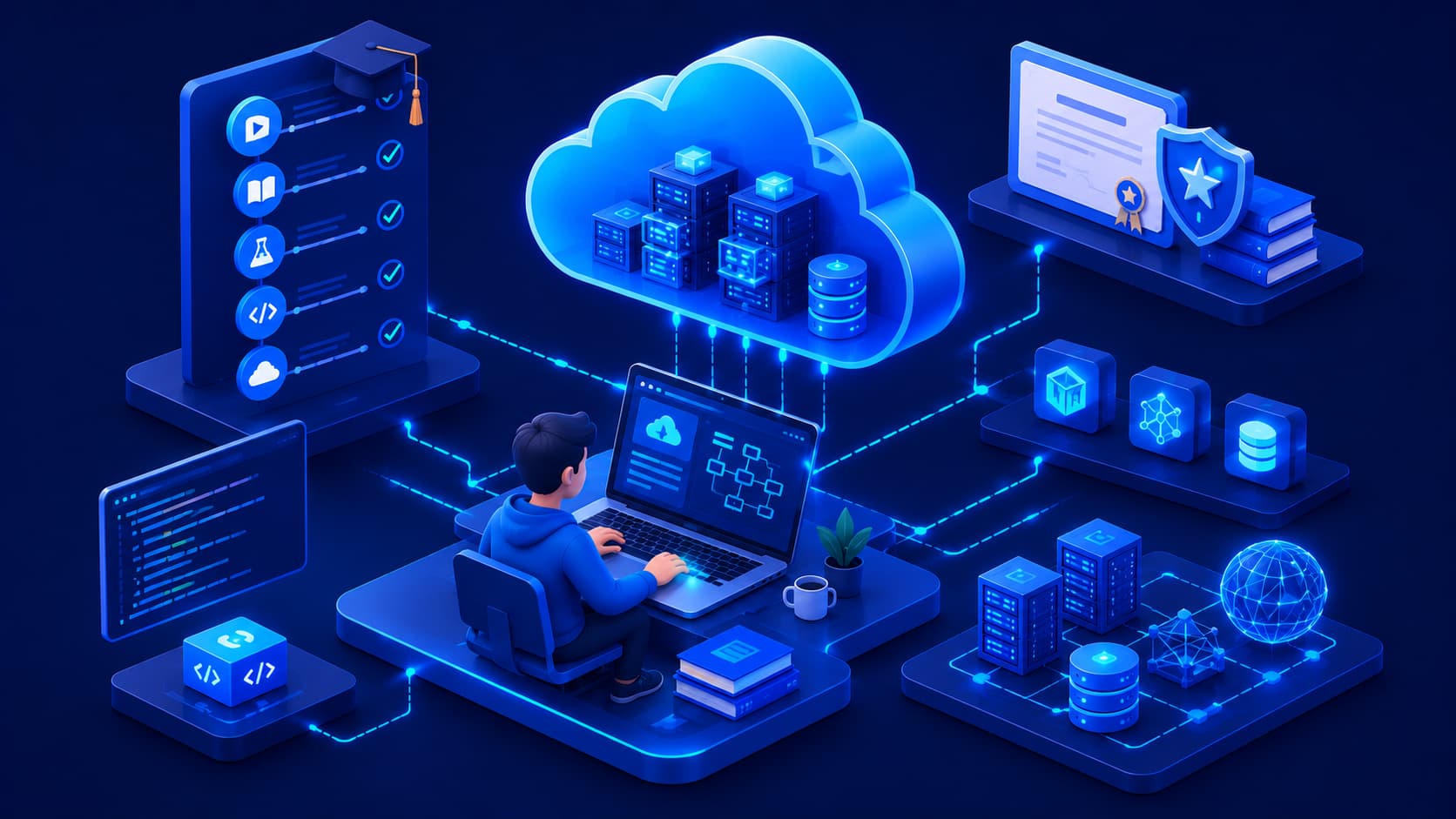
Learning cloud computing may seem overwhelming at first, but it becomes much more manageable when approached one step at a time.
Start by understanding the fundamentals.
Then strengthen your knowledge by:
- Building practical projects.
- Learning basic networking.
- Becoming comfortable with Linux.
- Developing good security habits.
- Exploring DevOps concepts gradually.
There's no need to rush.
Cloud computing is a journey rather than a race.
Each new concept builds upon previous knowledge, and every completed project increases your confidence and practical skills.
Final Takeaway
Becoming proficient in cloud computing isn't about memorizing hundreds of services or collecting certifications as quickly as possible.
It's about building a strong foundation, gaining hands-on experience, and continuously expanding your knowledge through real-world practice.
With patience, curiosity, and consistent effort, you'll develop the skills needed to understand modern cloud technologies and prepare yourself for a wide range of opportunities in today's rapidly evolving technology industry.