Artificial intelligence is often discussed as though it were a single technology with a single level of intelligence. In reality, AI is a broad field that encompasses many different systems, each designed with unique capabilities, limitations, and purposes. Some AI applications specialize in recognizing images, while others generate text, translate languages, recommend products, or analyze medical data. Although these systems all fall under the umbrella of artificial intelligence, they vary significantly in how they operate and what they are capable of accomplishing.
This diversity is why you'll frequently encounter terms such as Narrow AI, General AI, and Superintelligent AI. At first glance, these classifications may seem confusing, especially for beginners. However, they simply describe different levels of intelligence and flexibility rather than entirely different technologies. Understanding these categories makes it much easier to distinguish between AI systems that already exist today and those that remain theoretical concepts for future research.
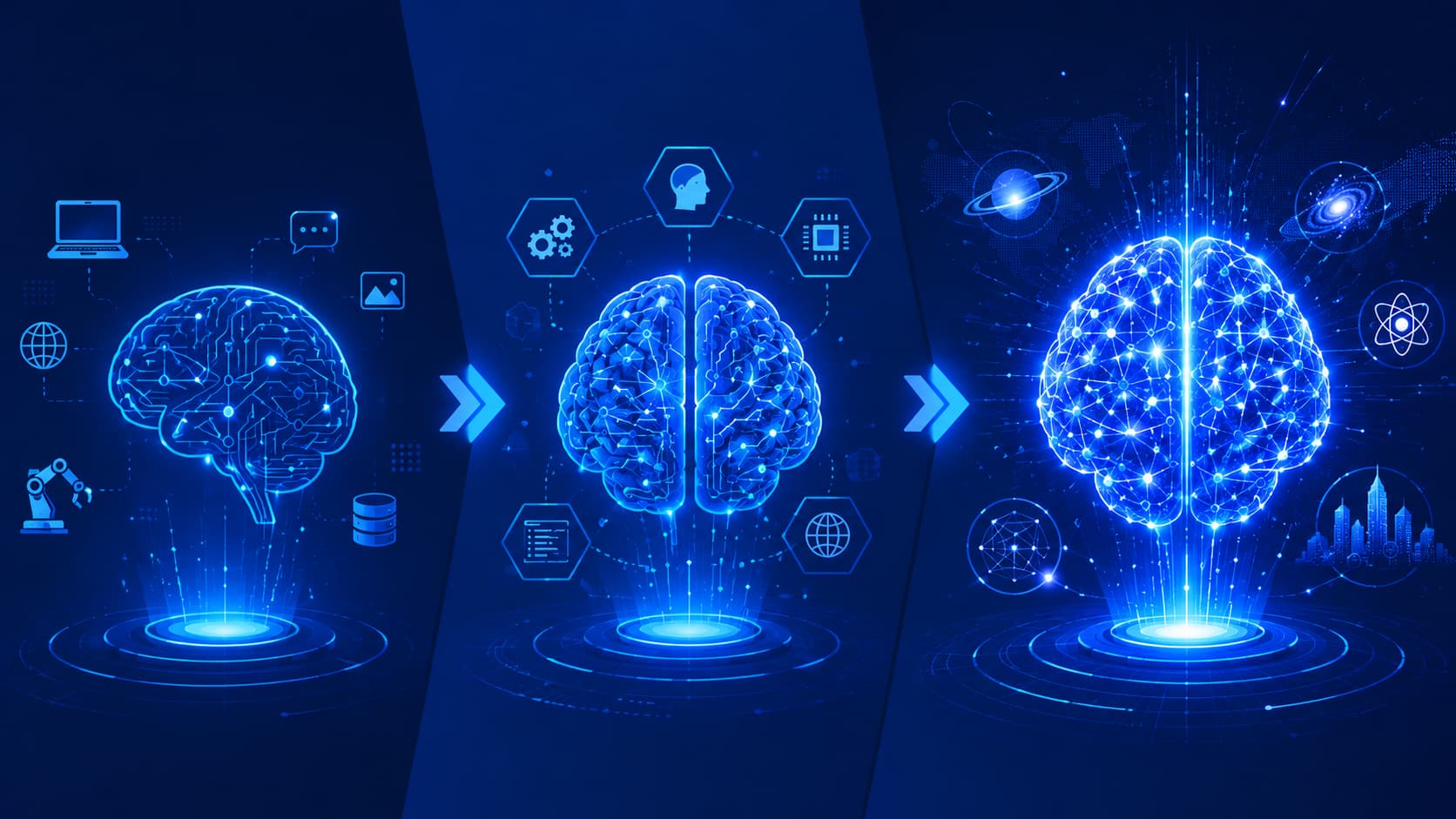
One helpful way to visualize AI is as a spectrum. At one end are systems designed to perform a single task exceptionally well. At the other end are hypothetical systems capable of learning, reasoning, adapting, and solving problems across virtually every domain, much like—or even beyond—human intelligence. Despite frequent media attention surrounding advanced AI, nearly every AI application available today belongs to the first category.
Understanding these distinctions is becoming increasingly important. News headlines, product announcements, and social media discussions often blur the line between today's practical AI and tomorrow's research ambitions. By learning how AI is classified, you'll be better equipped to evaluate technological claims, understand the capabilities of current AI tools, and separate realistic expectations from science fiction.
In this guide, you'll learn why artificial intelligence is divided into different categories, explore the three primary capability-based classifications, examine another common way researchers classify AI, and understand why these distinctions matter in the real world.
Why Is AI Divided into Different Types?
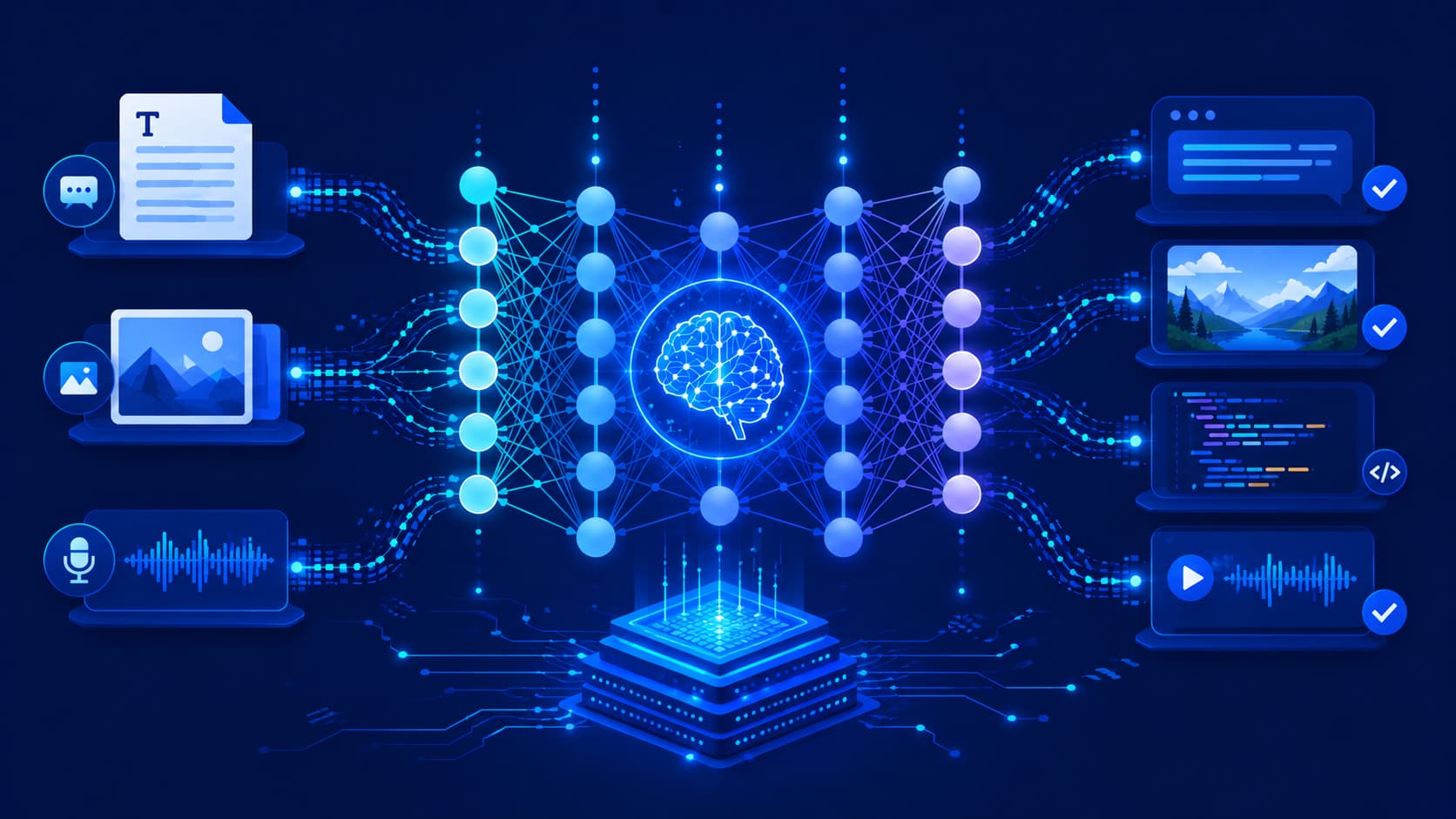
Not every AI system is built for the same purpose. Some systems recognize faces, others translate languages, recommend products, generate images, write articles, or answer complex questions. Although all of these applications fall within the field of artificial intelligence, their capabilities differ dramatically.
Researchers classify AI into different categories to describe how intelligent, flexible, and adaptable a system actually is. These classifications provide a common framework for discussing AI development and help explain why one AI application cannot automatically perform tasks outside the area it was designed for.
For example, your smartphone's voice assistant cannot suddenly diagnose complex medical conditions, and an AI chatbot cannot instantly learn to fly an airplane without extensive additional training. Every AI system is created with specific objectives, training data, and operational boundaries. Understanding those boundaries is just as important as understanding the capabilities themselves.
Practical Example
Imagine two different AI systems.
The first is trained exclusively to detect fraudulent banking transactions. It can analyze millions of financial records with remarkable accuracy but has no ability to translate languages or write software code.
The second is an AI image generator capable of creating realistic illustrations from text prompts. Although highly skilled at generating images, it cannot independently diagnose diseases or control industrial machinery.
Both systems are intelligent within their own domains, yet neither possesses universal intelligence. This illustrates why AI is categorized based on its capabilities.
Editorial Insight
Many people assume that every new AI application represents a step toward human-level intelligence.
In reality, most breakthroughs involve creating systems that become exceptionally good at one particular task rather than developing machines capable of general reasoning. As a result, advances in AI often improve specialization rather than expanding intelligence across every possible domain.
Narrow AI
Narrow AI, also known as Weak AI, is the only type of artificial intelligence that exists today. Despite its name, there is nothing "weak" about Narrow AI. In fact, these systems often outperform humans when performing highly specialized tasks within carefully defined environments.
For example, an AI model trained to identify signs of skin cancer from medical images may detect subtle visual patterns that are difficult for even experienced specialists to notice. Another AI system may analyze millions of financial transactions every second to identify fraudulent activity almost instantly. These systems demonstrate extraordinary performance—but only within the specific tasks they were designed to perform.
The defining characteristic of Narrow AI is specialization. A model trained to recognize medical images cannot suddenly compose music, recommend movies, or solve engineering problems without being trained for those entirely different tasks. Unlike humans, Narrow AI cannot transfer knowledge freely between unrelated domains.
Many AI applications people use every day belong to this category, including:
- ChatGPT
- Google Gemini
- Microsoft Copilot
- Google Translate
- Siri
- Alexa
- Face ID
- Netflix recommendations
- Spotify recommendations
Although these tools often appear remarkably intelligent, each has been designed for a particular purpose rather than possessing broad, human-like intelligence.
Best Practice
When evaluating AI products, ask yourself a simple question:
"What specific problem was this AI trained to solve?"
Understanding an AI system's intended purpose helps set realistic expectations and reduces the likelihood of overestimating its capabilities. Most modern AI tools excel because they are highly specialized—not because they possess general intelligence.
General AI
If Narrow AI is designed to solve one specific problem, General AI (AGI) represents the idea of a machine capable of performing virtually any intellectual task that a human can. Rather than specializing in a single domain, General AI would be able to learn new skills, apply knowledge across different subjects, adapt to unfamiliar situations, and continue improving without requiring separate training for every new challenge.
Imagine asking an AI assistant to write business emails in the morning, troubleshoot complex software problems in the afternoon, learn to play a musical instrument in the evening, and help develop a long-term business strategy before bedtime—all without retraining or switching to a different model. That level of flexibility represents the vision behind General AI.
Unlike today's AI systems, General AI would not be confined to one specialty. It could transfer knowledge from one field to another, solve unfamiliar problems, and continuously expand its understanding much like humans do throughout their lives. This ability to generalize knowledge is considered one of the defining characteristics separating General AI from today's Narrow AI systems.
Despite frequent media discussions, however, General AI does not currently exist. Researchers around the world continue exploring the possibility, but today's AI systems remain highly specialized and are designed to perform specific tasks rather than demonstrating broad, human-like intelligence. For now, General AI remains a long-term research objective rather than a commercially available technology.
Practical Example
Suppose you ask today's AI to:
- Write an article.
- Translate a document.
- Summarize a research paper.
- Generate computer code.
Modern AI can perform these tasks remarkably well because they fall within areas for which it has been trained.
However, if that same system were expected to independently master entirely new scientific disciplines, invent original learning strategies, or transfer knowledge between completely unrelated fields exactly as humans do, it would quickly reach its current limitations.
That difference illustrates why today's AI is still classified as Narrow AI rather than General AI.
Editorial Insight
Many news headlines suggest that General AI is only a few years away.
In reality, no scientific consensus exists regarding when—or even whether—human-level general intelligence will be achieved. While current AI capabilities continue improving rapidly, significant scientific and engineering challenges remain before researchers can build systems that genuinely reason, learn, and adapt across every domain like humans.
Superintelligent AI
Beyond General AI lies an even more ambitious concept known as Superintelligent AI. This theoretical form of artificial intelligence would surpass human intelligence across virtually every intellectual activity, including scientific research, engineering, medicine, creativity, strategic planning, and problem-solving.
A Superintelligent AI could potentially analyze enormous amounts of information within seconds, discover new scientific theories, develop breakthrough medical treatments, design advanced technologies, and solve problems that currently exceed human capability. Such possibilities explain why Super AI is frequently discussed in conversations about the long-term future of artificial intelligence.
However, it's important to recognize that Superintelligent AI remains entirely theoretical. No existing AI system possesses these capabilities, and discussions surrounding Super AI are primarily focused on ethics, governance, long-term planning, and AI safety rather than practical implementation.
Some researchers believe preparing for this possibility is worthwhile, while others argue it is still too early to predict whether such technology will ever become reality. Regardless of differing opinions, Super AI should be understood as a future concept rather than a current technology.
Best Practice
When reading articles or watching videos about "superintelligent AI," pay close attention to whether the discussion is describing:
- Existing technology.
- Ongoing scientific research.
- Future predictions.
- Personal opinions.
- Science fiction.
Separating these categories helps avoid unrealistic expectations about what artificial intelligence can currently accomplish.
Another Way to Classify Artificial Intelligence
The capability-based classification—Narrow AI, General AI, and Super AI—is the most familiar way to categorize artificial intelligence. However, researchers also classify AI based on how systems function, providing another useful perspective for understanding AI development.
This functional classification is less commonly discussed outside research communities, but you'll frequently encounter these terms in academic publications, technical documentation, and technology news.
Reactive Machines
Reactive Machines represent the simplest form of artificial intelligence.
These systems respond only to information available in the present moment and do not remember previous experiences or learn from earlier interactions. Every decision is made independently using the current input.
One of the most famous examples is IBM Deep Blue, the chess computer that defeated world chess champion Garry Kasparov in 1997. Although Deep Blue could analyze millions of possible chess moves, it had no memory of previous matches and learned nothing from earlier games. Every move was calculated from scratch.
Limited Memory AI
Limited Memory AI is the type of artificial intelligence most commonly used today.
Unlike Reactive Machines, these systems can temporarily use recent information to improve future decisions. Navigation applications, recommendation systems, autonomous driving research, and modern AI chatbots all rely on some form of limited memory to produce more relevant results.
For example, a navigation application remembers current traffic conditions before suggesting the fastest route. Likewise, AI chatbots use recent conversation history to generate responses that remain consistent with the ongoing discussion.
Most modern AI systems—including generative AI—belong to this category because they can utilize recent context without possessing long-term human-like memory.
Practical Example
Imagine asking an AI chatbot several related questions.
Instead of treating each question independently, the chatbot remembers the recent conversation so it can provide answers that remain relevant to the discussion.
That temporary contextual awareness is one of the defining characteristics of Limited Memory AI.
Theory of Mind AI
Theory of Mind AI is a research concept that represents the next stage beyond Limited Memory AI. The goal is to develop artificial intelligence capable of understanding emotions, beliefs, intentions, motivations, and social interactions in a way that more closely resembles human communication.
Humans naturally interpret facial expressions, tone of voice, body language, and emotional context during conversations. We can often recognize when someone is joking, being sarcastic, feeling frustrated, or hiding their emotions. Current AI systems, however, do not truly understand these emotional states. Instead, they identify statistical patterns in language and behavior that are associated with particular emotions.
If Theory of Mind AI becomes a reality, future systems could adapt their communication based not only on the words people use but also on their emotional state, intentions, and personal circumstances. Such capabilities could significantly improve education, healthcare, customer service, and human-computer interaction.
At present, however, Theory of Mind AI remains an active area of research rather than a technology available for everyday use.
Practical Example
Imagine a virtual tutor helping a student solve difficult mathematics problems.
A modern AI tutor can explain concepts and answer questions.
A future Theory of Mind AI, however, might recognize that the student is becoming frustrated, adjust its teaching style, slow the pace of the lesson, provide encouragement, and present simpler examples before continuing.
That type of emotional understanding is still beyond the capabilities of today's AI systems.
Editorial Insight
Many conversational AI systems appear empathetic because they generate responses that resemble human conversation.
However, this should not be confused with genuine emotional understanding.
Current AI models recognize patterns associated with emotional language, but they do not experience feelings, intentions, or consciousness in the way humans do.
Self-Aware AI
The final stage in the functional classification of artificial intelligence is Self-Aware AI.
In theory, this type of AI would possess consciousness, self-awareness, and an understanding of its own existence. Rather than simply responding to information, a self-aware system would understand itself as an independent entity capable of reflecting on its own thoughts and actions.
This concept is widely explored in science fiction, philosophy, and discussions about the long-term future of artificial intelligence. Stories featuring intelligent robots or conscious computer systems often assume the existence of self-aware AI.
Despite its popularity in fiction, there is currently no scientific evidence that modern AI systems possess consciousness or self-awareness. Today's AI models generate responses by recognizing statistical patterns within data rather than experiencing awareness or subjective thought.
For now, Self-Aware AI remains a purely theoretical concept.
Best Practice
When evaluating claims about conscious AI, distinguish between:
- Human-like conversation.
- Emotional language generation.
- Genuine consciousness.
A chatbot may appear intelligent or emotionally expressive, but this does not mean it possesses self-awareness. Understanding this distinction helps avoid many common misconceptions surrounding modern AI.
Comparing the Main Types of AI
Understanding the differences between the primary capability-based categories becomes much easier when viewed side by side. The comparison below highlights which categories exist today and what each is designed to achieve.
| AI Type | Exists Today? | Primary Capability |
|---|---|---|
| Narrow AI | ✅ Yes | Performs specific tasks exceptionally well |
| General AI | ❌ No | Can learn and perform a wide variety of intellectual tasks similar to humans |
| Superintelligent AI | ❌ No | Would surpass human intelligence across nearly every field |
For most people, Narrow AI is the only category they interact with in everyday life. Whether using virtual assistants, recommendation systems, AI chatbots, translation services, or image generators, these applications are all examples of highly specialized AI rather than human-level intelligence.
Common Misconceptions
Artificial intelligence evolves rapidly, making it easy for misconceptions to spread through news headlines, social media, and marketing campaigns. Understanding the most common myths helps create more realistic expectations about current AI capabilities.
Myth 1: ChatGPT Is General AI
This is one of the most widespread misunderstandings.
Although systems like ChatGPT can answer questions, write code, summarize documents, and generate human-like conversations, they are still examples of Narrow AI because they are designed for specific language-related tasks rather than possessing universal intelligence.
Myth 2: Super AI Is Almost Here
Another common misconception is that machines with superhuman intelligence will arrive in the immediate future.
In reality, no one knows when—or even if—technology will reach that stage. While AI has advanced dramatically over the past decade, significant scientific and engineering challenges remain before systems approach anything resembling General AI or Superintelligent AI.
Myth 3: Every AI System Can Do Everything
Many people assume that if an AI performs one task exceptionally well, it should also excel at unrelated activities.
Modern AI doesn't work that way.
A model trained for medical diagnosis cannot automatically become an expert financial advisor, and an AI image generator cannot independently perform scientific research without additional training or specialized design.
Specialization remains one of the defining characteristics of today's AI technology.
Why Understanding AI Types Matters
Knowing how artificial intelligence is classified isn't only useful for researchers or technology professionals. It also helps you evaluate product announcements, understand technology news, and recognize what companies actually mean when they claim to use AI.
In most situations, those claims refer to Narrow AI—a system trained to solve a specific problem rather than a machine capable of thinking like a human. Understanding this distinction makes it easier to separate genuine technological progress from marketing buzzwords and unrealistic expectations.
Frequently Asked Questions
What type of artificial intelligence exists today?
Almost every AI system available today belongs to the Narrow AI category. These systems are designed to perform specific tasks, such as generating text, recognizing images, translating languages, recommending content, or detecting fraud. Although they can be highly capable within their specialized domains, they do not possess general human intelligence.
Is ChatGPT an example of General AI?
No.
ChatGPT is classified as Narrow AI because it has been designed primarily for language-related tasks. It can answer questions, write articles, summarize documents, generate code, and assist with many text-based activities, but it does not possess the broad, adaptable intelligence associated with General AI.
Will General AI become reality?
Researchers around the world continue working toward General AI, but there is currently no reliable timeline for when—or even whether—it will be achieved. While AI technology continues advancing rapidly, General AI remains an active research goal rather than an available product.
Is Superintelligent AI real?
No.
Superintelligent AI is a theoretical concept that does not exist today. Discussions surrounding Super AI primarily focus on long-term possibilities, ethics, AI safety, and future technological development rather than existing systems.
Why are there different ways to classify AI?
Artificial intelligence can be classified from different perspectives.
One classification focuses on capabilities, dividing AI into Narrow AI, General AI, and Superintelligent AI. Another focuses on how AI functions, including Reactive Machines, Limited Memory AI, Theory of Mind AI, and Self-Aware AI.
Both approaches help explain different aspects of artificial intelligence and make it easier to understand the technology.
Can today's AI think like humans?
No.
Although modern AI can generate natural conversations, recognize patterns, and solve highly specialized problems, it does not possess human consciousness, emotions, self-awareness, or genuine understanding. Its responses are based on statistical learning rather than human reasoning.
Why is it important to understand AI classifications?
Knowing how AI is classified helps you evaluate technology more accurately.
It becomes easier to distinguish between current AI capabilities, future research goals, marketing claims, and science fiction. This understanding also helps prevent unrealistic expectations about what today's AI systems can actually accomplish.
Conclusion
Artificial intelligence is not a single technology with a single level of intelligence. Instead, it encompasses a broad range of systems with different capabilities, purposes, and levels of sophistication. While today's AI applications have achieved remarkable success in specialized tasks, they all belong to the category known as Narrow AI. General AI and Superintelligent AI remain future research concepts rather than technologies available for everyday use.
Understanding these classifications provides a stronger foundation for interpreting AI news, evaluating new products, and separating realistic technological progress from exaggerated claims. As artificial intelligence continues to evolve, knowing what current systems can—and cannot—do will become increasingly valuable for students, professionals, businesses, and anyone interested in the future of technology.
Final Takeaway
Artificial intelligence exists on a spectrum rather than as a single technology.
Most AI systems available today are highly specialized Narrow AI models designed to solve specific problems exceptionally well. Although researchers continue exploring General AI and Superintelligent AI, these concepts remain part of ongoing scientific research rather than practical technology.
By understanding the different ways AI is classified—both by its capabilities and by how it functions—you can better evaluate new developments, recognize realistic expectations, and make more informed decisions as artificial intelligence becomes an increasingly important part of everyday life.