Most people think of the internet as something abstract.
You open a website, send a message, stream a movie, or upload a photo, and everything seems to happen almost instantly.
Because these actions feel so effortless, it's easy to forget that none of these digital services exist "in the cloud" without physical infrastructure.
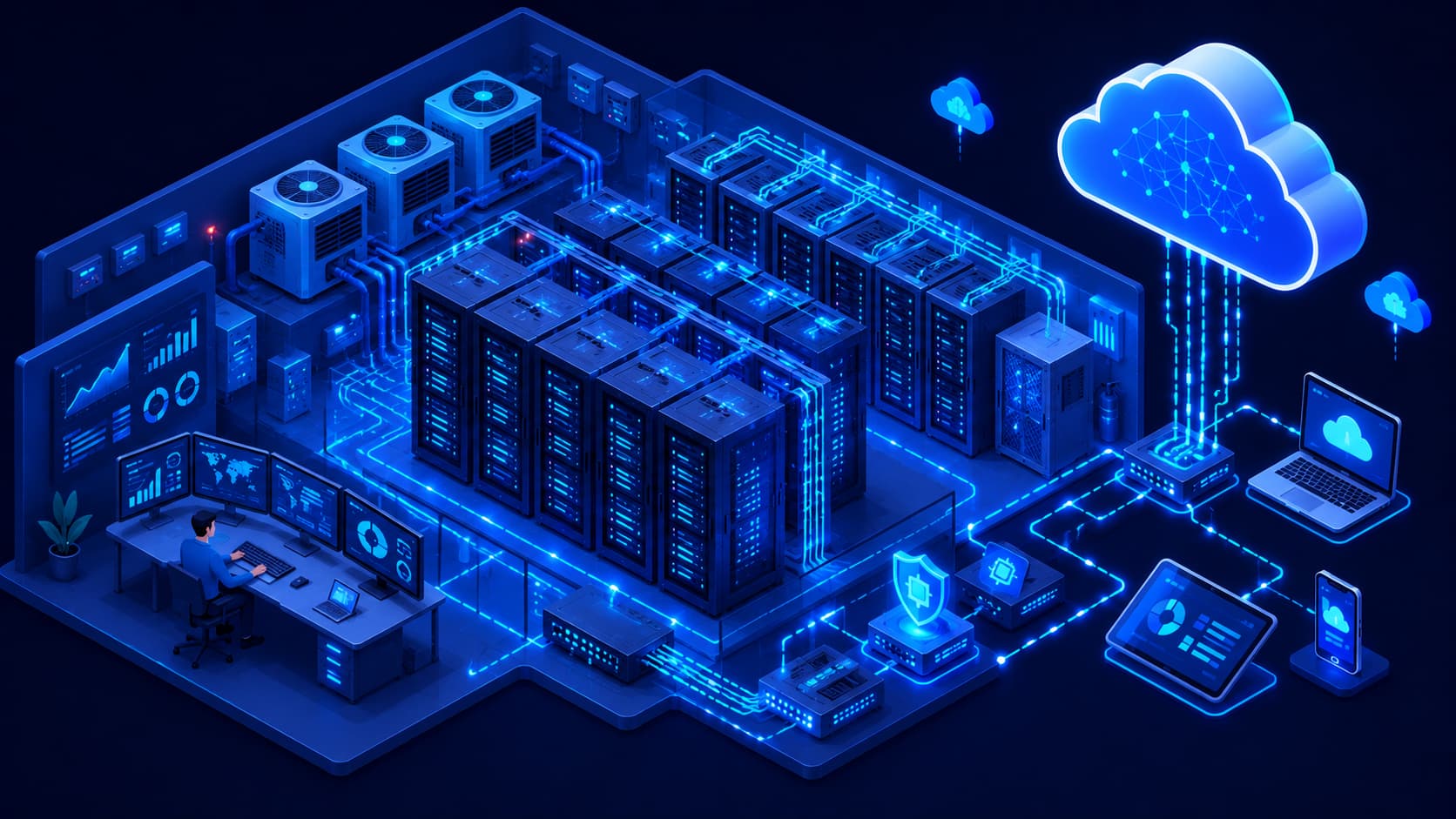
Behind every website, mobile app, online game, and cloud platform are thousands of physical computers operating around the clock inside specialized facilities known as data centers.
Although data centers rarely receive the same public attention as smartphones, artificial intelligence, or cloud computing, they are among the most important components of today's digital infrastructure.
Without them:
- Websites couldn't stay online.
- Cloud computing wouldn't exist.
- Online banking wouldn't function.
- Video streaming services would stop working.
- Countless digital services people depend on every day would become unavailable.
Understanding what a data center is provides valuable insight into how the internet actually works behind the scenes.
What Is a Data Center?
A data center is a specialized facility that houses the computer systems and supporting equipment needed to store, process, and distribute digital information.
Inside a modern data center, you'll typically find:
- Server racks.
- Networking equipment.
- Storage systems.
- Backup power supplies.
- Cooling systems.
- Physical security infrastructure.
These components work together to ensure that websites, databases, applications, and cloud services remain available 24 hours a day, seven days a week.
Unlike a personal computer sitting on your desk, a data center is designed for continuous operation.
If one server fails, another can often take over automatically.
If the primary power source is interrupted, backup systems immediately activate.
Every aspect of the facility is engineered with reliability as the highest priority.
More Than Just a Room Full of Computers
People sometimes imagine a data center as simply a large room filled with servers.
In reality, it's a carefully engineered environment where computing hardware, networking, electrical systems, cooling, and security all work together.
Without these supporting systems, even the most powerful servers couldn't operate reliably for long periods.
Editorial Insight
The servers inside a data center usually receive the most attention, but they're only one part of a much larger ecosystem. Power, cooling, networking, and physical security are equally essential for keeping digital services running around the clock.
Why Are Data Centers So Important?
Every time you visit a website or use an online service, your device communicates with servers located somewhere inside a data center.
Those servers:
- Process your requests.
- Retrieve information.
- Run applications.
- Send responses back to your device—often within fractions of a second.
Without data centers, the internet as we know it simply wouldn't function.
Cloud providers also rely on enormous networks of data centers distributed across multiple geographic regions.
This global infrastructure allows users to access cloud services quickly regardless of where they're located while improving reliability if one location experiences technical problems.
Everyday Examples
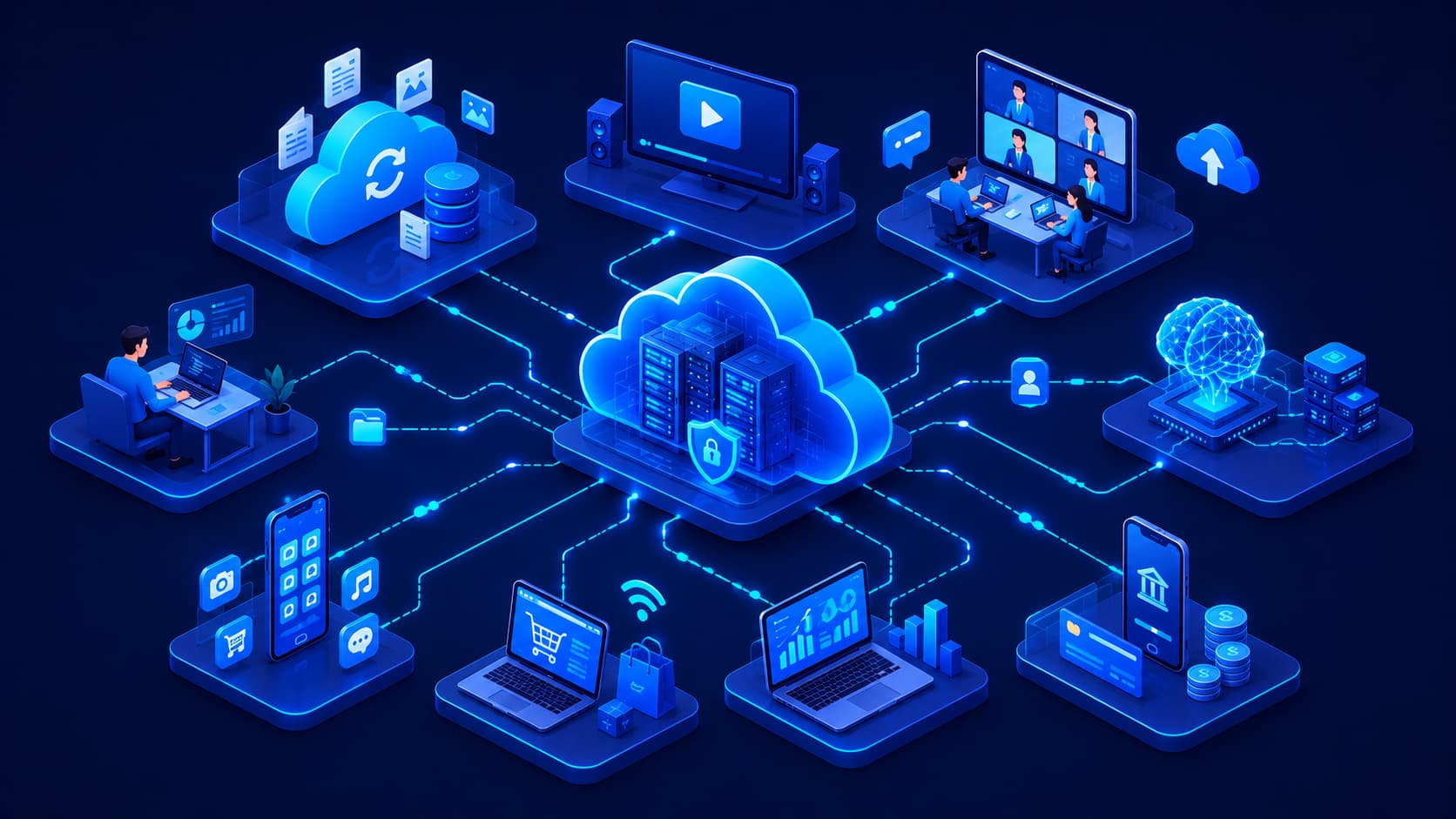
You interact with data centers far more often than you might realize.
For example:
- Watching videos on YouTube or Netflix.
- Saving files to cloud storage.
- Sending emails.
- Shopping online.
- Joining a video meeting.
- Playing multiplayer games.
Every one of these activities depends on servers operating continuously inside data centers around the world.
Why Location Matters
The closer a data center is to its users, the faster information can travel between devices and servers.
This is one reason major cloud providers build facilities across multiple countries and regions—to improve performance while increasing availability.
What's Inside a Data Center?
From the outside, a data center often resembles an ordinary industrial building.
Inside, however, it's a highly engineered environment designed to keep thousands of computers operating efficiently and reliably.
Some of the key components include:
Server Racks
Tall cabinets called server racks hold the physical servers that perform computing tasks for websites, cloud platforms, and business applications.
These servers process billions of requests every day from users around the world.
Networking Equipment
High-speed networking devices connect servers with each other and with the internet.
Without this networking infrastructure, applications couldn't communicate with users or other systems.
Storage Systems
Storage devices contain enormous amounts of digital information, including:
- Photos.
- Videos.
- Business databases.
- Application files.
- Customer information.
Cooling Systems
Servers generate significant amounts of heat while operating.
Powerful cooling systems run continuously to maintain safe operating temperatures and prevent equipment from overheating.
Backup Power
Battery systems and backup generators ensure services continue operating even if the primary electrical supply is interrupted.
Best Practice
Modern data centers are designed with redundancy in mind. Critical components such as power supplies, cooling equipment, networking connections, and servers often have backups so that a single failure doesn't interrupt the services users depend on.
Who Owns Data Centers?
Data centers are operated by a wide range of organizations, each with different operational needs and business goals.
Some of the most common owners include:
- Large cloud providers.
- Technology companies.
- Banks and financial institutions.
- Hospitals and healthcare organizations.
- Government agencies.
- Universities.
- Telecommunications companies.
Large cloud providers build massive data centers capable of supporting millions of customers around the world.
Technology companies often operate their own facilities to power online platforms, while banks and government organizations may maintain private data centers to meet strict security and regulatory requirements.
Why Many Businesses No Longer Build Their Own
In recent years, many organizations have moved away from constructing private data centers.
Instead, they rent computing resources from cloud providers.
This approach allows businesses to benefit from enterprise-grade infrastructure without the enormous expense of:
- Purchasing servers.
- Building secure facilities.
- Installing cooling systems.
- Managing backup power.
- Hiring specialists to maintain the infrastructure.
For many companies, this shift frees them to focus on growing their business rather than operating complex IT facilities.
Editorial Insight
Owning a data center is no longer a requirement for using enterprise-level computing resources. Cloud providers have made advanced infrastructure accessible to organizations of almost every size through a subscription-based model.
How Do Data Centers Support Cloud Computing?
Cloud computing and data centers are inseparable.
Every cloud service ultimately depends on one or more physical data centers operating behind the scenes.
Whenever you:
- Upload a file to cloud storage.
- Launch a virtual machine.
- Open an online application.
- Store business data in the cloud.
your request is processed by servers located inside a data center.
The cloud doesn't eliminate physical infrastructure.
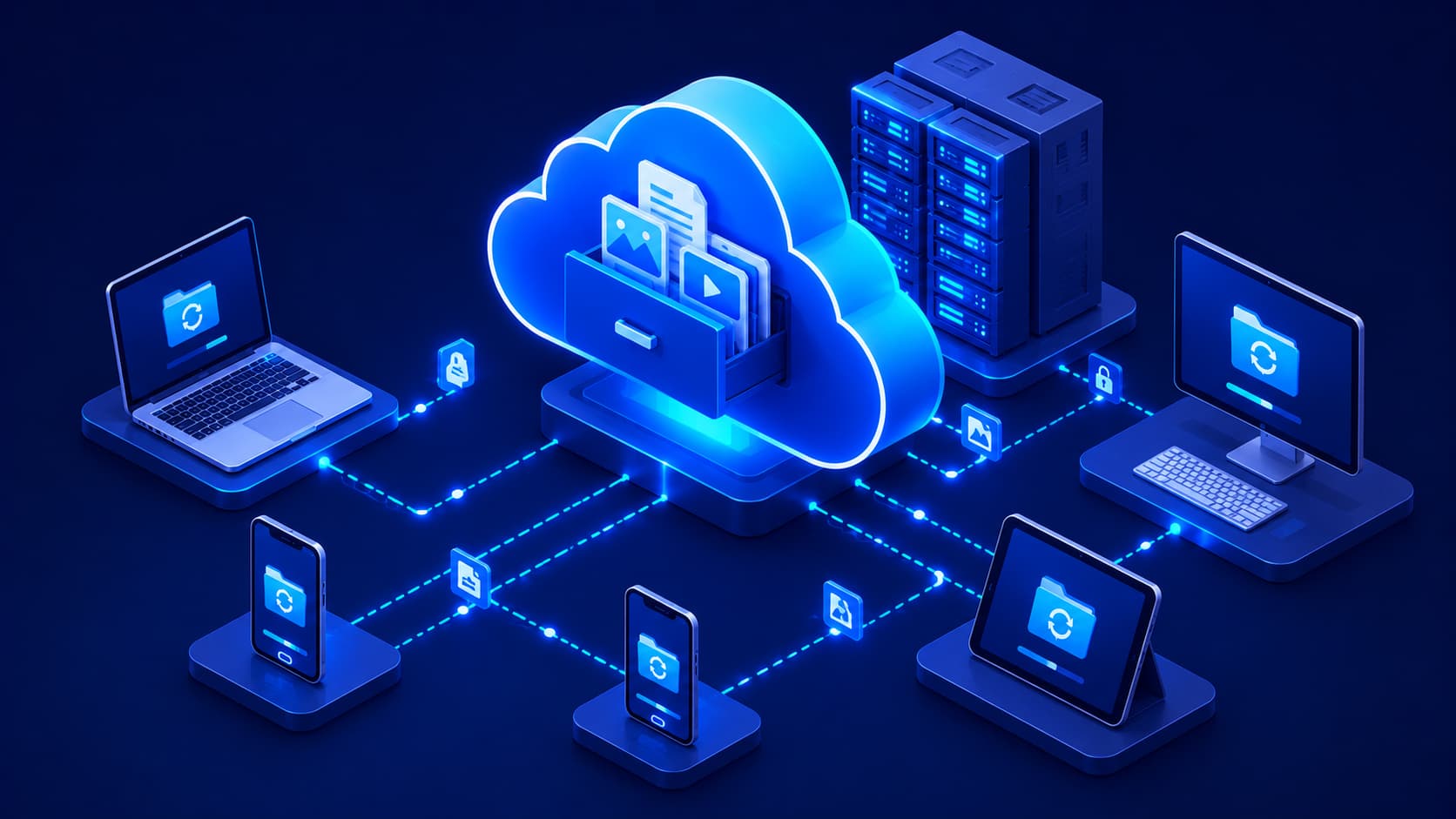
Instead, it allows users to access that infrastructure remotely through the internet.
Cloud providers operate networks of data centers across multiple regions, giving customers access to computing resources without needing to purchase or maintain the hardware themselves.
Why This Makes Cloud Computing Flexible
Because cloud providers already own and manage the infrastructure, customers can quickly provision services such as:
- Virtual servers.
- Databases.
- Storage.
- Networking.
- Artificial intelligence services.
without waiting for hardware installation.
This ability to access computing resources on demand is one of cloud computing's greatest advantages.
Real-World Example
Imagine a software company launching a new mobile application.
Instead of buying physical servers and building its own server room, the company can deploy the application on a cloud platform.
Behind the scenes, the application still runs on physical hardware—but that hardware is managed inside professionally operated data centers.
The business receives the benefits of enterprise infrastructure without having to own it.
Why Are Modern Data Centers So Reliable?
Downtime can be extremely expensive.
For organizations that rely on digital services, even a few minutes of interruption may affect:
- Customers.
- Revenue.
- Productivity.
- Brand reputation.
For this reason, modern data centers are designed with reliability as one of their highest priorities.
Most enterprise facilities include redundant systems for critical infrastructure.
For example:
- If one server fails, another immediately takes over.
- If the primary power supply is interrupted, batteries and backup generators activate automatically.
- Internet connectivity is provided through multiple network providers to reduce the likelihood of outages.
This redundancy helps ensure that websites, applications, and cloud services remain available even when unexpected problems occur.
Understanding Redundancy
Redundancy means having backup components ready to replace critical systems whenever failures occur.
Rather than relying on a single server or power source, modern data centers often duplicate essential infrastructure so services can continue operating without interruption.
This design philosophy is one of the key reasons cloud services achieve such high availability.
Best Practice
Organizations that deploy applications in the cloud should also design their own systems with redundancy in mind. Even though cloud providers offer highly reliable infrastructure, application-level resilience remains an important responsibility for customers.
Security Inside a Data Center
Protecting digital information requires much more than cybersecurity software.
Physical security is equally important.
Modern data centers typically use multiple layers of protection.
Access is limited to authorized personnel through measures such as:
- Identification badges.
- Biometric authentication.
- Security checkpoints.
Facilities are commonly monitored around the clock using:
- Surveillance cameras.
- On-site security personnel.
- Environmental monitoring systems.
These systems can detect:
- Temperature changes.
- Humidity.
- Smoke.
- Water leaks.
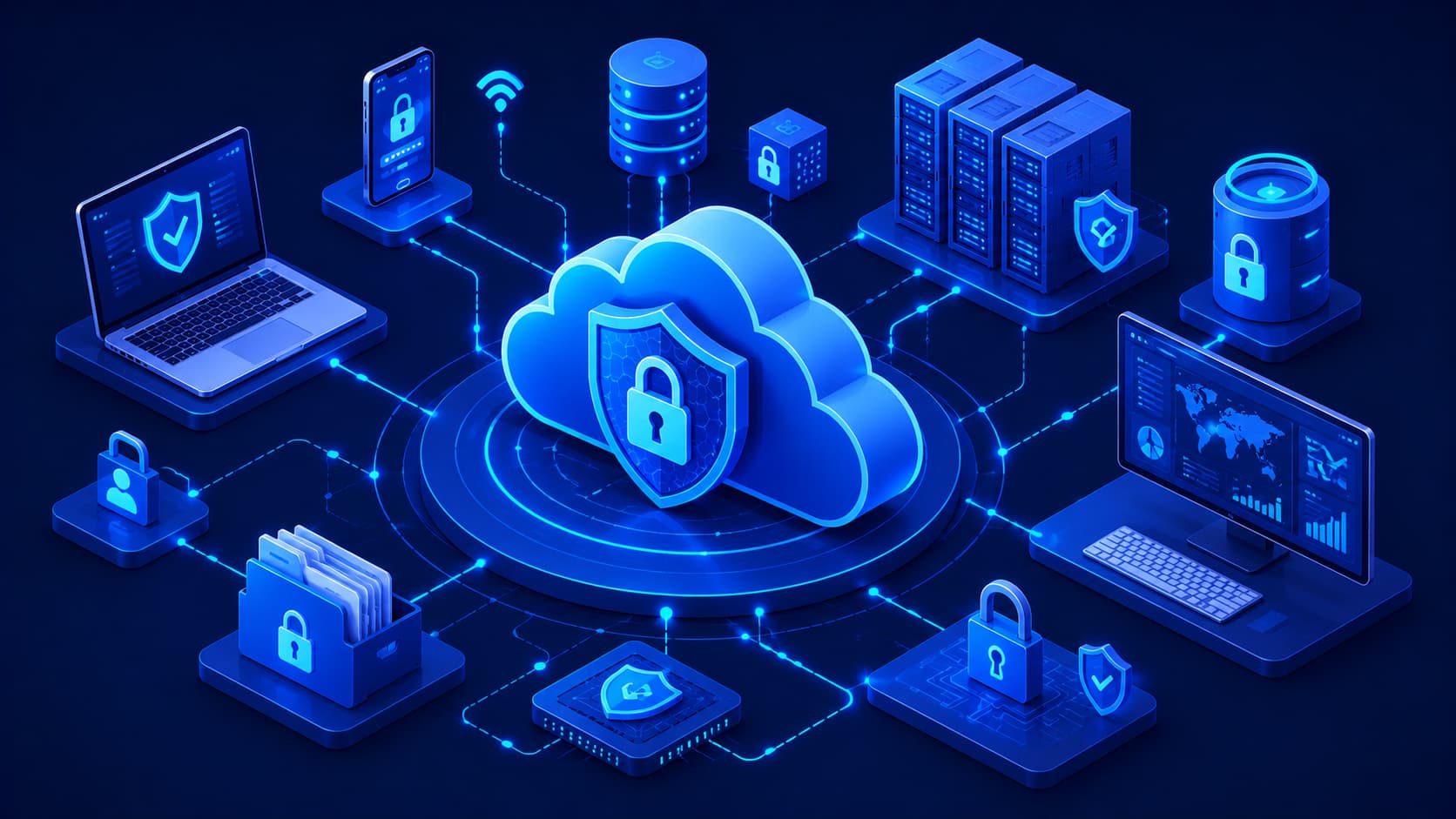
Combined with cybersecurity technologies such as encryption, firewalls, and continuous network monitoring, these safeguards help protect both the infrastructure and the valuable data stored inside.
Editorial Insight
Data center security extends far beyond locking the front door. Modern facilities combine physical protection, environmental monitoring, and advanced cybersecurity controls to safeguard the digital services that millions of people rely on every day.
Can Businesses Build Their Own Data Centers?
Yes, they can.
Many large enterprises, government agencies, financial institutions, and some technology companies continue to operate private data centers because they require greater control over their infrastructure.
However, building and operating a modern data center is a major undertaking.
Organizations must invest in:
- Physical servers.
- High-performance networking equipment.
- Enterprise storage systems.
- Cooling infrastructure.
- Backup power systems.
- Physical security.
- Suitable facilities.
- Skilled engineers to maintain everything.
For many businesses, these costs and operational responsibilities outweigh the benefits of owning their own infrastructure.
As a result, renting cloud infrastructure has become the more practical solution for many organizations.
Instead of maintaining hardware, businesses can focus on:
- Developing products.
- Serving customers.
- Expanding into new markets.
- Driving innovation.
Private Data Center vs. Cloud Services
Choosing between a private data center and cloud services often comes down to business priorities.
Organizations that require complete control over hardware, strict compliance, or specialized workloads may still benefit from operating their own facilities.
On the other hand, businesses that prioritize flexibility, faster deployment, and reduced infrastructure management often find cloud computing to be the more efficient choice.
Editorial Insight
Building a private data center is no longer the default approach for growing businesses. Today, many organizations view infrastructure as a service they consume rather than an asset they own.
The Future of Data Centers
As demand for digital services continues to grow, data centers are evolving alongside the technologies they support.
Emerging technologies such as:
- Cloud computing.
- Artificial intelligence.
- Video streaming.
- Online gaming.
- Connected devices (IoT).
all require increasing amounts of computing power.
To meet this growing demand, providers are investing in:
- Larger facilities.
- More energy-efficient infrastructure.
- Advanced cooling technologies.
- Renewable energy.
- Increased automation.
Artificial intelligence is also beginning to assist with managing data center operations.
According to the source material, AI can help:
- Improve energy efficiency.
- Predict hardware failures.
- Optimize resource utilization.
Although most users will never visit a data center, these facilities will continue to play a central role in supporting the digital services people rely on every day.
Why Sustainability Matters
Modern data centers consume significant amounts of electricity.
As global demand for computing resources increases, providers are placing greater emphasis on improving energy efficiency while reducing their environmental impact.
Efficient cooling systems, renewable energy sources, and intelligent infrastructure management all contribute to making future data centers more sustainable.
Best Practice
Organizations selecting a cloud provider should consider more than just pricing. Reliability, geographic coverage, security certifications, sustainability initiatives, and long-term scalability are all important factors when evaluating data center infrastructure.
Frequently Asked Questions
What Is a Data Center in Simple Terms?
A data center is a facility containing servers, storage systems, networking equipment, and supporting infrastructure used to store, process, and deliver digital services over the internet.
Is the Cloud Stored in Data Centers?
Yes.
Cloud services operate on physical servers located inside data centers around the world.
The term cloud simply refers to accessing those computing resources over the internet rather than owning the hardware yourself.
Who Owns Data Centers?
Data centers may be owned by:
- Cloud providers.
- Technology companies.
- Telecommunications providers.
- Financial institutions.
- Governments.
- Universities.
- Other organizations that require large-scale computing infrastructure.
Why Do Data Centers Need Cooling Systems?
Servers generate a significant amount of heat while operating.
Cooling systems prevent equipment from overheating, helping maintain performance while extending the lifespan of critical hardware.
Are Data Centers Secure?
Modern data centers use multiple layers of physical and digital security.
These protections include:
- Controlled facility access.
- Surveillance systems.
- Backup power infrastructure.
- Fire protection.
- Data encryption.
- Continuous monitoring.
Together, these measures help protect both the infrastructure itself and the valuable information stored within it.
Conclusion
Although most people never see them, data centers form one of the most important foundations of the modern internet.
Every website you visit, every cloud application you use, and every online service you rely on ultimately depends on servers operating inside these specialized facilities.
Data centers are much more than buildings filled with computers.
They provide the reliability, security, computing power, and availability needed to support today's digital world.
As cloud computing, artificial intelligence, and connected technologies continue to expand, the importance of data centers will only continue to grow.
Understanding how these facilities operate helps explain what happens behind the scenes whenever you browse the web, stream a movie, save a file to the cloud, or use an online application.
Final Takeaway
Data centers are the physical foundation of the digital world.
While cloud computing often feels invisible to users, every cloud service ultimately depends on carefully engineered facilities filled with servers, networking equipment, storage systems, and supporting infrastructure.
The next time you access a website or use a cloud application, remember that somewhere in the world, a data center is working continuously to process your request—making the modern internet fast, reliable, and always available.