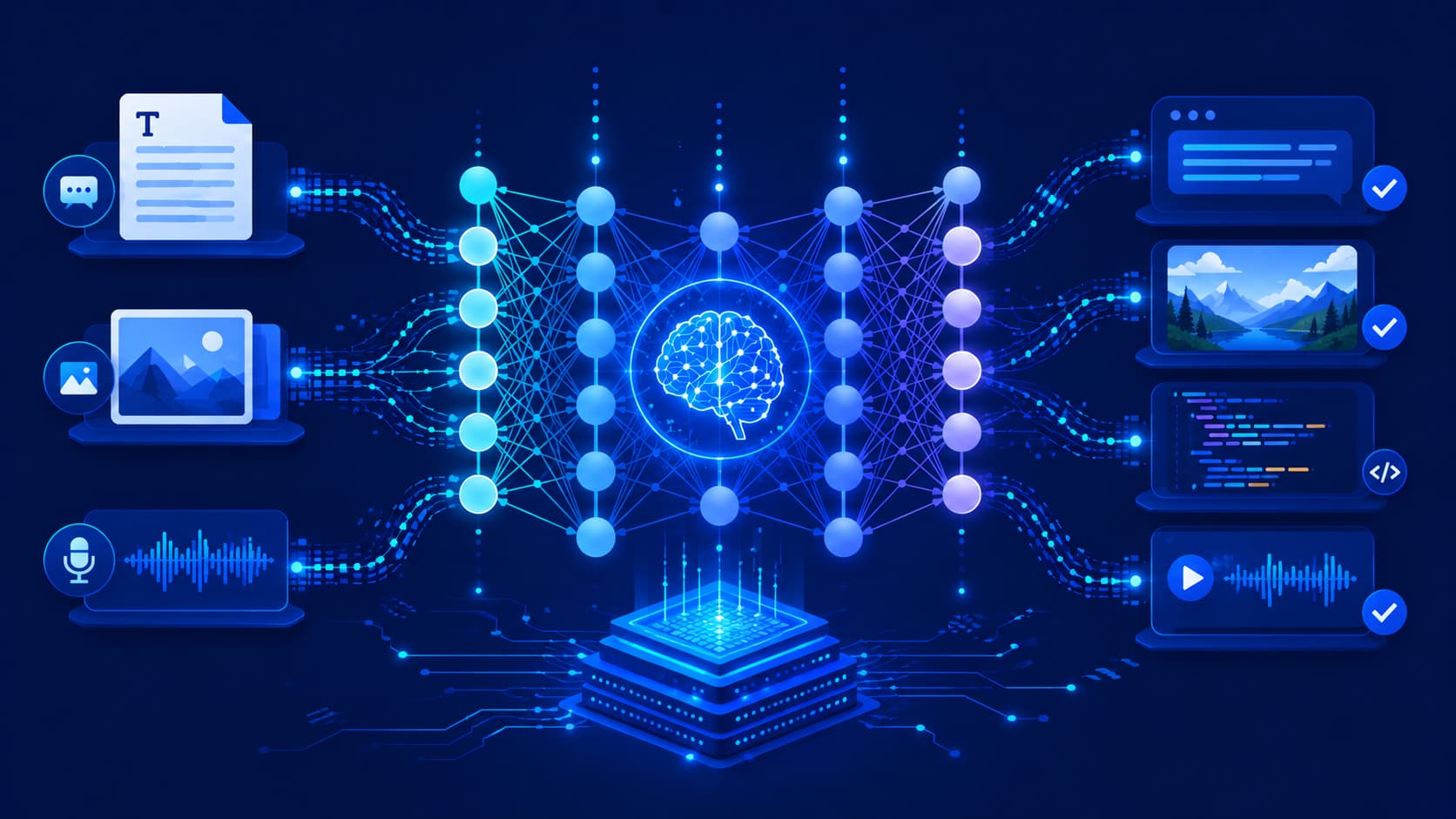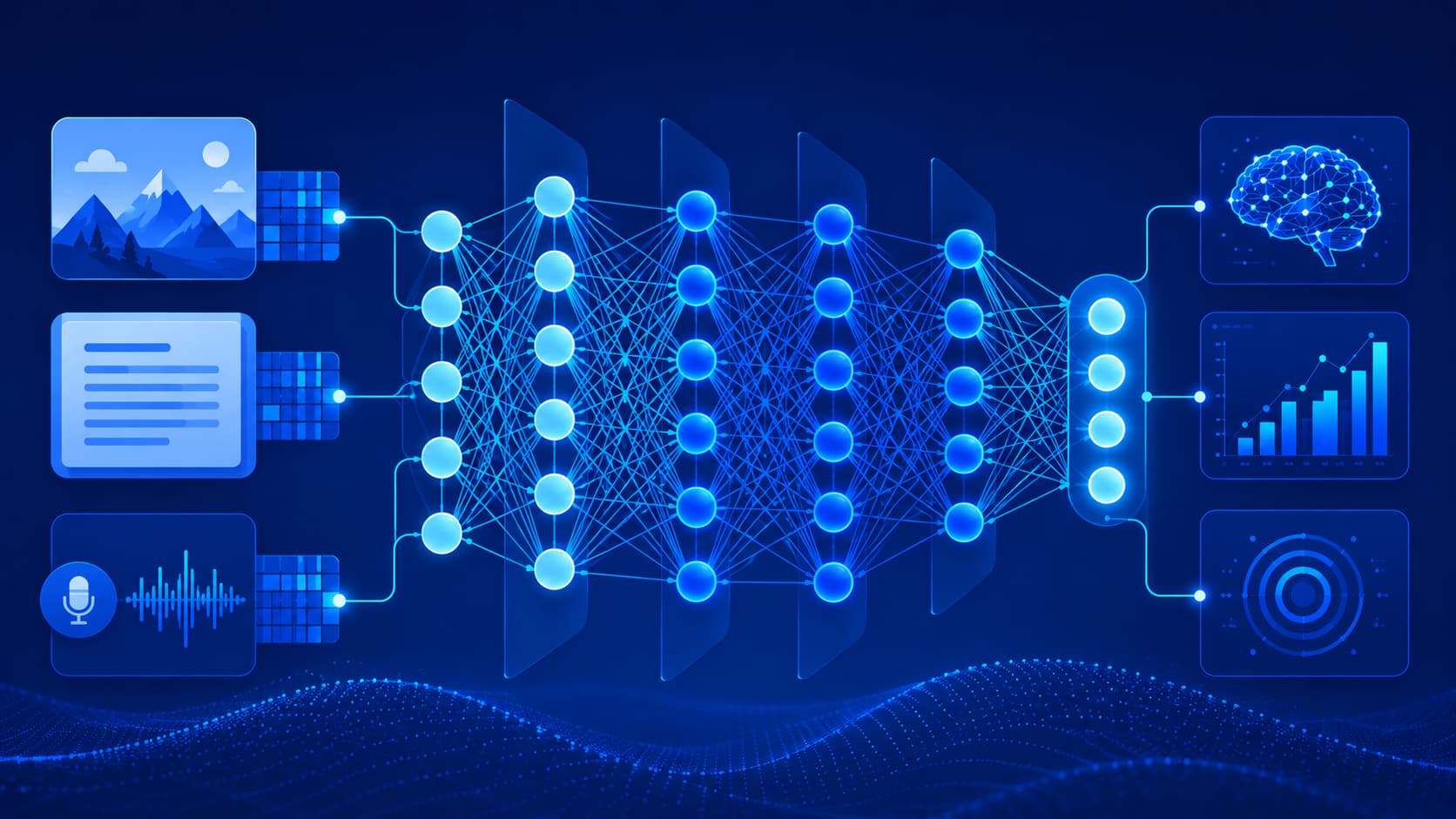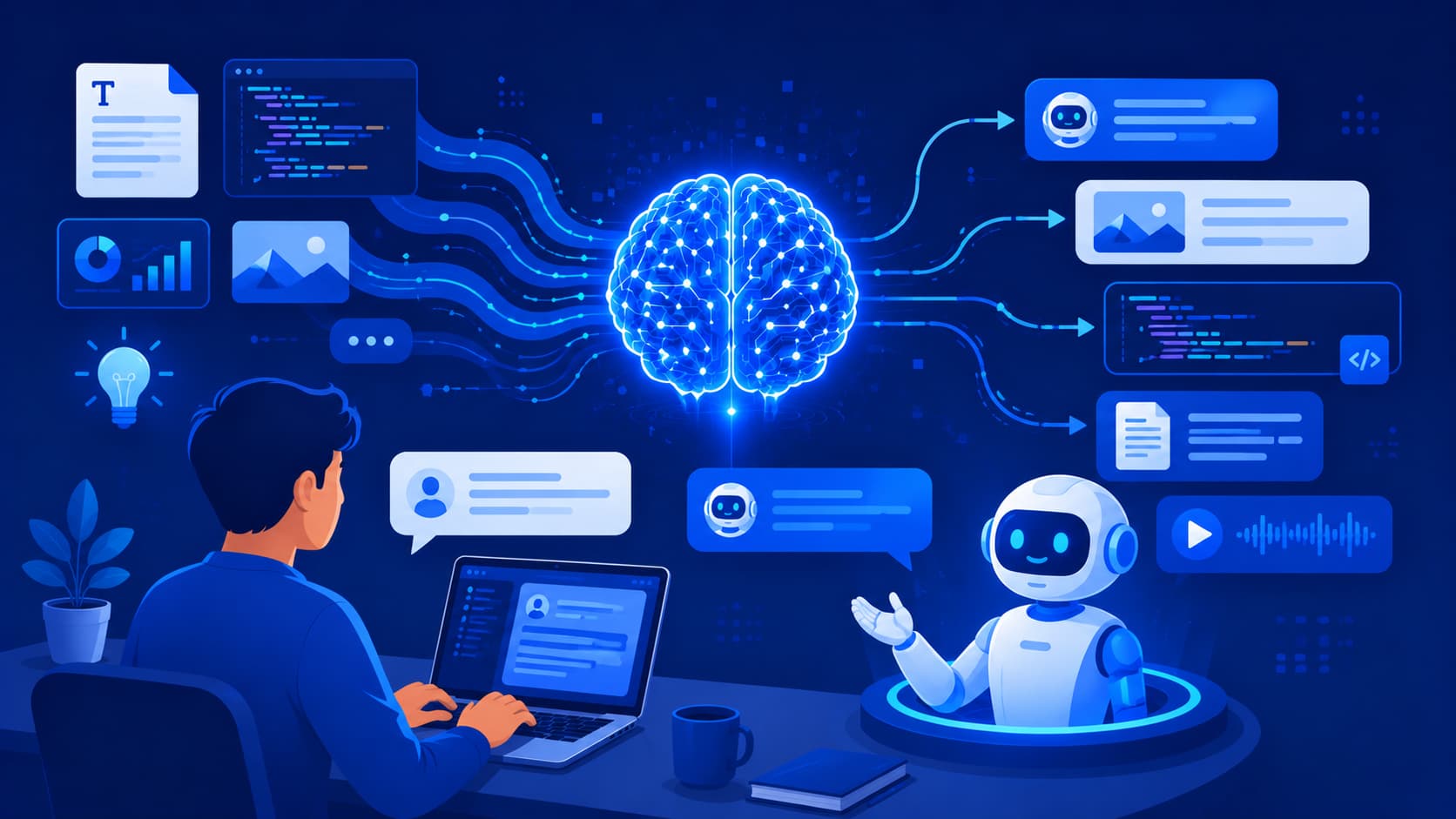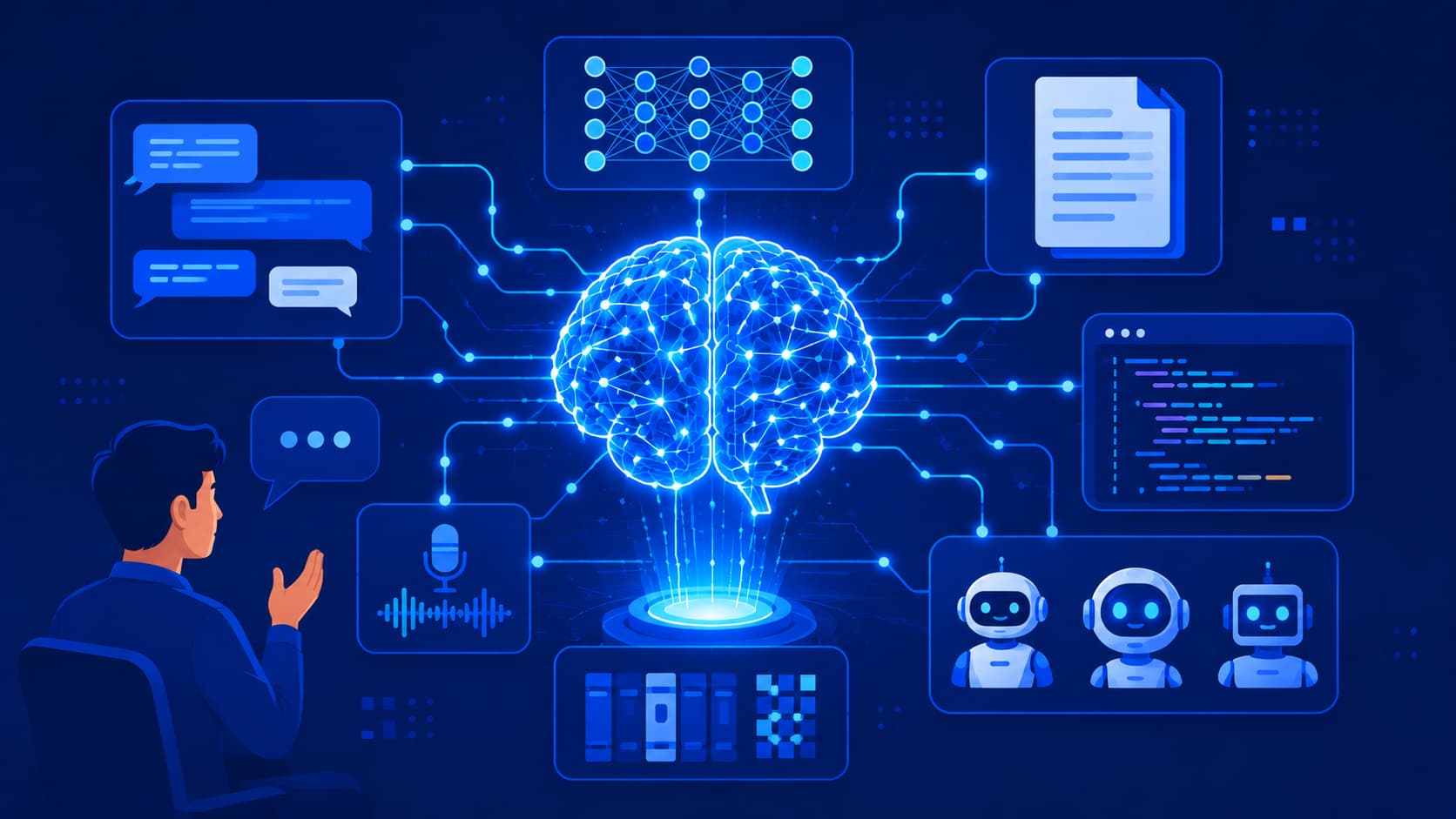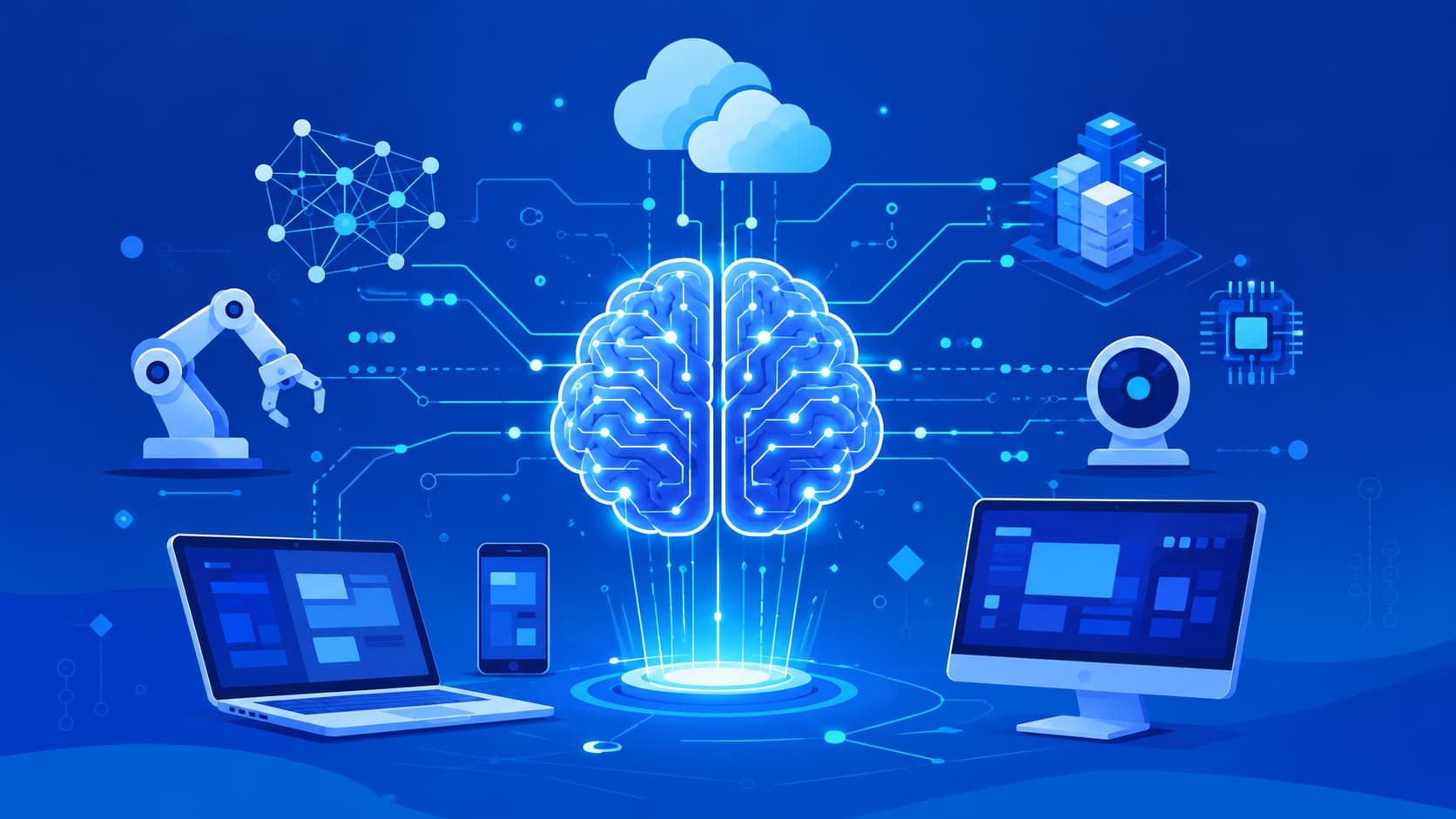
Artificial intelligence has rapidly evolved from a futuristic concept into one of the most influential technologies shaping modern life. Whether you're asking an AI assistant to summarize a document, unlocking your smartphone with facial recognition, receiving personalized recommendations on Netflix, or using Google Maps to avoid traffic congestion, artificial intelligence is already working quietly behind the scenes to make these experiences faster, smarter, and more convenient.
Not long ago, AI was primarily associated with science fiction movies, research laboratories, and ambitious predictions about intelligent robots. Today, that perception has changed dramatically. Artificial intelligence has become part of everyday life, often embedded within digital products and online services that millions of people use without realizing AI is involved. Students use AI to simplify difficult subjects, professionals rely on it to improve productivity, businesses automate repetitive workflows, and software developers accelerate coding with intelligent assistants.
As AI has become more accessible, public interest has grown just as quickly. Unfortunately, so have misconceptions. Some people believe artificial intelligence can think exactly like humans, while others fear it will eventually replace every profession. Neither assumption accurately reflects how modern AI works. Today's AI systems are incredibly powerful within specific tasks, but they still depend on data, algorithms, statistical learning, and human oversight to produce useful results. They do not possess consciousness, emotions, personal experiences, or independent reasoning in the same way humans do.
Understanding artificial intelligence is no longer just a topic for programmers or data scientists. Just as internet literacy became an essential skill over the past two decades, AI literacy is rapidly becoming valuable for students, educators, entrepreneurs, marketers, creators, business owners, and professionals across virtually every industry. Knowing what AI can—and cannot—do allows you to evaluate AI-generated information more critically, use AI-powered tools responsibly, and make better decisions in both your personal and professional life.
In this comprehensive guide, you'll learn what artificial intelligence is, how it works, the technologies behind it, the different types of AI, where it is used across modern industries, its benefits and limitations, and why it has become one of the most transformative technologies of the digital age. Whether you're completely new to AI or looking to strengthen your understanding, this article will provide a solid foundation before exploring more advanced AI concepts.
What Is Artificial Intelligence?
Artificial intelligence (AI) is a branch of computer science focused on building systems capable of performing tasks that normally require human intelligence. These tasks include understanding language, recognizing images, identifying patterns, solving problems, making predictions, and generating original content.
Unlike traditional software, which follows a fixed set of instructions written by developers, AI systems learn from data. Instead of explicitly programming every possible rule, developers train AI models using large datasets. The system analyzes this information, discovers patterns, and gradually improves its ability to make decisions or generate responses when it encounters new situations.
This ability to learn from experience is one of the defining characteristics that separates artificial intelligence from conventional software. Rather than simply executing predefined instructions, AI can adapt its behavior based on the information it has learned during training, making it suitable for solving problems that are too complex or unpredictable for traditional programming techniques.
Practical Example
Imagine using two different applications.
The first is a basic calculator. Every time you press the same buttons, it produces exactly the same result because every calculation follows predefined mathematical rules.
The second is an AI-powered translation tool. Instead of relying on fixed word substitutions, it considers grammar, context, sentence structure, and language patterns to produce translations that sound natural. As AI models improve through training and updates, they become increasingly accurate over time.
This comparison illustrates one of the biggest differences between traditional software and artificial intelligence: conventional software follows rules, while AI learns patterns.
Editorial Insight
One common misconception is that AI "knows" information the way people do. In reality, AI does not understand concepts through human reasoning or personal experience. It identifies statistical relationships within massive datasets and uses those patterns to generate predictions or responses.
This distinction is important because it explains both AI's greatest strengths and its biggest limitations. AI can analyze enormous amounts of information far faster than humans, yet it may still produce inaccurate or misleading answers when the available data is incomplete, ambiguous, or outside its training experience.
Traditional Software vs Artificial Intelligence
A simple comparison helps illustrate the difference between traditional software and AI. Imagine using a calculator to solve a mathematical equation. Every time you enter the same numbers, the calculator follows identical instructions and always produces the same answer. It never becomes smarter, adapts its behavior, or learns from previous calculations because every possible operation has already been programmed by its developers.
Now compare that with a navigation application such as Google Maps. Rather than simply calculating the shortest distance between two locations, it continuously analyzes live traffic conditions, road closures, historical travel data, estimated arrival times, and alternative routes before recommending the fastest journey. If traffic conditions change unexpectedly, the suggested route changes as well because the system adapts using newly available information instead of relying on a single fixed instruction.
This ability to analyze changing information and make informed predictions is what gives AI systems significantly greater flexibility than traditional software. Instead of following rigid instructions, AI can respond to situations it has never encountered before by applying patterns learned during training.
Learning Through Examples
One of the easiest ways to understand artificial intelligence is to imagine teaching someone how to recognize different breeds of dogs.
One approach would be to write an enormous instruction manual explaining every possible characteristic, including ear shape, fur color, body size, tail length, facial features, and countless other details. Although this approach is theoretically possible, it quickly becomes impractical because every dog is slightly different.
A far more effective method is to show hundreds or even thousands of labeled photographs.
After seeing enough examples, most people naturally begin recognizing breeds they have never encountered before because they have learned the visual patterns shared among similar dogs.
Modern AI systems learn in much the same way. Instead of memorizing every possible answer, they analyze enormous datasets containing millions—or sometimes billions—of examples. During training, AI models identify statistical relationships within the data and later apply those learned patterns when processing entirely new information.
This pattern-based learning enables AI to solve problems that would be extremely difficult—or sometimes impossible—to address using traditional programming techniques alone.
Practical Example
Consider how an email spam filter works.
Rather than relying on a manually written list containing every possible spam message ever created, the AI analyzes millions of legitimate and malicious emails. Over time, it learns patterns such as suspicious wording, unusual links, sender behavior, and formatting characteristics.
When a completely new email arrives, the AI doesn't search for an exact match. Instead, it predicts whether the message resembles previously identified spam based on patterns learned during training.
Why Pattern Recognition Matters
The true strength of artificial intelligence lies in its ability to recognize patterns at a scale far beyond human capability. Whether identifying objects in photographs, translating languages, recommending products, filtering spam emails, or answering complex questions, AI continuously searches for meaningful relationships within data instead of relying solely on manually programmed instructions.
Pattern recognition allows AI systems to perform increasingly sophisticated tasks while adapting to situations they have never encountered before. This flexibility explains why AI has become such an important technology across industries ranging from healthcare and finance to education and software development.
Editorial Insight
Pattern recognition is the foundation of nearly every modern AI system.
Whether an AI is recognizing faces, recommending videos, translating languages, detecting financial fraud, or generating computer code, it is fundamentally performing the same task: identifying meaningful relationships within vast amounts of data and using those relationships to make predictions.
Understanding this single concept makes many AI applications much easier to understand.
Why Artificial Intelligence Matters
Artificial intelligence is no longer a technology reserved for researchers or large technology companies. It has become an essential component of countless digital tools that millions of people use every day, often without realizing AI is involved. Whether you're shopping online, searching the web, translating another language, streaming movies, or filtering unwanted emails, AI is likely working behind the scenes to make those experiences faster, more accurate, and more personalized.
As computing power continues to increase and access to AI tools becomes more widespread, understanding AI is rapidly shifting from a specialized technical skill to a form of general digital literacy. Organizations across nearly every industry now rely on AI to automate repetitive tasks, analyze data, improve customer experiences, and support decision-making.
AI in Everyday Life
Artificial intelligence already powers many familiar activities, including:
- Unlocking smartphones using Face ID or fingerprint recognition.
- Receiving personalized recommendations on Netflix, YouTube, and Spotify.
- Asking AI assistants to answer questions or summarize information.
- Using Google Maps to avoid traffic congestion.
- Automatically filtering spam messages from your inbox.
- Translating conversations between different languages almost instantly.
Although these features appear simple from the user's perspective, each one relies on sophisticated AI models capable of analyzing enormous amounts of information within seconds.
Best Practice
AI can significantly improve productivity, but it should be viewed as a collaborative tool rather than a replacement for human judgment.
When using AI to write articles, generate code, analyze data, or summarize information:
- Verify important facts before relying on the results.
- Review AI-generated content for accuracy and context.
- Add your own expertise, creativity, and critical thinking.
- Avoid sharing confidential or sensitive information unless you fully trust the platform and understand its privacy policies.
Using AI responsibly often produces far better results than relying on automation alone.
AI Across Modern Industries
Businesses have adopted artificial intelligence just as rapidly as consumers. Customer support teams use AI-powered chatbots to answer common questions around the clock, reducing response times while allowing human agents to focus on more complex issues. Marketing teams analyze customer behavior to create more personalized campaigns. Doctors use AI-assisted tools to help interpret medical scans, while software developers rely on coding assistants to accelerate development and reduce repetitive programming tasks.
Across many industries, AI is not replacing human expertise. Instead, it complements human skills by automating repetitive work, improving efficiency, and helping people make more informed decisions. This collaborative relationship between humans and AI is likely to remain one of the defining characteristics of modern workplaces as AI technology continues to evolve.
Why Understanding AI Is Becoming Essential
As artificial intelligence becomes increasingly integrated into everyday software, understanding its basic concepts has become an important digital skill. Just as learning to use the internet became essential decades ago, understanding AI is rapidly becoming valuable for students, professionals, entrepreneurs, and anyone who regularly uses digital technology.
Knowing how AI works also helps people recognize its strengths, understand its limitations, evaluate AI-generated information more critically, and use these tools responsibly instead of treating them as infallible. Even a basic understanding of AI can help users make better decisions about when to trust automated systems and when human expertise remains essential.
A Brief History of Artificial Intelligence
Although artificial intelligence feels like one of the newest technological breakthroughs, the underlying idea has existed for much longer than many people realize. Researchers first began exploring intelligent machines during the 1950s, asking whether computers could eventually solve problems in ways similar to human reasoning.
Over the decades, AI has evolved through several important milestones. Improvements in computing power, access to larger datasets, and advances in machine learning have transformed AI from an academic research topic into a technology that millions of people use every day.
The Early Days
Early AI research focused on building programs capable of solving puzzles, playing games, and performing logical reasoning. However, computers during that era had extremely limited processing power and memory, making meaningful progress slow and difficult. Despite these challenges, the pioneering work of early researchers established many of the theoretical foundations that continue to influence artificial intelligence today.
The Rise of Machine Learning
As computing power increased and the internet generated enormous amounts of digital information, researchers discovered a more effective approach to building intelligent systems.
Instead of manually programming every possible rule, they began teaching computers to learn directly from data. This shift led to the rise of machine learning, which remains one of the most important technologies behind modern AI. By identifying patterns within large datasets, machine learning allows AI systems to improve their performance as they process more information.
The Modern AI Era
Recent advances in cloud computing, graphics processing units (GPUs), and deep learning have accelerated artificial intelligence at an unprecedented pace.
Today's AI models can:
- Generate realistic images.
- Write articles.
- Summarize lengthy documents.
- Translate multiple languages.
- Create software code.
- Hold natural conversations with users.
What once seemed like science fiction has become part of everyday life, transforming artificial intelligence into a practical technology used by individuals, educators, businesses, researchers, and developers around the world.
Editorial Insight
AI did not suddenly appear with modern chatbots. The technology has evolved through decades of research, experimentation, and gradual improvements in computing hardware and algorithms. Understanding this history helps explain why today's rapid progress is built upon years of scientific development rather than a single technological breakthrough.
How Does Artificial Intelligence Work?
At first glance, artificial intelligence can seem almost magical. You ask a question, upload an image, or describe an idea, and within seconds an AI system generates a useful response. Behind the scenes, however, AI relies on mathematics, algorithms, large datasets, and statistical pattern recognition—not human-like thinking.
Although different AI systems are designed for different purposes, most modern models follow a similar learning process. Instead of memorizing every possible answer, they learn from examples and apply those learned patterns when processing new information.
1. Collecting Large Amounts of Data
Every AI system begins with data.
The quality and quantity of training data have a significant influence on how capable an AI model becomes. Depending on its purpose, this data may include:
- Text documents.
- Images.
- Videos.
- Audio recordings.
- Computer code.
- Medical records.
- Scientific research.
- Many other forms of digital information.
For example, an AI designed to recognize cats must first analyze an enormous collection of labeled cat images. Likewise, an AI language model learns by processing vast amounts of written text, enabling it to recognize vocabulary, grammar, writing styles, and relationships between words.
2. Learning Patterns During Training
Once enough data has been collected, the AI enters its training phase.
Rather than memorizing individual examples, it searches for recurring patterns hidden within the data. During this process, the system continuously adjusts its internal mathematical model so it becomes increasingly accurate at recognizing similar patterns in the future.
A useful analogy is teaching a child to recognize different kinds of fruit. Instead of explaining every tiny detail about apples, oranges, and bananas, you simply show enough examples until the child naturally recognizes them without requiring detailed instructions.
Artificial intelligence learns in much the same way—except that modern AI models may analyze millions or even billions of examples before becoming accurate enough for real-world applications.
3. Building a Predictive Model
As training continues, AI gradually builds a mathematical model capable of making predictions based on what it has learned.
Instead of storing every possible answer, the model estimates the probability that certain patterns are connected. After analyzing millions of images, for example, an AI can estimate whether a newly uploaded picture contains a dog, a bicycle, or a tree. Similarly, language models predict which words are most likely to appear next in a sentence based on statistical relationships learned during training.
4. Making Predictions or Generating Responses
After training is complete, the AI begins applying what it has learned.
Whenever a user submits a prompt, uploads a photo, or provides another form of input, the model analyzes that information and predicts the most appropriate output based on patterns discovered during training. This allows AI systems to answer questions, summarize documents, generate images, recommend products, translate languages, and perform many other complex tasks.
Although these responses appear almost instantaneous, they are the result of billions of mathematical calculations performed in fractions of a second.
Practical Example
Suppose you ask an AI assistant:
"Write a professional email requesting a meeting."
The AI doesn't search a database for an identical email.
Instead, it analyzes the request, predicts which words and sentence structures are most appropriate based on patterns learned from millions of writing examples, and generates a completely new response tailored to your prompt.
Why Data Quality Matters
Learning from data does not automatically make an AI system perfect. If the training data contains inaccuracies, outdated information, hidden biases, or lacks sufficient diversity, those weaknesses can influence the AI's responses. As a result, even advanced AI systems may occasionally produce incorrect, incomplete, or biased answers.
For this reason, high-quality datasets, continuous evaluation, and responsible AI development remain essential. Improving the quality of training data is one of the most effective ways to improve the reliability, fairness, and overall accuracy of modern artificial intelligence systems.
Best Practice
When using AI for research, education, business, or professional work:
- Verify important information using trusted sources.
- Treat AI as an assistant rather than the final authority.
- Review AI-generated content before publishing or sharing it.
- Remember that even advanced AI models can occasionally make mistakes or present outdated information.
Using AI responsibly means combining its speed and efficiency with human judgment and critical thinking.
Types of Artificial Intelligence
Artificial intelligence can be classified in several ways, but one of the most common approaches is based on its capabilities. This classification helps explain what current AI systems can do today, what researchers hope to achieve in the future, and what remains largely theoretical.
Although AI technology continues to evolve rapidly, most systems currently in use belong to a single category: Narrow AI.
Narrow AI (Weak AI)
Narrow AI is designed to perform specific tasks exceptionally well.
Unlike humans, it cannot transfer knowledge from one domain to another or perform unrelated activities without additional training. Most AI applications people use today—including virtual assistants, recommendation systems, language translation tools, facial recognition software, and generative AI—fall into this category.
Examples include:
- AI chatbots.
- Recommendation engines.
- Image recognition systems.
- Voice assistants.
- AI-powered translation tools.
Although Narrow AI may outperform humans in certain specialized tasks, it lacks general reasoning abilities.
General AI (AGI)
Artificial General Intelligence (AGI) refers to a hypothetical form of AI capable of understanding, learning, and applying knowledge across a wide range of tasks at a level comparable to human intelligence.
Unlike today's AI systems, an AGI would be able to:
- Learn new skills without extensive retraining.
- Solve unfamiliar problems.
- Transfer knowledge between different domains.
- Adapt to changing environments using general reasoning.
At present, AGI remains an active area of research rather than an existing technology.
Superintelligent AI
Superintelligent AI describes a theoretical future system that would surpass human intelligence across virtually every intellectual activity, including scientific research, creativity, strategic planning, and complex decision-making.
This concept is frequently explored in academic discussions and science fiction, but no such AI currently exists. Discussions about superintelligence primarily focus on long-term possibilities, ethics, governance, and AI safety rather than present-day technology.
Editorial Insight
Many media reports blur the distinction between today's AI systems and hypothetical future AI. In reality, the tools available today are highly specialized Narrow AI systems. General AI and Superintelligent AI remain research concepts rather than technologies that people can currently use.
Artificial Intelligence vs Machine Learning vs Deep Learning
These three terms are often used interchangeably, but they represent different concepts within the field of artificial intelligence. Understanding their relationship helps clarify how modern AI systems are built.
- Artificial Intelligence (AI) is the broad field focused on creating systems capable of performing tasks that typically require human intelligence.
- Machine Learning (ML) is a subset of AI that enables computers to learn patterns from data instead of relying entirely on manually programmed rules.
- Deep Learning (DL) is a specialized branch of machine learning that uses multi-layered artificial neural networks to solve highly complex problems.
You can think of their relationship like this:
Artificial Intelligence
        └── Machine Learning
                └── Deep Learning
Each layer builds upon the previous one, with deep learning powering many of today's most advanced AI applications.
What Is Generative AI?
One of the most significant recent developments in artificial intelligence is Generative AI.
Unlike traditional AI systems that primarily classify, predict, or analyze information, Generative AI creates entirely new content based on patterns learned during training. Depending on the model, this content may include text, images, music, software code, videos, or other forms of digital media.
Generative AI has become increasingly popular because it enables users to complete creative and professional tasks much more efficiently while reducing repetitive work.
Practical Example
A marketing professional may ask an AI assistant to:
"Write a product description for a wireless gaming mouse."
Instead of retrieving an existing paragraph from a database, the AI generates an original description based on language patterns learned during training.
Similarly, an image generation model can create entirely new artwork from a text prompt rather than editing an existing image.
Popular Applications of Generative AI
Today, generative AI powers a wide range of tools used by individuals and organizations around the world. Common applications include:
- Writing articles and blog posts.
- Summarizing lengthy documents.
- Translating multiple languages.
- Assisting with software development.
- Creating marketing content.
- Generating images from text descriptions.
- Brainstorming ideas and creative concepts.
- Supporting research and education.
These tools continue to improve rapidly, making generative AI one of the fastest-growing areas of modern computing.
Frequently Asked Questions
Is Artificial Intelligence the Same as Machine Learning?
No.
Machine learning is one branch of artificial intelligence. AI is the broader field, while machine learning focuses specifically on enabling computers to learn from data rather than relying solely on explicitly programmed instructions.
Can AI Think Like Humans?
Not with today's technology.
Modern AI can analyze information, recognize patterns, generate content, and perform highly specialized tasks, but it does not possess consciousness, emotions, self-awareness, or genuine human understanding. Its responses are generated through statistical learning rather than human reasoning.
Will AI Replace Every Job?
AI is more likely to transform jobs than eliminate them entirely.
Many repetitive tasks can be automated, but human creativity, critical thinking, ethical judgment, leadership, and interpersonal communication remain essential across many professions.
Conclusion
Artificial intelligence has become one of the defining technologies of the digital era. From virtual assistants and recommendation systems to medical diagnostics and generative AI, it is transforming how people work, learn, communicate, and solve problems. By learning patterns from vast amounts of data, AI can perform tasks that once required significant human effort while opening new possibilities for innovation across nearly every industry.
Understanding the fundamentals of AI—including how it learns, the different types of AI, and the distinction between AI, machine learning, and deep learning—provides a strong foundation for navigating a future where intelligent systems will continue to play an increasingly important role in everyday life.
Final Takeaway
Remember these key concepts about artificial intelligence:
- Artificial intelligence enables computers to perform tasks that typically require human intelligence.
- Modern AI learns from data by identifying patterns rather than following only fixed programming rules.
- Most AI systems available today are Narrow AI, designed for specific tasks.
- Machine learning and deep learning are subsets of artificial intelligence that power many modern AI applications.
- Generative AI can create original text, images, code, and other forms of content.
- AI is transforming industries by improving productivity, supporting decision-making, and automating repetitive work.
- Despite its impressive capabilities, AI still depends on high-quality data and human oversight.
- Responsible AI use combines automation with critical thinking, fact-checking, and ethical decision-making.
Artificial intelligence is no longer a technology of the future—it is already part of everyday life. By understanding its capabilities and limitations, you can use AI more effectively, make better-informed decisions, and prepare for a future where intelligent systems continue to shape the way we live and work.