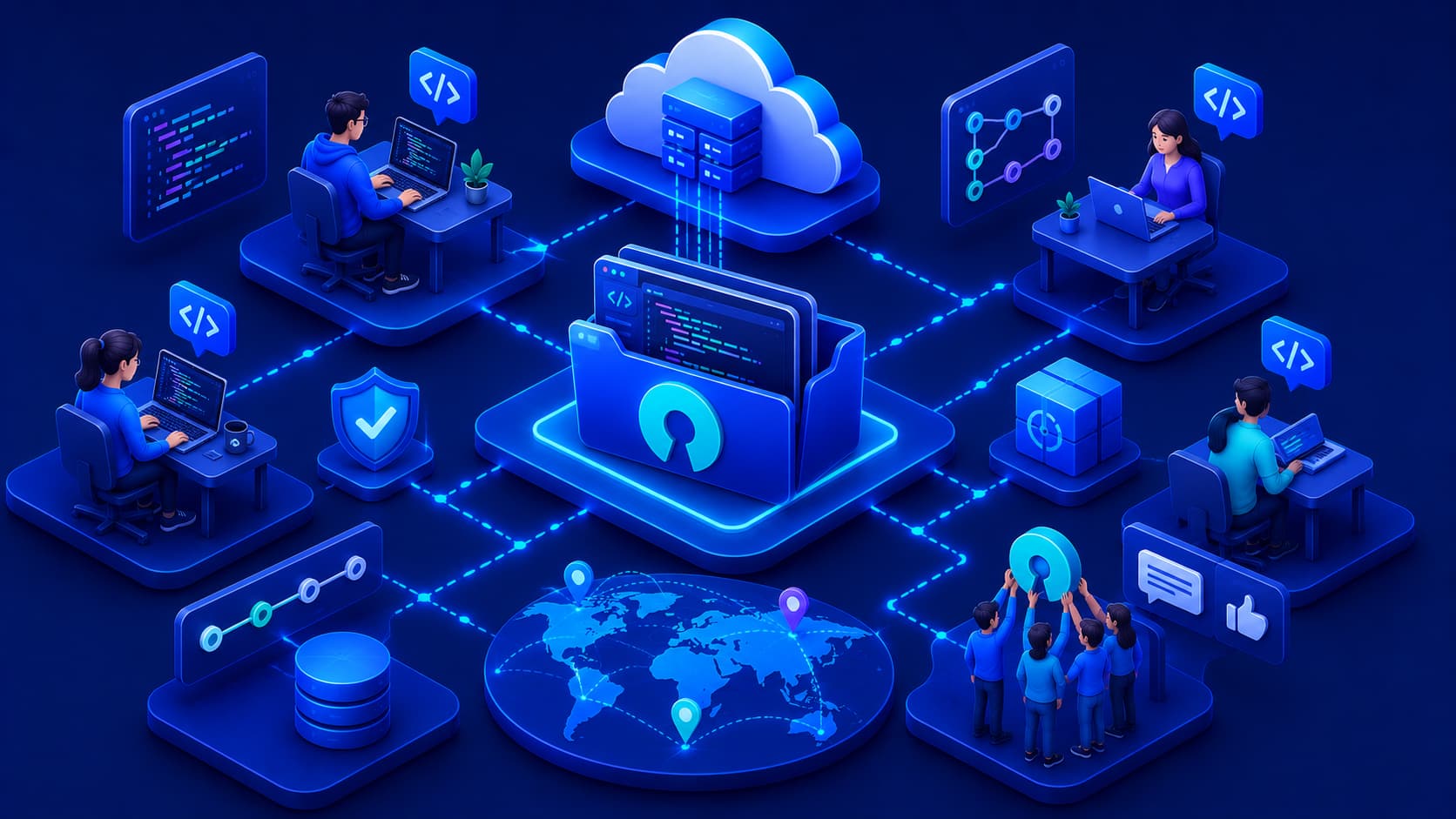
Modern software is created in many different ways. Some applications are developed entirely within private companies, where the source code remains confidential. Others are built through open collaboration, allowing developers from around the world to examine, improve, and contribute to the project. This collaborative approach is known as open source software.
Open source has become one of the driving forces behind today's technology industry. Many websites, cloud platforms, programming tools, operating systems, and business applications rely on open source projects in some form. Despite its widespread adoption, however, the term "open source" is often misunderstood. Many people assume it simply means software that can be downloaded for free, when in reality it describes how software is developed, shared, and licensed, rather than its price.
What Is Open Source Software?
Open source software is software whose source code is made available under a license that allows people to view, study, modify, and redistribute it according to the license terms. Unlike software distributed only as finished applications, open source projects make the underlying code accessible to the public.
This openness enables developers to:
- Learn how the software works.
- Identify and fix bugs.
- Improve existing features.
- Add new functionality.
- Share improvements with the wider community.
Instead of depending entirely on a single organization, many open source projects evolve through contributions from developers, researchers, companies, educational institutions, and volunteers around the world. This collaborative model encourages continuous improvement and innovation.
Editorial Insight
Open source should not be viewed simply as a licensing model. It also represents a development philosophy centered on transparency, collaboration, and shared knowledge. Some of today's most influential technologies exist because thousands of contributors have worked together to improve the same software over many years.
Why Does Source Code Matter?
When software is distributed only as a finished application, users can use it but generally cannot see how it was built. The underlying programming logic remains hidden from view. Open source changes this by providing access to the software's source code.
Access to source code allows developers to:
- Understand how the software works internally.
- Identify bugs and security issues.
- Improve performance.
- Adapt the software for new use cases.
- Learn modern programming techniques.
For students and aspiring developers, reading open source code provides valuable exposure to real-world software architecture and engineering practices that are difficult to gain from small classroom examples alone.
Practical Example
Imagine you're learning web development.
Instead of studying only simplified tutorial projects, you can explore the source code of mature open source applications to see how experienced developers:
- Organize large codebases.
- Structure reusable components.
- Handle security and authentication.
- Optimize application performance.
- Collaborate through version control.
Studying production-quality code helps bridge the gap between learning programming concepts and building professional software.
How Open Source Development Works
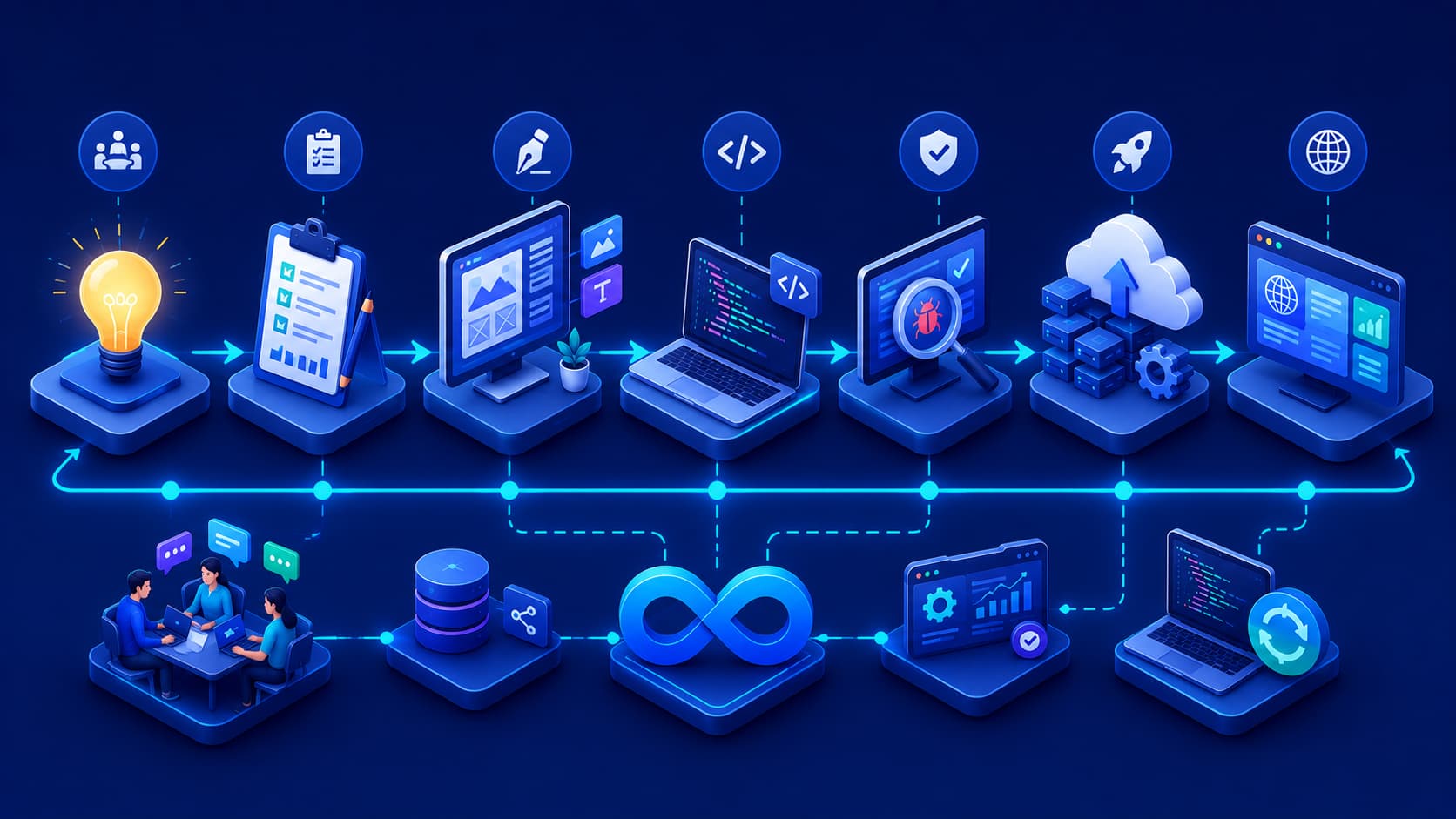
Open source software is typically developed through collaboration rather than by a single company working in isolation. Contributors propose improvements, report bugs, review code changes, and discuss new ideas before updates become part of the project.
Although each project follows its own workflow, many successful open source communities share several common principles:
- Public source code.
- Community collaboration.
- Peer review.
- Transparent development.
- Continuous improvement.
Because developers with different backgrounds contribute their expertise, open source projects often benefit from diverse perspectives, faster innovation, and higher-quality software over time.
Open Source Is About More Than Cost
One of the most common misconceptions about open source software is that it simply means "free software." While many open source applications can indeed be downloaded without charge, cost is not what defines open source. The defining characteristic is that the source code is available under a license that allows people to study, modify, and redistribute it according to the license terms.
Some open source projects generate revenue through:
- Commercial support services.
- Cloud-based offerings.
- Enterprise editions with additional features.
- Consulting and professional services.
Others are maintained by volunteers, nonprofit organizations, educational institutions, or communities of developers. Regardless of how funding is obtained, it is the licensing model—not the price—that distinguishes open source software.
Editorial Insight
Many successful technology companies actively invest in open source projects. They may offer the core software as open source while generating income through managed hosting, premium services, technical support, or enterprise solutions. This allows open collaboration to coexist with sustainable business models.
Benefits of Open Source Software
Open source software has become a cornerstone of today's technology ecosystem because it provides advantages for developers, organizations, and individual users alike.
Transparency
Because the source code is publicly available, developers can examine exactly how the software works instead of relying solely on documentation or vendor claims. This transparency encourages greater trust and allows security researchers to identify, analyze, and report potential vulnerabilities more effectively.
Organizations also benefit from being able to audit software for security, compliance, or performance requirements when necessary.
Collaboration
Open source projects thrive on contributions from developers around the world. People with different technical backgrounds, experiences, and perspectives work together to improve the same software.
This collaborative approach often results in:
- Faster innovation.
- More diverse ideas.
- Better problem solving.
- Continuous feature improvements.
- Shared technical knowledge.
Instead of innovation being limited to a single development team, improvements can come from an entire global community.
Flexibility
Organizations can adapt open source software to meet their own requirements whenever the project's license permits. Rather than waiting for a software vendor to release new features, developers may customize the software themselves or contribute their improvements back to the community.
This flexibility makes open source suitable for a wide variety of industries, including education, finance, healthcare, scientific research, and enterprise computing.
Learning Opportunities
Open source projects provide valuable educational resources for developers at every skill level. Students and aspiring programmers can study real-world codebases, explore software architecture, and observe how experienced engineers solve complex technical challenges.
Contributing to open source projects also helps developers:
- Improve programming skills.
- Learn collaborative development workflows.
- Gain practical experience.
- Build professional portfolios.
- Participate in real software projects used by people around the world.
Challenges of Open Source Software
Although open source software offers many benefits, it also presents several challenges that organizations and individual users should consider before adoption.
Maintenance
Not every open source project has a large or well-funded development team. Some projects are maintained by only a small number of contributors, making long-term maintenance more challenging. The overall health of a project often depends on the size, activity, and commitment of its community.
Support
Commercial software frequently includes dedicated customer support. Open source projects may instead rely on documentation, discussion forums, community channels, or volunteer contributors to assist users. Many mature projects also provide professional support through commercial partners.
Compatibility
Although many open source applications support multiple operating systems and deployment environments, organizations should still evaluate compatibility with their existing infrastructure before implementation. Proper planning helps reduce integration challenges and ensures smoother adoption.
Best Practice
Before adopting any open source software in a production environment, evaluate more than just its features. Consider factors such as:
- Community activity.
- Documentation quality.
- Release frequency.
- Security update history.
- Long-term maintenance.
- Compatibility with your existing systems.
A healthy, actively maintained project is generally a better long-term choice than one with impressive features but little ongoing development.
Where Is Open Source Software Used?
Open source software powers a significant portion of today's digital infrastructure. It is used across a wide range of industries and technologies because of its flexibility, transparency, and collaborative development model.
Common areas where open source software is widely used include:
- Web development.
- Cloud computing.
- Software development tools.
- Databases.
- Artificial intelligence.
- Cybersecurity.
- Networking.
- Enterprise infrastructure.
Many organizations combine open source and proprietary software to build complete technology solutions that meet their business requirements. Rather than choosing one model exclusively, businesses often integrate both to take advantage of the strengths each offers.
Open Source and Innovation
Open source has significantly accelerated technological innovation by allowing developers to build upon existing work instead of starting every project from scratch. Shared knowledge encourages experimentation, collaboration, and continuous improvement across the global technology community.
Many technologies that support today's internet, cloud services, programming ecosystems, and software development workflows have benefited from open source collaboration. By sharing ideas and improvements openly, developers can solve problems more efficiently and create better software for everyone.
Editorial Insight
Open source innovation is not simply about writing code faster. It enables organizations to focus on creating new features and solving unique challenges instead of repeatedly rebuilding common technologies. This shared foundation has become one of the key drivers of rapid advancement across the software industry.
Common Misconceptions About Open Source
Although open source software is widely used, several misconceptions continue to create confusion about how it works. Understanding these misconceptions helps clarify what open source truly represents.
Open Source Doesn't Always Mean Free of Charge
Many open source applications are available at no cost, but some organizations offer paid support, managed services, enterprise editions, or cloud hosting alongside the open source version. The defining characteristic remains the availability of the source code—not the pricing model.
Anyone Cannot Change the Official Software Directly
Although anyone can study or modify open source code within the terms of its license, changes to the official project are typically reviewed by maintainers before they are accepted. This review process helps maintain software quality, consistency, and stability.
In other words, open collaboration does not mean unrestricted control. Successful projects follow structured development processes to ensure new contributions meet quality standards.
Open Source Doesn't Mean Lower Quality
Some people assume software developed by volunteers must be less reliable than commercial alternatives. In reality, many widely used open source projects are maintained by experienced developers, nonprofit organizations, research institutions, and major technology companies. Software quality depends on development practices, testing, code reviews, and community involvement—not simply on whether it is open source.
Frequently Asked Questions
What Is Open Source Software in Simple Terms?
Open source software is software whose source code is publicly available so people can study, modify, and share it according to the terms of its license.
Is All Open Source Software Free?
Not necessarily.
Many open source projects are available at no cost, but some organizations charge for support, hosting, enterprise features, or related services.
Can Anyone Contribute to Open Source Projects?
Many projects welcome contributions from the community. However, proposed changes are typically reviewed before becoming part of the official software to ensure quality and stability.
Why Do Companies Use Open Source Software?
Organizations often choose open source because it offers flexibility, transparency, collaboration, and the ability to adapt software to meet specific business requirements.
Is Open Source Software Secure?
Open source software can be highly secure when projects are actively maintained, regularly reviewed, and kept up to date. Public access to the source code allows security researchers and contributors to identify and resolve vulnerabilities more quickly.
Conclusion
Open source software has transformed the way modern technology is developed. By making source code available for study, improvement, and collaboration, it encourages innovation, transparency, and shared problem-solving across the global technology community.
Although open source projects differ in size, purpose, governance, and licensing, they all demonstrate the value of collaborative software development. For users, understanding open source leads to more informed technology decisions. For developers, it provides opportunities to learn from real-world projects, contribute meaningful improvements, and participate in one of the most influential movements in modern computing.
Final Takeaway
Open source software is defined not by its price, but by its openness. By giving developers access to source code and encouraging collaboration, open source has helped shape many of the technologies that power today's internet, cloud platforms, programming tools, and enterprise systems.
Whether you're a student learning to program, a developer building applications, or an organization evaluating software solutions, understanding how open source works provides valuable insight into one of the foundations of today's technology ecosystem.