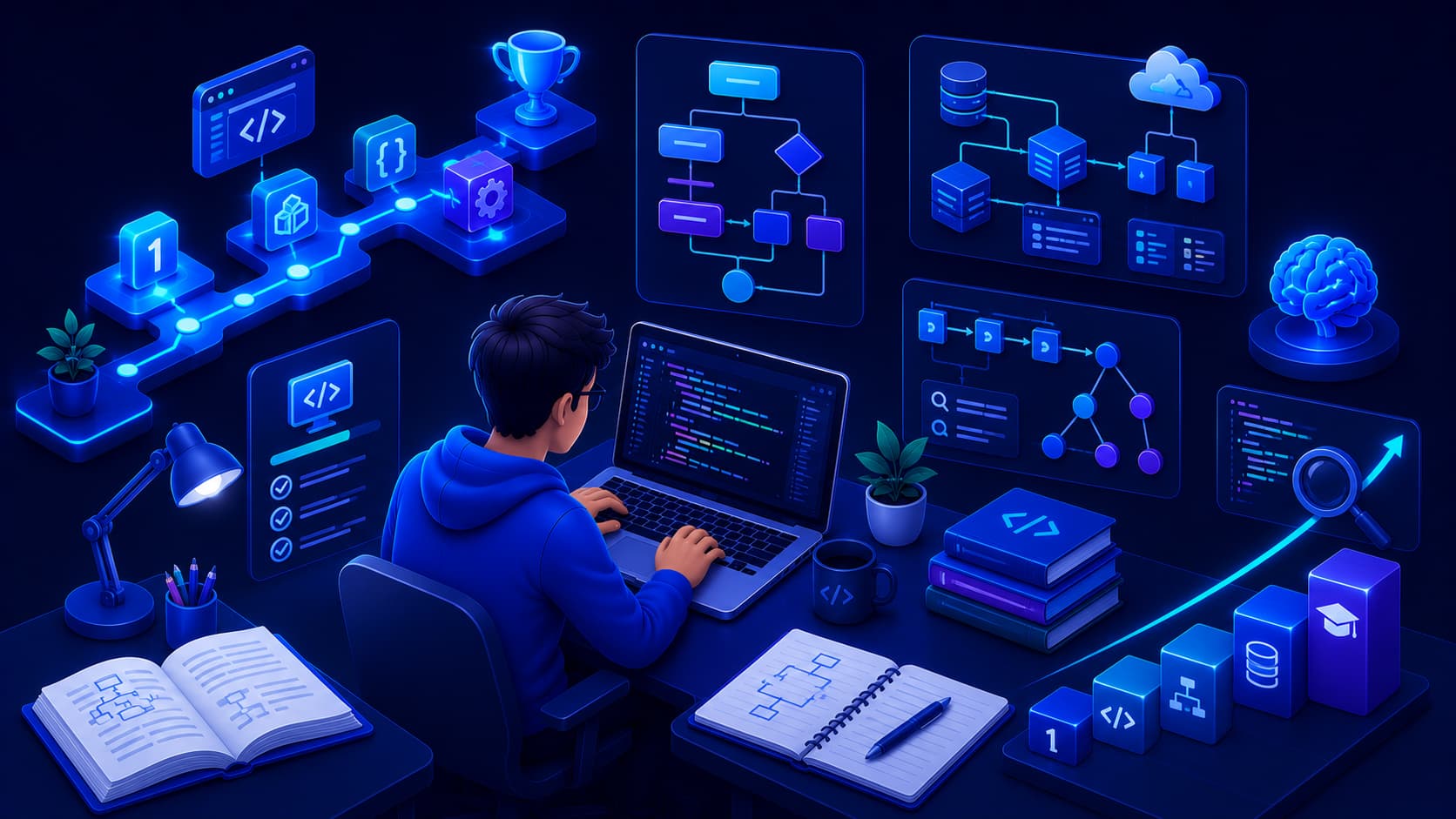
Learning programming has never been more accessible. Thousands of tutorials, online courses, books, and videos are available to anyone with an internet connection. Yet many beginners still encounter the same challenge: there are simply too many choices. Questions such as "Should I learn Python or JavaScript?", "Do I need to study computer science first?", or "Should I focus on web development, mobile apps, or artificial intelligence?" can feel overwhelming before you've even written your first line of code.
The good news is that learning programming doesn't require following a perfect roadmap. What matters most is building a strong foundation step by step. Once you understand the core concepts, learning new programming languages and technologies becomes much easier because programming is less about memorizing syntax and more about developing a logical way of thinking. This roadmap is designed to help you build that mindset.
Step 1: Understand Programming Fundamentals
Before worrying about which programming language to learn, spend time understanding the concepts that every developer uses. These foundational ideas appear in nearly every modern programming language and form the basis of effective software development.
Core programming fundamentals include:
- Variables and data types.
- Conditions and decision making.
- Loops.
- Functions.
- Algorithms.
- Data structures.
- Basic problem-solving techniques.
Once you understand these concepts, switching between programming languages becomes much easier because the underlying principles remain largely the same.
Practical Example
Think of programming fundamentals as learning the rules of mathematics. Once you understand addition, subtraction, multiplication, and division, you can solve problems using different calculators without relearning basic arithmetic. Programming languages work in a similar way—the syntax may change, but the core concepts remain consistent.
Editorial Insight
Many beginners spend too much time deciding which language is "best." In reality, employers and experienced developers value strong problem-solving skills and programming fundamentals far more than knowledge of a single language.
Step 2: Choose One Programming Language
One of the biggest mistakes beginners make is trying to learn multiple programming languages at the same time. While it may seem productive, constantly switching between languages often creates confusion and slows progress. Instead, choose one language and stay with it long enough to become comfortable using it.
Whether you choose Python, JavaScript, Java, C#, Go, or another modern programming language, you'll still be learning the same underlying programming principles. The specific language matters far less than maintaining consistency throughout the learning process.
Best Practice
Choose a programming language that aligns with your interests:
- Interested in web development? JavaScript is a natural choice.
- Interested in automation or data analysis? Python is widely used.
- Interested in enterprise software? Java or C# are excellent options.
Once you've made your choice, commit to learning it well before exploring additional languages.
Step 3: Learn by Building Small Projects
Reading books and watching tutorials helps you understand programming concepts, but building projects teaches you how to apply them. Practical experience develops problem-solving skills that cannot be gained through passive learning alone.
Begin with small, manageable projects such as:
- A calculator.
- A to-do list.
- A personal portfolio website.
- A basic note-taking application.
- A simple number guessing game.
These projects provide valuable hands-on experience without becoming overwhelming. As your confidence grows, you can gradually tackle larger and more complex applications.
Practical Example
A simple calculator project might teach you:
- Variables and data types.
- Conditional statements.
- Functions.
- User input.
- Error handling.
Although the project itself is small, it combines several important programming concepts into one practical application, making the lessons much easier to remember.
Step 4: Learn How to Read Documentation
One habit consistently separates experienced developers from many beginners: they know how to learn independently. Rather than relying entirely on video tutorials or step-by-step guides, they regularly consult official documentation to understand how programming languages, libraries, and development tools work.
At first, documentation may seem more difficult than watching a tutorial because it is written as a technical reference rather than a guided lesson. However, developing the habit of reading documentation builds long-term confidence and helps you become less dependent on others for answers.
Practical Example
Imagine you're learning how to work with dates in a programming language.
Instead of searching for another tutorial every time you need help, visit the language's official documentation to:
- Learn how the date functions work.
- Explore available methods.
- Read examples provided by the language maintainers.
- Understand limitations and best practices.
Over time, this approach becomes much faster than relying solely on tutorials.
Editorial Insight
Professional developers spend a significant portion of their time reading documentation. Learning this skill early allows you to adapt more quickly to new frameworks, libraries, and technologies throughout your career.
Step 5: Practice Debugging
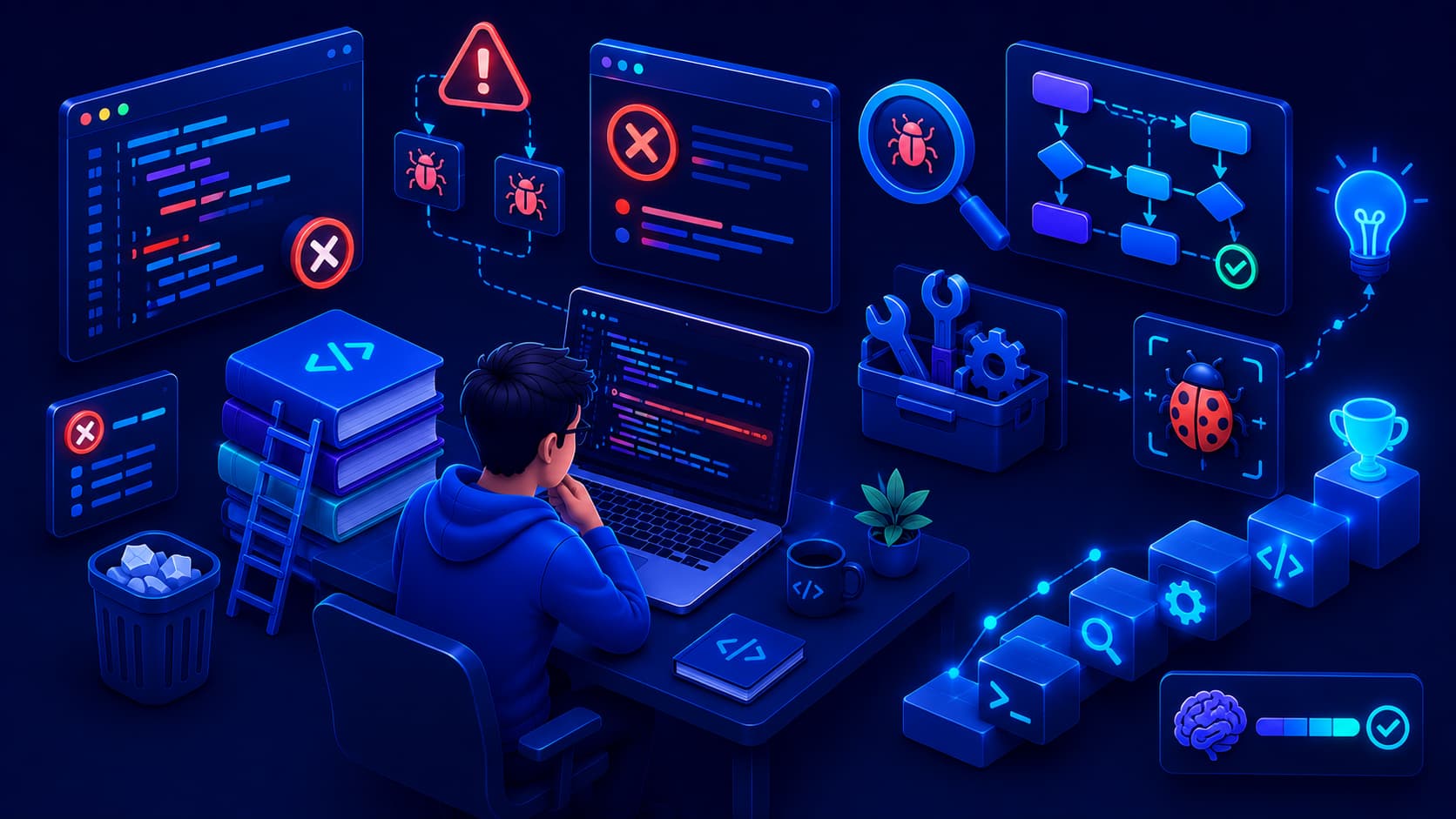
Every programmer encounters bugs. In fact, debugging is one of the most valuable skills you'll develop. Instead of becoming frustrated when your code doesn't work, treat every error as an opportunity to understand how the program behaves. Carefully read error messages, break large problems into smaller ones, and test one change at a time.
Learning to debug systematically improves your programming skills far more than simply copying solutions from the internet because it teaches you how software actually works. Eventually, you'll realize that debugging isn't a sign of failure—it's a normal and essential part of software development.
Best Practice
When you encounter a bug:
- Reproduce the problem consistently.
- Read the error message carefully.
- Change only one thing at a time.
- Test again after each change.
- Confirm the issue is truly resolved before continuing.
Following a structured process prevents unnecessary confusion and helps you identify the real cause of the problem.
Step 6: Learn Version Control
As your projects become more complex, you'll need a reliable way to track changes. Version control systems allow developers to save project history, experiment safely, and collaborate with other developers without fear of permanently breaking their applications.
Instead of worrying that a mistake will destroy hours of work, version control allows you to return to an earlier version whenever necessary. Learning version control early also prepares you for professional software development, where it plays a central role in everyday collaboration.
Practical Example
Suppose you add a new feature that unexpectedly causes several parts of your application to fail.
With version control, you can:
- Review exactly what changed.
- Compare different versions of your code.
- Restore a previous working version if needed.
- Continue experimenting without risking the entire project.
These capabilities make software development significantly safer and more efficient.
Step 7: Understand How Software Is Built
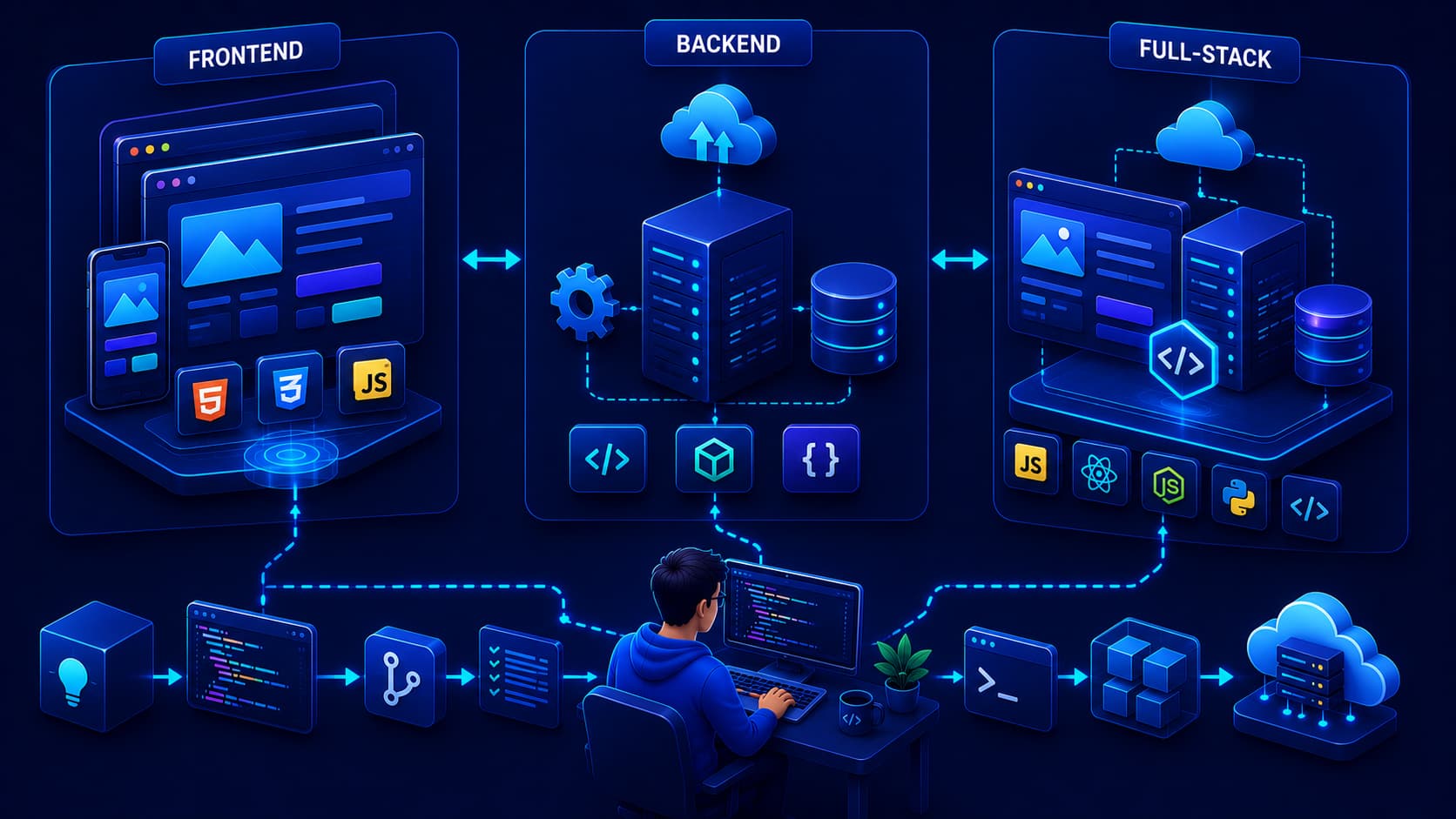
Programming isn't only about writing code. Modern software consists of many different components working together to create complete applications. As your skills develop, begin exploring related areas such as:
- Frontend development.
- Backend development.
- Databases.
- APIs.
- Cloud computing.
- Software testing.
- Deployment.
You don't need to master every technology immediately. The goal is simply to understand how different technologies fit together and how each contributes to the overall software development process.
Editorial Insight
Think of software development as building a house. Programming is one important skill, but complete applications also require databases to store information, APIs to exchange data, cloud infrastructure to host services, and testing to ensure reliability. Understanding how these pieces connect gives you a much broader perspective on software engineering.
Step 8: Build a Portfolio
One of the best ways to measure your progress as a programmer is by building projects that demonstrate your skills. A strong portfolio doesn't need dozens of applications. In fact, a few well-designed and completed projects are often far more valuable than many unfinished ones. Each project teaches different skills and reflects your growth as a developer.
For example:
- One project might strengthen your understanding of user interface design.
- Another may improve your knowledge of databases.
- A different project could introduce you to APIs or cloud services.
Over time, your portfolio becomes more than a collection of projects—it becomes evidence of your practical experience and a record of how your skills have evolved.
Practical Example
A beginner portfolio could include:
- A personal portfolio website.
- A to-do list application.
- A weather app using a public API.
- A simple expense tracker.
- A basic blog or note-taking application.
These projects demonstrate different programming concepts while giving you valuable real-world experience.
Best Practice
Prioritize completing projects rather than constantly starting new ones. A polished application that solves a real problem is usually much more impressive than several incomplete experiments.
Common Mistakes Beginners Should Avoid
Learning programming is a marathon, not a sprint. Avoiding several common mistakes can make your learning journey smoother and help you develop stronger programming habits from the beginning.
Waiting Until You Feel "Ready"
Many beginners spend months watching tutorials before writing meaningful code because they believe they need to learn everything first. The reality is that you'll probably never feel completely ready. The best time to begin building projects is as soon as you understand the basics. Practical experience accelerates learning far more effectively than endless preparation.
Switching Languages Too Frequently
Every few weeks, beginners often hear that another programming language is "better." Constantly switching between languages prevents deep understanding and slows long-term progress. Choose one language, build a solid foundation, and only then begin exploring others. Once you understand programming fundamentals, those concepts transfer much more easily to new languages.
Editorial Insight
Programming languages are simply tools. Your long-term success depends far more on understanding programming concepts than on chasing whichever language is currently the most popular.
Comparing Yourself to Others
Programming communities include developers with many years of experience. Comparing your first few months of learning with someone else's decade-long career creates unrealistic expectations and unnecessary frustration. Instead, focus on consistent progress and remember that every experienced developer was once a beginner.
Ignoring Problem-Solving Skills
Programming isn't about typing code quickly—it's about solving problems effectively. Before writing code, spend time understanding the problem and thinking through possible solutions. Strong problem-solving abilities remain valuable regardless of which programming language or technology you use.
Best Practice
Whenever you're faced with a new programming challenge, try sketching the solution on paper or breaking it into smaller steps before writing code. Planning often leads to cleaner solutions and fewer bugs.
Frequently Asked Questions
How Long Does It Take to Learn Programming?
You can learn the programming fundamentals within a few months of consistent practice. Becoming comfortable building real applications usually takes longer and depends on how frequently you practice and the complexity of the projects you complete.
Which Programming Language Should Beginners Choose?
There isn't a single correct answer. Choose a modern programming language that aligns with your goals, then focus on learning programming concepts rather than searching endlessly for the "perfect" language.
Do I Need a Computer Science Degree?
No.
Many successful developers are self-taught or have learned through online courses, coding bootcamps, and personal projects. Practical experience and continuous learning are often just as valuable as formal education.
How Much Should I Practice?
Consistency matters more than long study sessions. Even one hour of focused programming each day can lead to significant progress over time.
What's the Best Way to Improve?
Build projects, read documentation, debug your own code, learn from mistakes, and continue challenging yourself with increasingly complex problems. Practical experience remains one of the most effective teachers for aspiring developers.
Conclusion
Learning programming may seem challenging at first, but every experienced developer once faced the same questions and uncertainties. The key isn't finding the perfect programming language or completing every available course. Instead, success comes from building a strong foundation, practicing consistently, and developing the habit of solving problems one step at a time.
Programming is a skill that grows through experience. Every project you complete, every bug you fix, and every new concept you understand increases both your confidence and your ability. Whether your goal is to build websites, develop mobile applications, create cloud services, explore artificial intelligence, or simply understand how software works, every journey begins with a single line of code.
Final Takeaway
Learning programming doesn't require following a perfect roadmap—it requires consistent progress.
Remember these key principles:
- Build a strong understanding of programming fundamentals.
- Focus on one programming language before exploring others.
- Learn by building real projects.
- Read official documentation regularly.
- Treat debugging as a learning opportunity.
- Understand how different software technologies work together.
- Create a portfolio that demonstrates your skills.
- Practice consistently and stay curious.
Programming is a lifelong learning journey. By focusing on steady improvement instead of trying to learn everything at once, you'll develop the confidence, experience, and problem-solving skills needed to succeed in modern software development.