Writing code that works is an important achievement. Writing code that other people can understand, maintain, and improve is an even greater one. As software projects grow, they often involve multiple developers collaborating over months or even years. In that environment, programming becomes more than simply solving technical problems—it becomes a form of communication. Every variable name, function, and file structure tells part of the story about how the software works.
Clear, well-organized code allows future developers to understand that story with minimal effort. Poorly structured code, on the other hand, creates confusion, increases maintenance costs, and makes bugs more difficult to identify. This is why experienced developers place so much importance on programming best practices. These practices aren't meant to make programming more complicated—they exist to make software easier to understand, modify, and maintain throughout its lifecycle.
1. Write Code for Humans First
Computers execute instructions exactly as they are written. Humans, however, must read, understand, review, and improve those instructions over time. For that reason, good code should always prioritize readability. Use meaningful names for variables, functions, and classes, organize related logic together, and avoid unnecessary complexity whenever possible.
A useful question to ask yourself is:
Could another developer understand this code without needing me to explain it?
If the answer is yes, you're probably writing code that is both maintainable and professional.
Practical Example
Consider the following variable names:
a
b
x1
Now compare them with:
customerName
totalPrice
isLoggedIn
Both versions may work exactly the same way, but the second example immediately communicates the purpose of each variable. Future developers can understand the code much more quickly without guessing what each value represents.
Editorial Insight
Professional software development isn't measured only by whether a program works. It's also measured by how easily other developers can understand, review, debug, and extend the code months or even years later.
2. Keep Functions Small and Focused
Functions are most effective when they have a single, well-defined responsibility. Large functions that perform many unrelated tasks quickly become difficult to understand, debug, and test. Smaller functions encourage code reuse and make software easier to maintain over time.
When reviewing your code, ask yourself whether each function has one clear purpose. If it performs several unrelated jobs, consider dividing it into smaller functions with more specific responsibilities.
Best Practice
A common guideline in software engineering is the Single Responsibility Principle (SRP). Although you don't need to apply every software design principle immediately, learning to keep each function focused on one task naturally leads to cleaner, more maintainable code.
3. Avoid Repeating Yourself
Repeated code often leads to repeated problems. If the same logic appears in multiple places, updating one copy while forgetting another can introduce inconsistencies and bugs. Whenever practical, place shared logic into reusable functions, classes, or modules. This principle is widely known as Don't Repeat Yourself (DRY).
Reducing duplication improves consistency, simplifies maintenance, and makes future enhancements much easier. Instead of fixing the same issue in several different files, you only need to update one reusable component.
Practical Example
Imagine several pages of a website calculating sales tax using identical code. If the tax calculation changes, you'll need to update every copy. By placing the calculation inside a single reusable function, every page automatically benefits from the update while reducing the risk of introducing inconsistencies.
4. Use Consistent Formatting
Consistent formatting makes software easier to read, even though it doesn't change how the program behaves. Proper indentation, consistent naming conventions, and an organized project structure help developers understand code much more quickly and collaborate more effectively.
Fortunately, many modern development tools can automatically format code according to established style guidelines. This allows developers to spend less time debating spacing or indentation and more time solving real problems.
Editorial Insight
Formatting may seem like a minor detail, but consistency across an entire project significantly improves readability. Whether you're working alone or as part of a team, adopting a consistent coding style creates a more professional and maintainable codebase.
5. Test Your Code Regularly
Waiting until an entire project is finished before testing often makes bugs much harder to identify. By that stage, many different parts of the application have been built, making it difficult to determine exactly where a problem originated. Instead, test small pieces of functionality as you build them. Frequent testing helps catch issues early, when they are usually easier and less expensive to fix.
Testing doesn't always require sophisticated automated testing frameworks. Even simple manual testing during development can significantly improve software quality by revealing problems before they spread throughout the project.
Practical Example
Suppose you're developing a registration form with five different features. Rather than building everything first and testing at the end, verify each feature immediately after it's completed:
- Test user input validation.
- Verify password requirements.
- Confirm email formatting.
- Check database storage.
- Test the success message.
By testing each component individually, you'll know exactly which recent change introduced a bug if something stops working.
Best Practice
Develop the habit of testing every new feature before moving on to the next one. Small, frequent tests are usually faster and more effective than trying to debug dozens of problems at the end of a project.
6. Learn to Debug Systematically
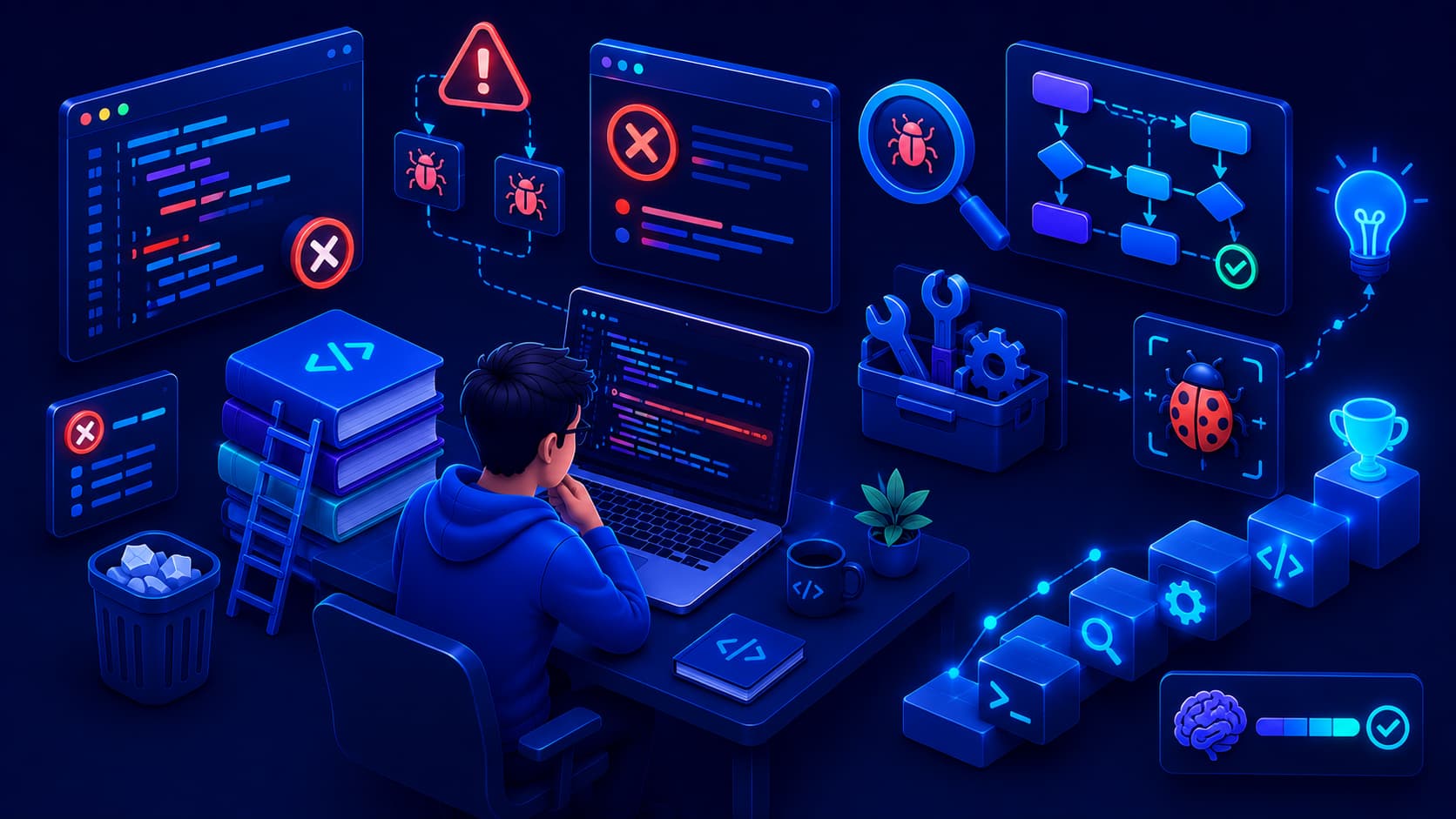
Every programmer encounters bugs. The difference between beginners and experienced developers often lies in how they approach solving them. Rather than randomly changing parts of the code and hoping the issue disappears, experienced developers investigate the problem methodically. They reproduce the issue consistently, isolate the affected section of code, and use debugging tools or log messages until the root cause becomes clear.
A systematic debugging process usually leads to faster, more reliable solutions because it focuses on understanding the problem rather than guessing at possible fixes.
Practical Example
Imagine an application crashes whenever a user uploads a file.
Instead of immediately rewriting the upload function, a systematic approach would be to:
- Reproduce the error consistently.
- Review the error message or logs.
- Verify whether the uploaded file meets the expected requirements.
- Test individual sections of the upload process.
- Confirm the fix before making additional changes.
This process not only resolves the current issue but also helps prevent similar problems in the future.
Editorial Insight
Strong debugging skills often distinguish experienced developers from beginners. The goal isn't simply fixing bugs—it's understanding why they occurred so similar issues can be avoided later.
7. Write Helpful Comments—Not Too Many
Comments can improve understanding, but they shouldn't explain code that is already obvious. For example, a comment such as "Increment the counter by one" adds very little value if the code itself clearly communicates that action. Instead, comments should explain why something is done when the reason isn't immediately obvious.
A useful guideline is:
- Well-written code explains what it does.
- Good comments explain why it does it.
It's equally important to keep comments up to date. Outdated comments can become more confusing than having no comments at all because they may describe behavior that no longer exists in the codebase.
Best Practice
Before adding a comment, ask yourself:
- Does the code already explain itself?
- Is this comment providing useful context?
- Will this comment still make sense after future updates?
If the answer is yes, the comment is probably worth keeping.
8. Keep Learning Continuously
Technology evolves rapidly. Every year brings new programming languages, frameworks, libraries, and development tools. Trying to learn everything is impossible. Instead, focus on building strong fundamentals while remaining curious about new ideas and technologies.
Continuous learning can take many forms, including:
- Reading technical articles.
- Building personal projects.
- Exploring official documentation.
- Learning from experienced developers.
- Experimenting with new technologies after mastering the basics.
Programming is a career built on continuous learning, and that's one of the reasons many developers find it both challenging and rewarding. As technology changes, developers continue growing alongside it.
Editorial Insight
You don't need to learn every new framework the moment it's released. Focus first on mastering the underlying principles. Developers with strong fundamentals typically adapt to new technologies much more quickly than those who rely only on specific tools.
9. Use Version Control
As software projects become larger and more complex, keeping track of changes becomes increasingly important. Version control systems allow developers to record changes, review previous versions of their code, and collaborate safely with others. Instead of worrying that a mistake might permanently break an application, developers can experiment with confidence, knowing they can return to an earlier version if necessary.
Version control is valuable not only for professional teams but also for personal projects. Learning it early helps establish professional development habits and prepares you for collaborative software development environments where tracking changes is essential.
Practical Example
Imagine you've been working on a feature for several days, and a recent change unexpectedly breaks your application.
Without version control, you might have to manually undo changes or recreate working code from memory.
With version control, you can:
- Review exactly what changed.
- Compare different versions of the code.
- Restore a previous working version if needed.
- Experiment safely without risking your entire project.
Editorial Insight
Version control isn't just about creating backups. It provides a complete history of your project's evolution, making collaboration, debugging, and long-term maintenance significantly easier.
10. Build Real Projects
Reading tutorials teaches programming concepts, but building projects teaches practical experience. Real projects force you to combine multiple skills, solve unexpected problems, and make decisions that tutorials often don't cover. This hands-on experience is one of the fastest ways to become a better developer.
Your first projects don't need to be large or complicated. Even simple applications can teach valuable lessons about planning, debugging, testing, and improving software.
Some beginner-friendly project ideas include:
- A calculator.
- A personal portfolio website.
- A task management application.
- A weather application using a public API.
Each completed project strengthens both your technical skills and your confidence, while giving you practical experience that goes far beyond following tutorials.
Best Practice
Don't wait until you feel "ready" to build projects. Small, imperfect projects often teach more than weeks of passive learning because they expose you to real-world programming challenges.
Great Code Evolves Over Time
One common misconception among beginners is that experienced developers write perfect code on their first attempt. In reality, software evolves through continuous improvement. Developers regularly refactor code, simplify solutions, improve performance, and remove unnecessary complexity.
Writing clean software isn't about achieving perfection from the beginning. It's about making small improvements whenever opportunities arise. Over time, these incremental improvements produce code that is easier to understand, maintain, and extend.
Editorial Insight
Professional software development is an ongoing process of refinement. Even mature applications receive updates to improve readability, performance, security, and maintainability. Great developers continuously improve their code instead of expecting perfection on the first draft.
Frequently Asked Questions
What Is the Most Important Programming Best Practice?
There isn't a single rule that outweighs all others. Writing readable code, testing regularly, avoiding unnecessary duplication, and continuously improving your skills all contribute to better software development. These practices work together to create code that is easier to understand, maintain, and expand.
Should Beginners Worry About Writing Perfect Code?
No.
Focus on writing code that works and is easy to understand. As your experience grows, you'll naturally improve its structure, organization, and overall quality through practice and continuous learning.
Why Is Readable Code Important?
Software is often maintained for many years by multiple developers. Readable code makes collaboration easier, reduces the time needed to fix bugs, and simplifies the process of adding new features. Well-structured code also makes future maintenance much less stressful.
Do Professional Developers Still Make Mistakes?
Absolutely.
Experienced developers still introduce bugs from time to time. The difference is that they rely on testing, debugging, code reviews, and proven development practices to identify and resolve problems efficiently.
Are Programming Best Practices the Same for Every Language?
The implementation details may vary between programming languages, but the underlying principles—clarity, simplicity, maintainability, and continuous improvement—remain valuable across nearly every modern programming language.
Conclusion
Programming best practices aren't rigid rules designed to limit creativity. Instead, they are practical habits developed through years of software engineering experience. Writing readable code, keeping functions focused, avoiding duplication, testing frequently, debugging systematically, and building real projects all contribute to creating software that is easier to understand, maintain, and improve over time.
As your programming journey continues, you'll discover that becoming a better developer isn't only about learning new technologies. It's also about improving the way you think, organize your work, solve problems, and collaborate with others. Strong programming habits will continue to benefit you regardless of which programming language or technology you choose in the future.
Final Takeaway
Great software is built through consistent habits, not one-time achievements.
Remember these key principles:
- Write code for people first, computers second.
- Keep functions small and focused.
- Eliminate unnecessary duplication.
- Test frequently throughout development.
- Debug methodically instead of guessing.
- Continue learning and building real projects.
- Treat software as something that continuously evolves.
By applying these programming best practices from the beginning of your journey, you'll create code that is easier to maintain, simpler to understand, and more enjoyable to work with—qualities that define professional software development.